Sorry I think all my energy goes into Instagram, more visual and less writing which I’m a little too distractible for. I am flying to Rotterdam on business but seeing a friend I had promised boots to a couple years ago but that still wasn’t enough time
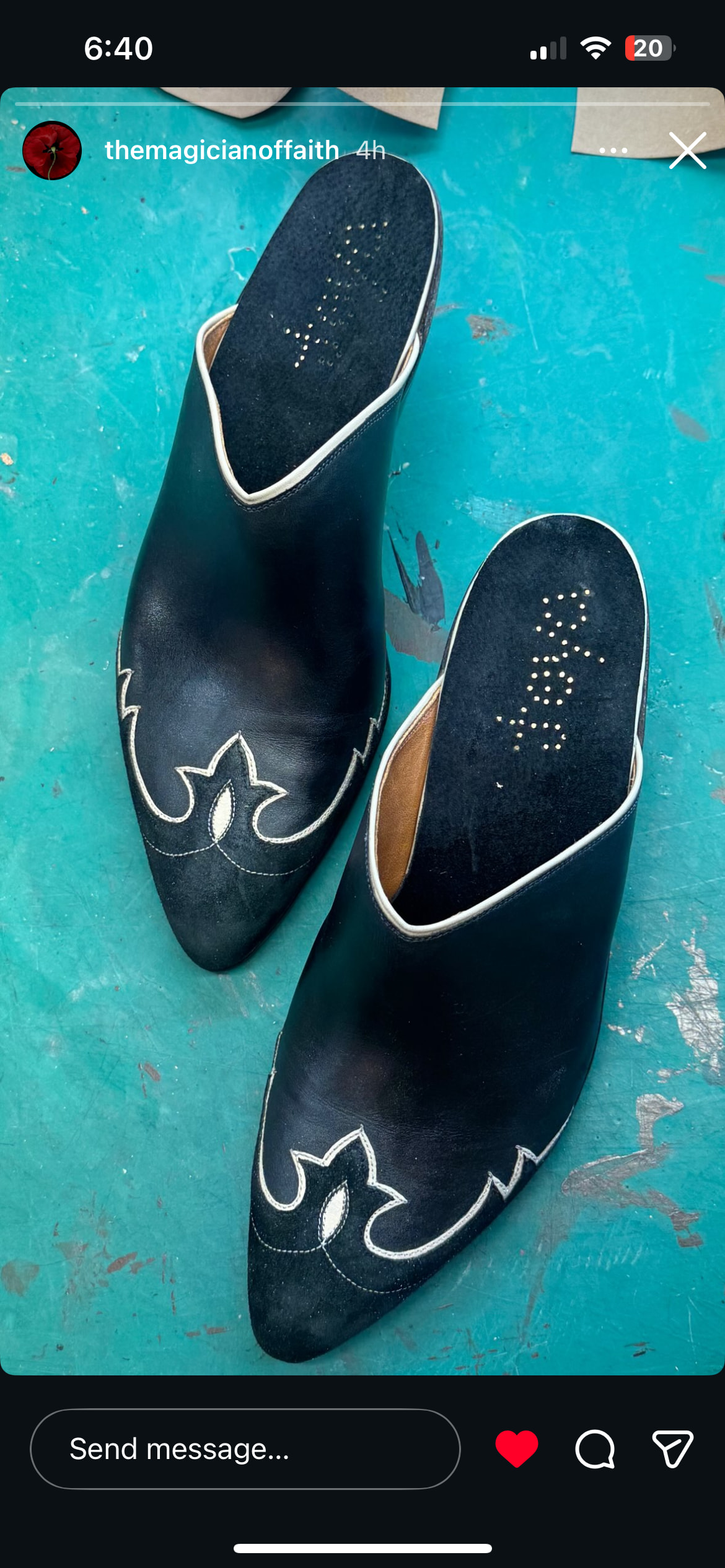
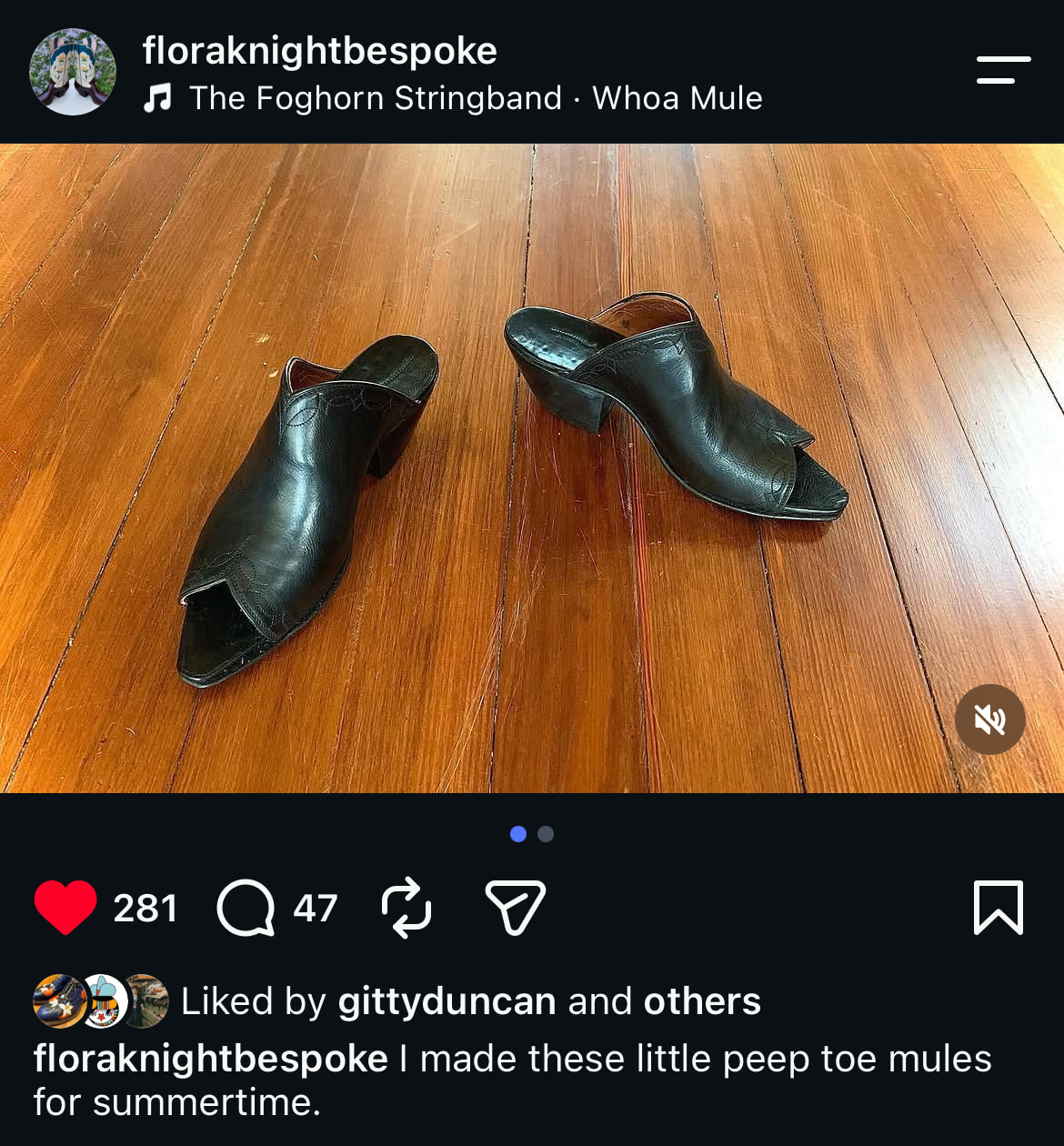
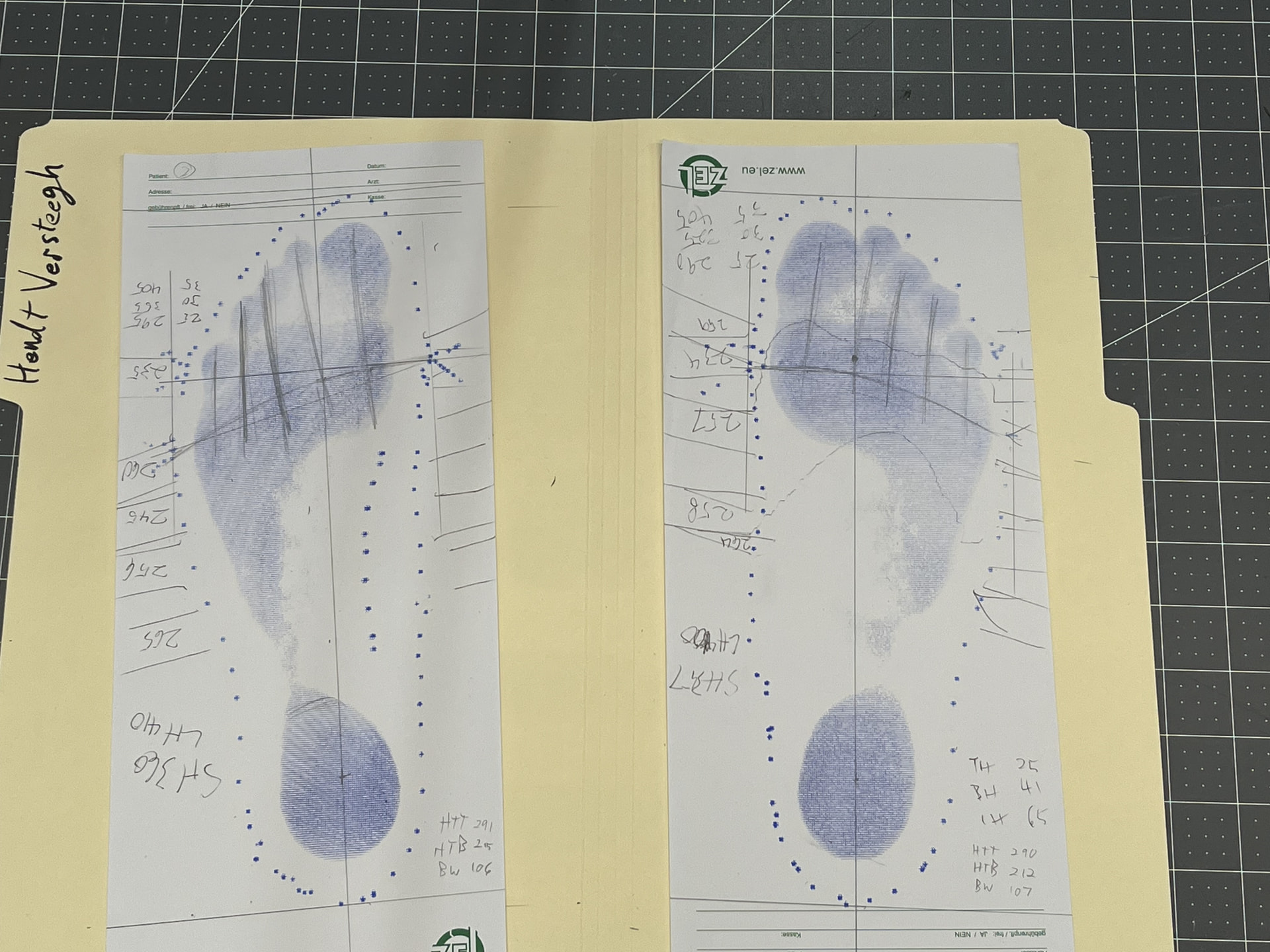
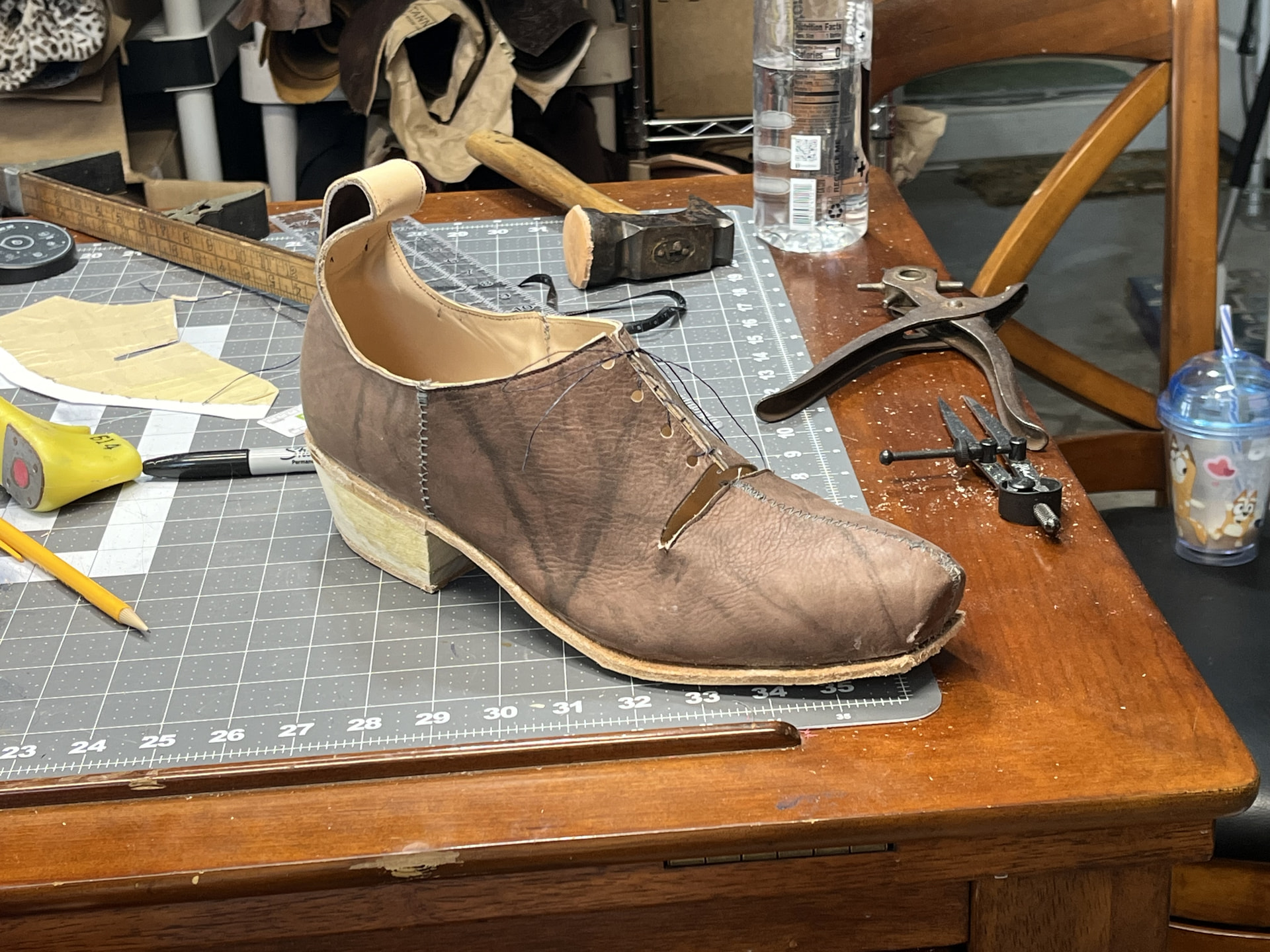
So a little tongue in cheek I thought oh I’ll make that little Dutch Boy (he’s actually pretty tall like most of his people, I ended up with a 12C last) some boot clogs. Hopefully less time than a pair of boots. Almost true although food poisoning this weekend waylaid me and all I got done was one clog with no heel. Oh well it’ll be fun to present them then mail the pair 2 years later.
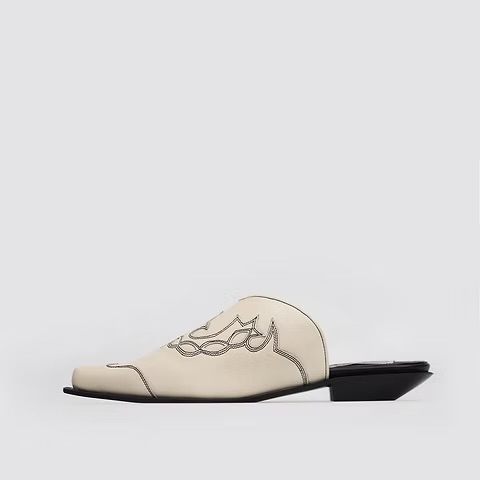
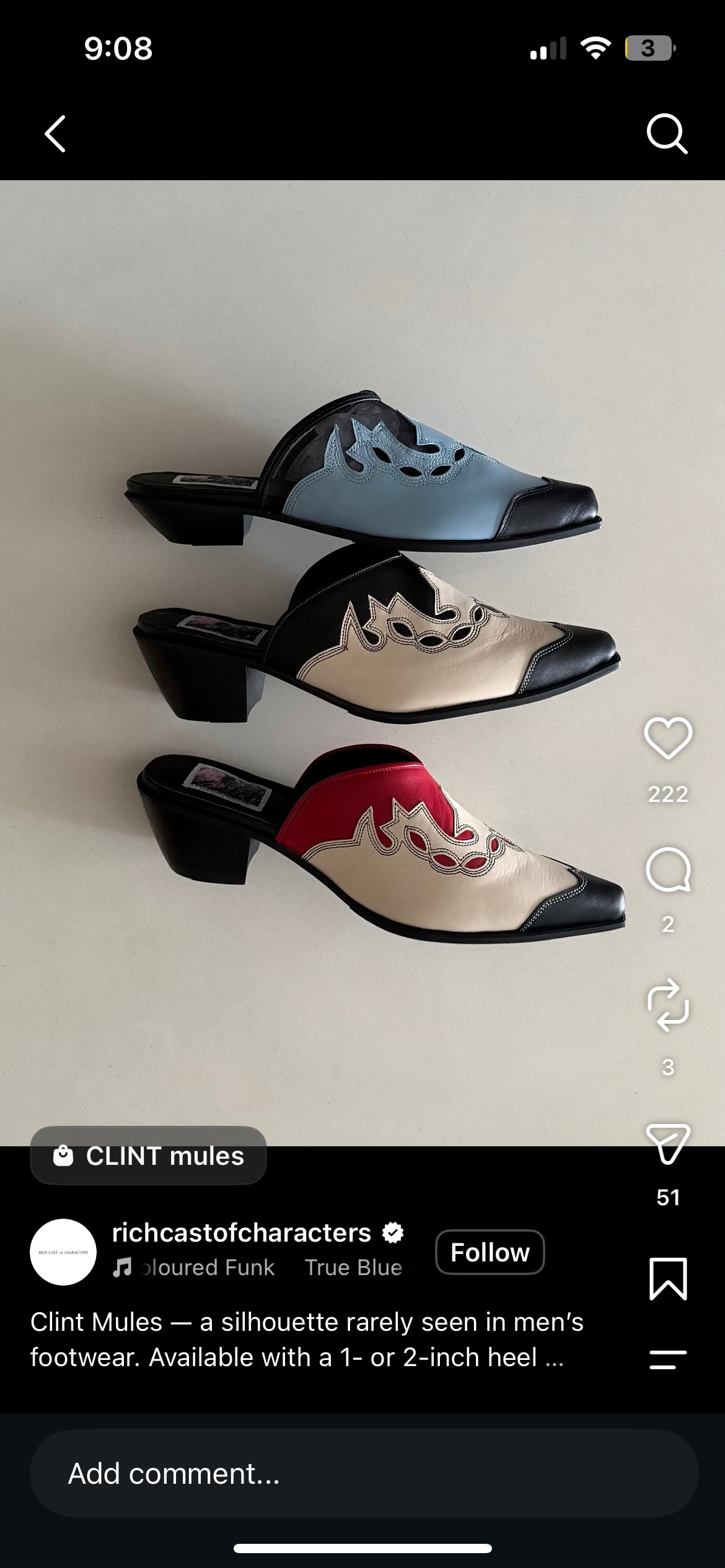
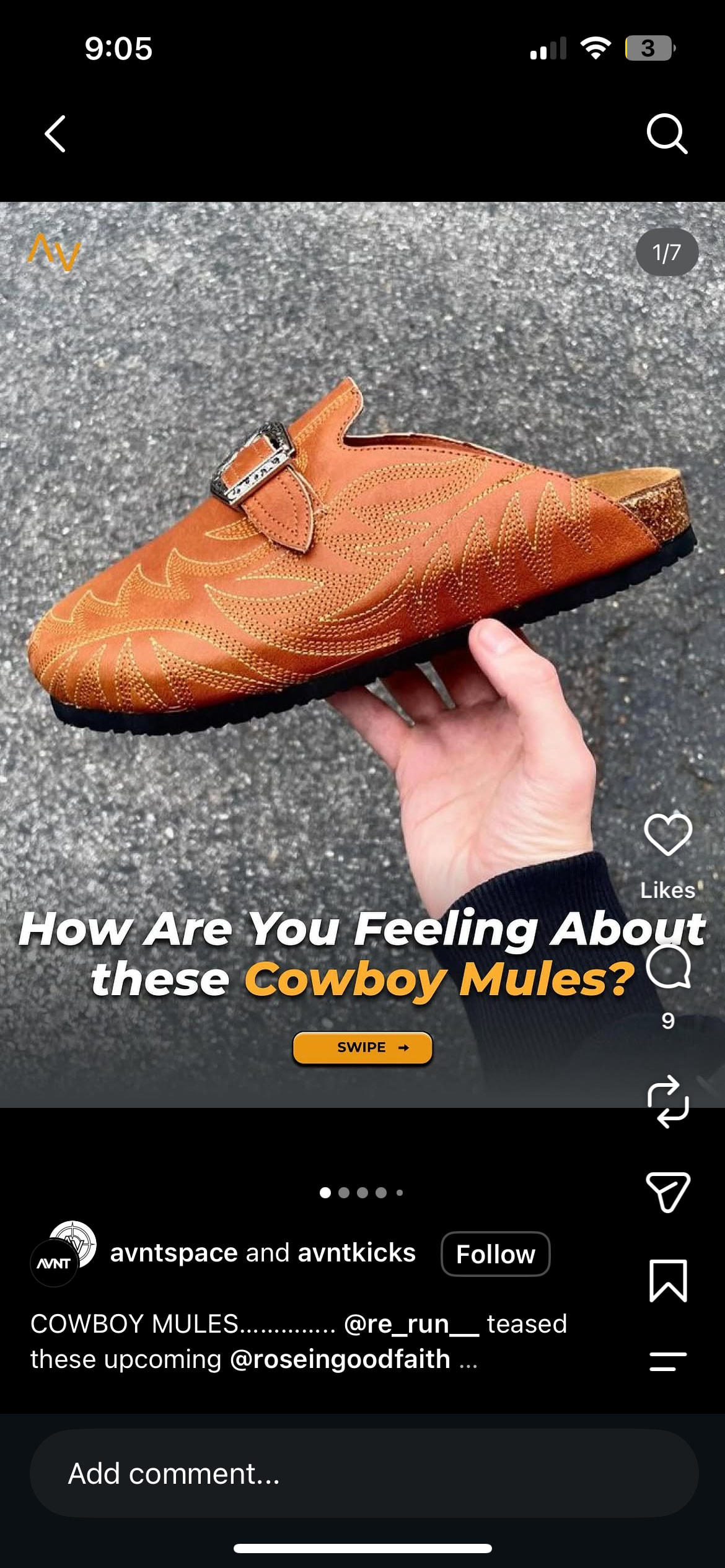
Did some googling and all the boot clogs or mules I saw I though were kinda dumb
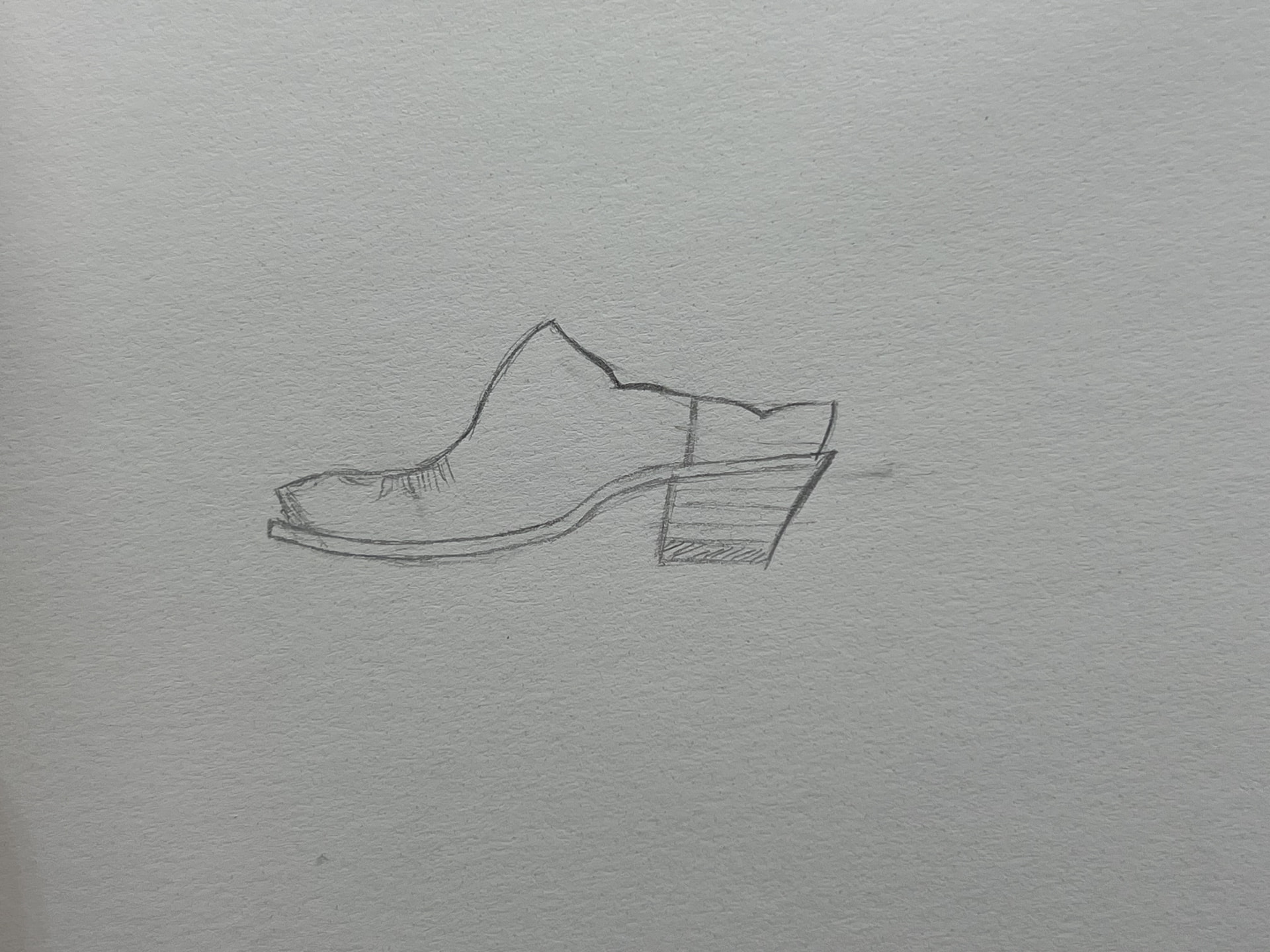
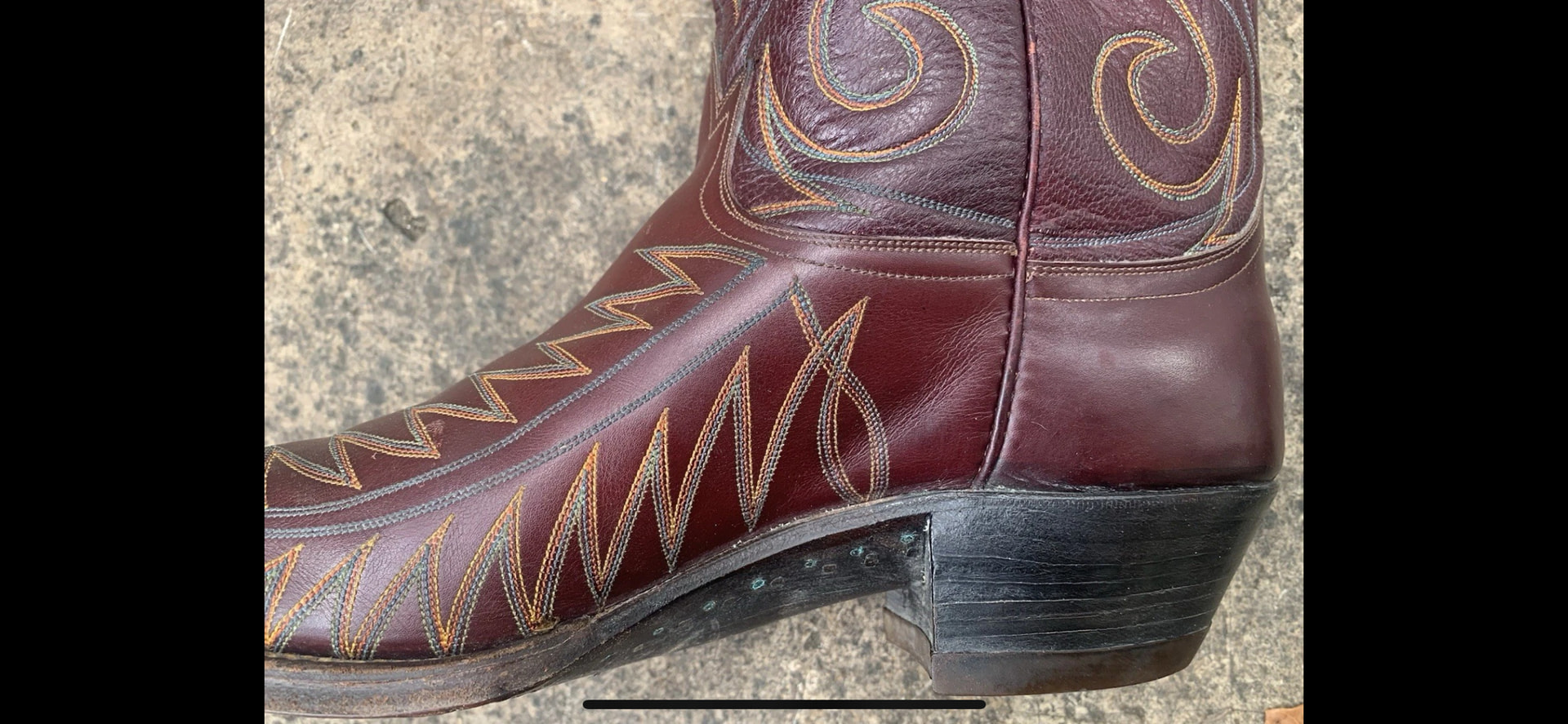
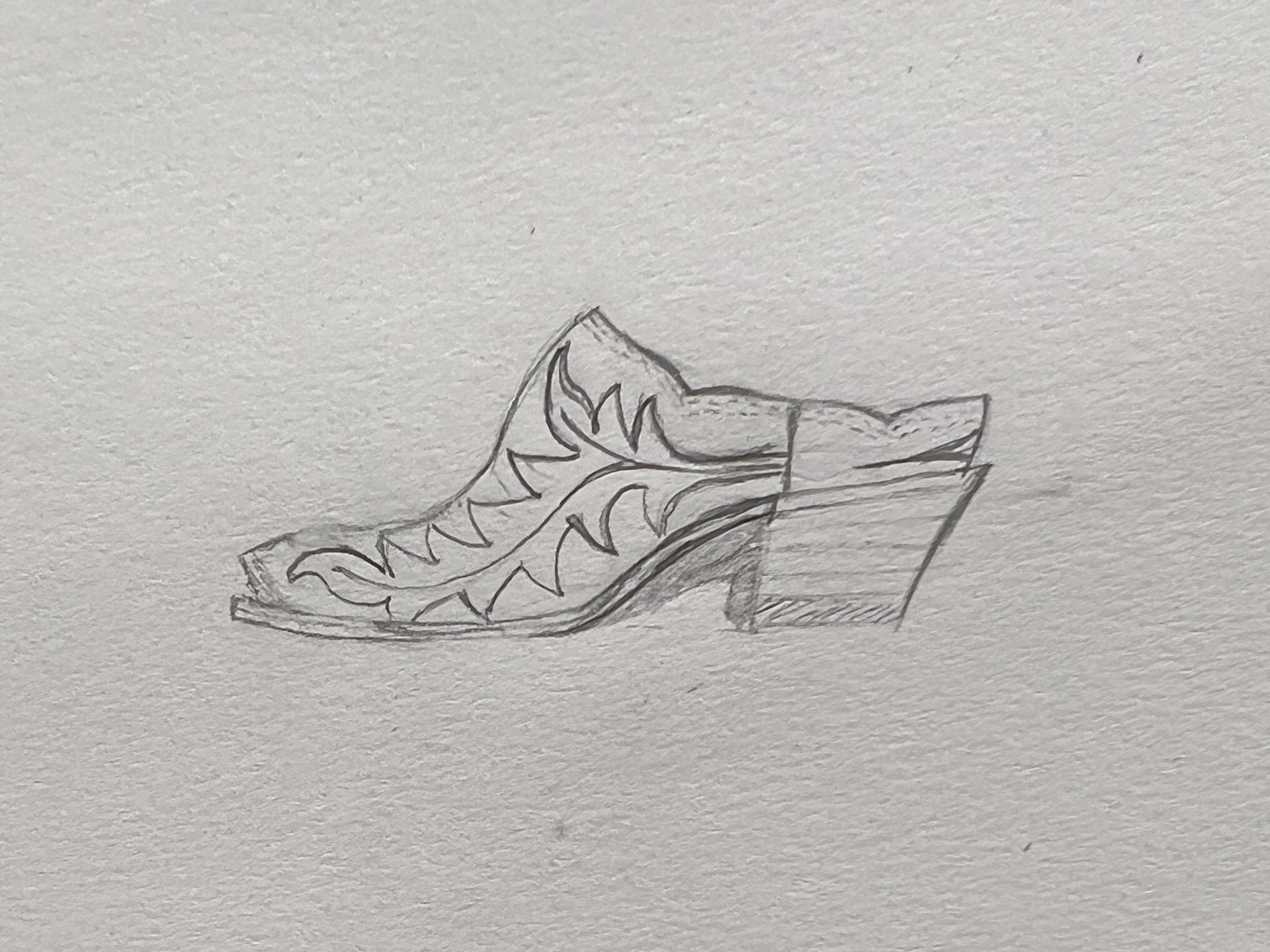
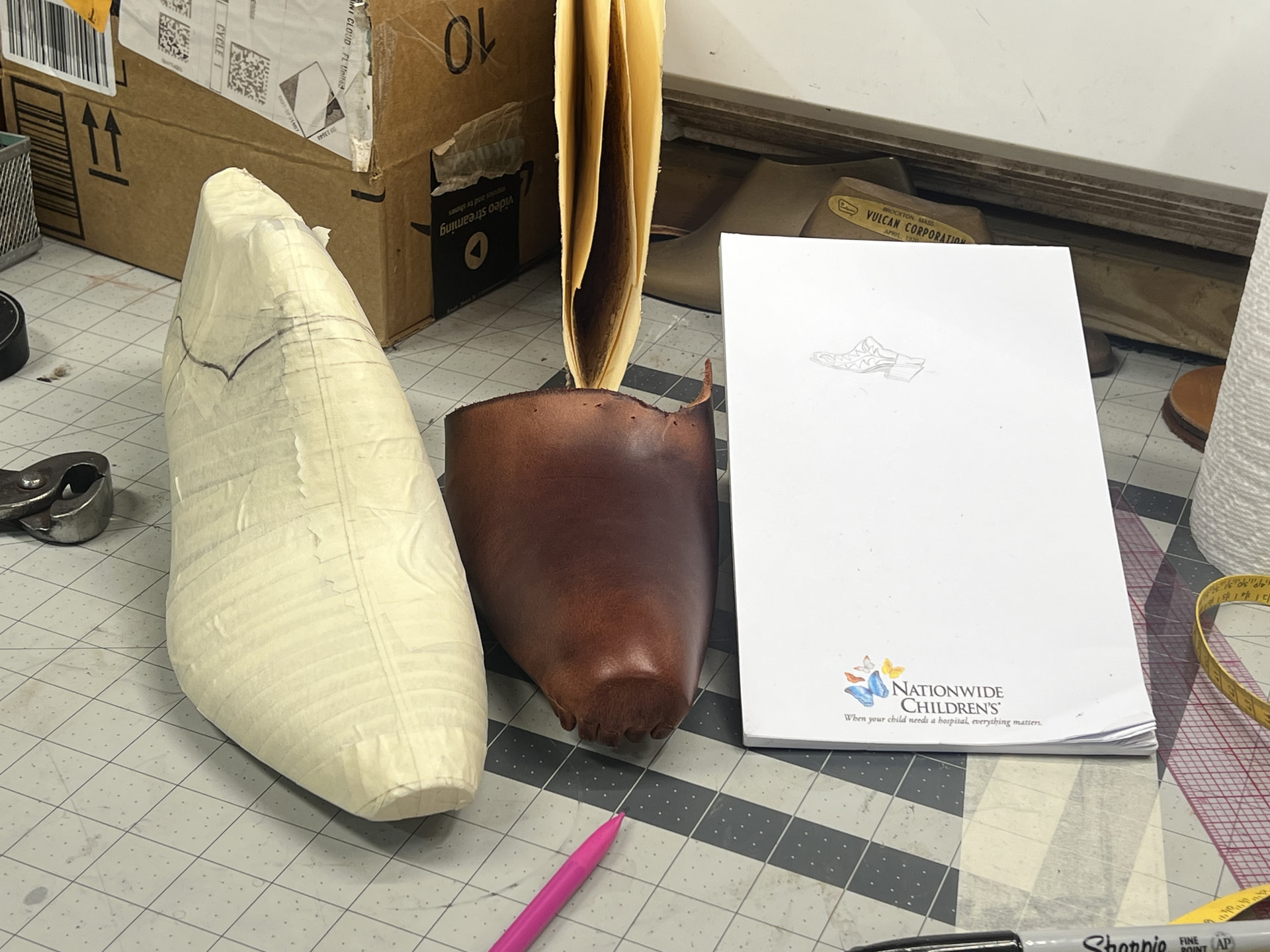
Made a couple sketches first, looking to keep the classic cowboy lines in the instep, shank, toe etc but like a boot that had been cut down to a clog, keeping some of the traditional elements like side seams, top bead, scallops, top line stitching, toe bug etc
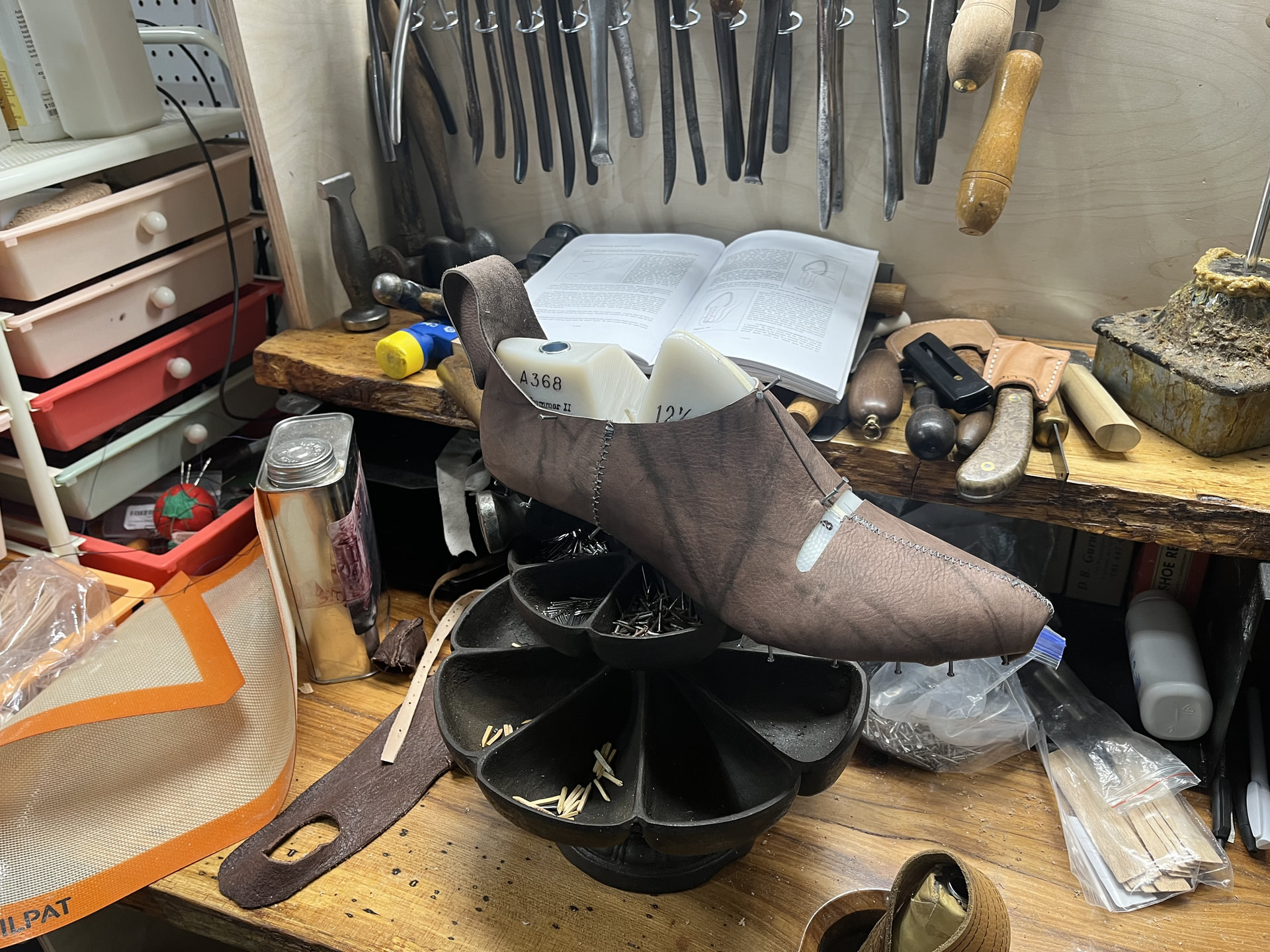
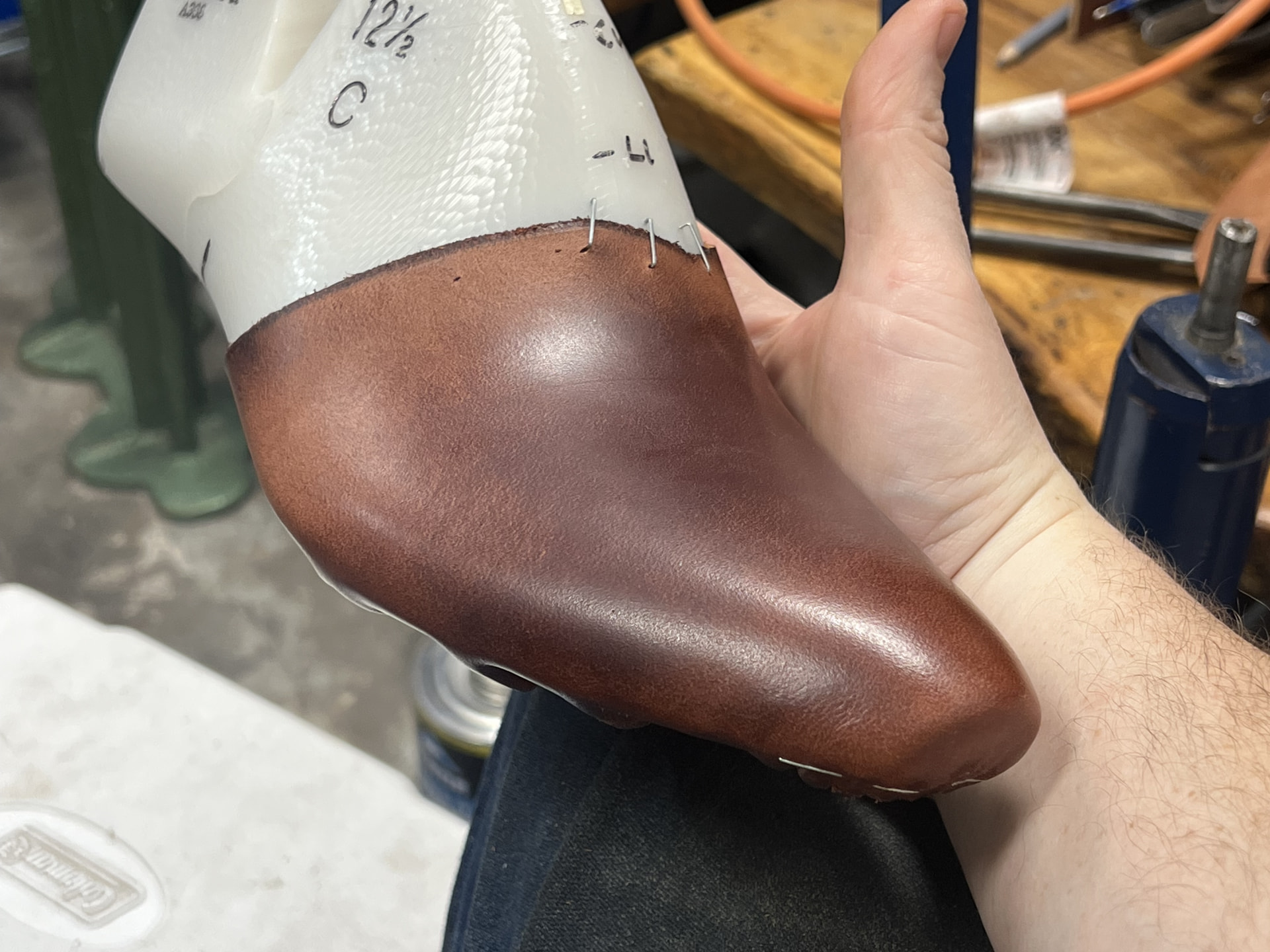
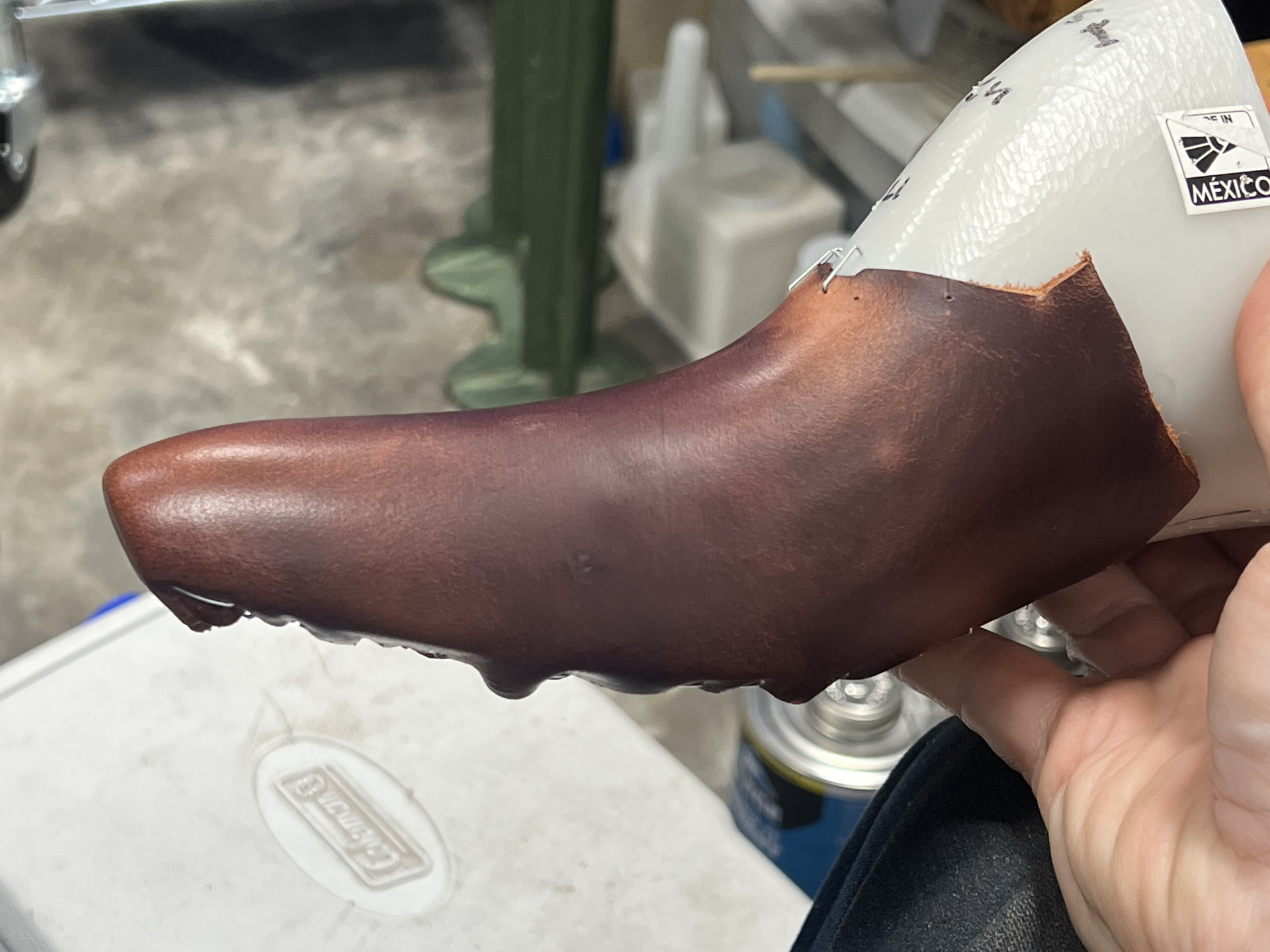
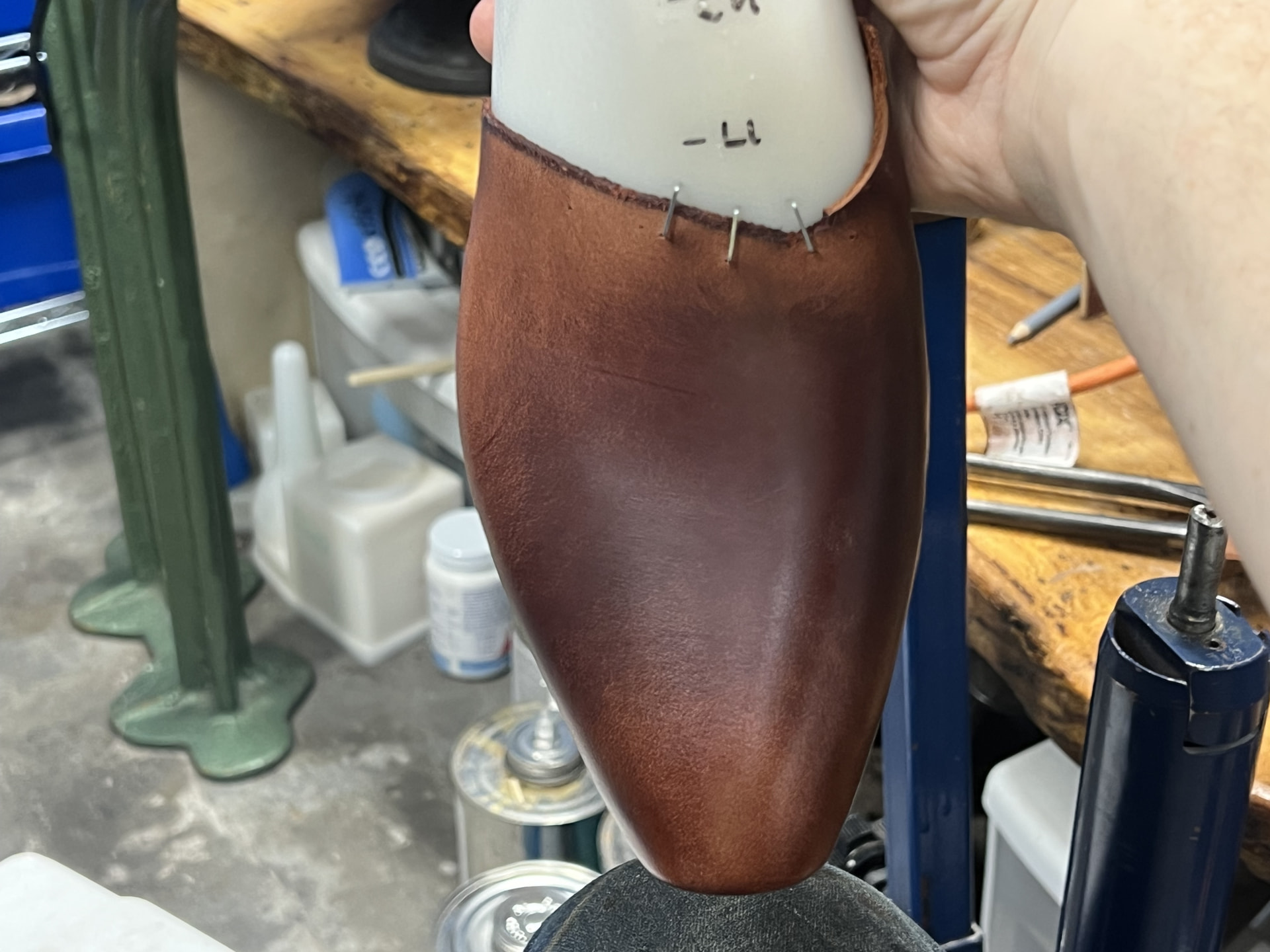
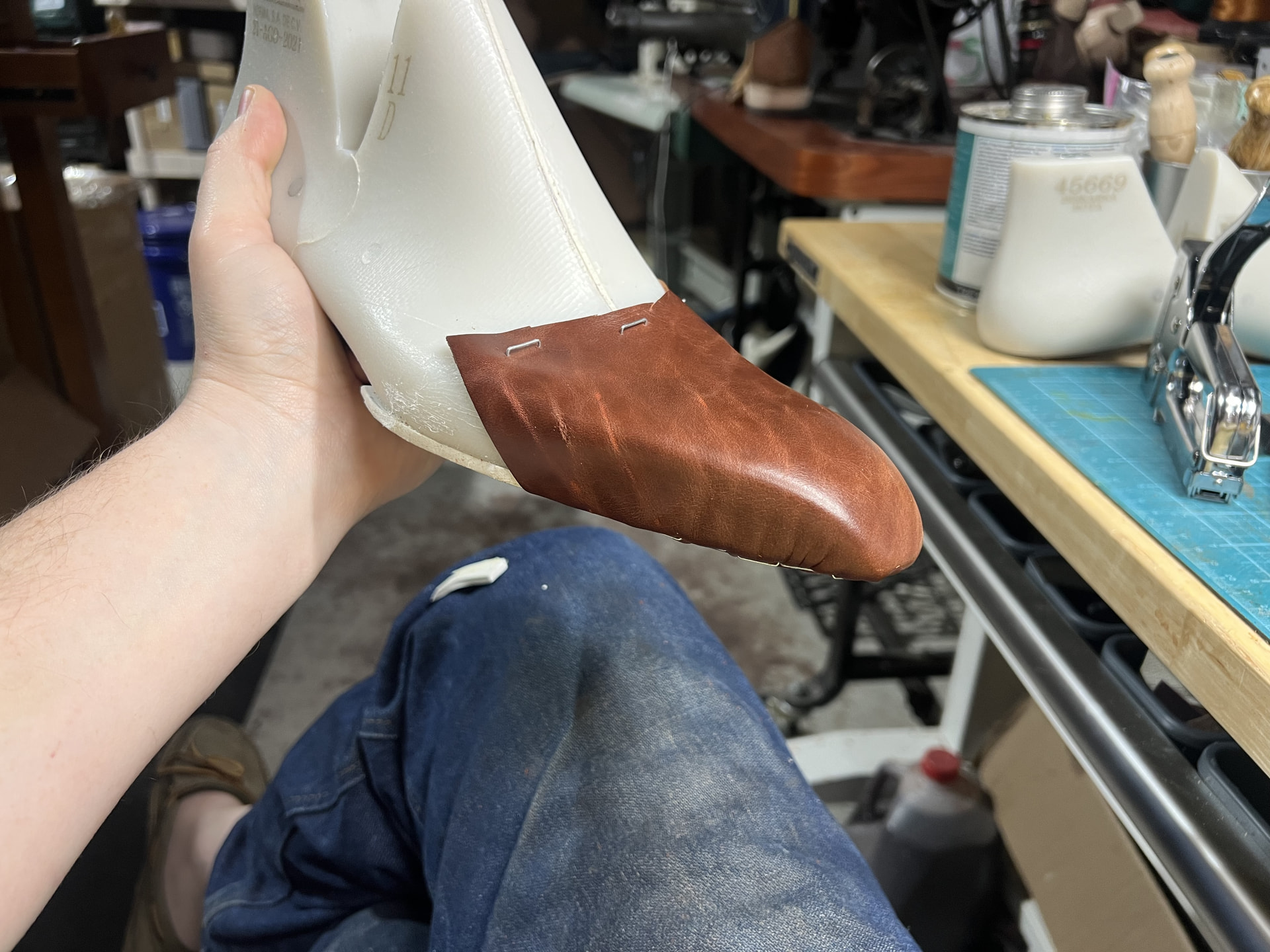
I wanted to borrow the color from the Lama boot so I hunted through the library and landed on some 5oz Horween Roanoke (Essex-style veg tan crust, meaning the cordovan tannin blend used in an accelerated drum tanning process, then hot stuffed and plated like CXL) in the timber colorway, which is a slightly reddish brown. Thought it was pretty nice pulled over the toe even though that’s a little heavier than I planned.
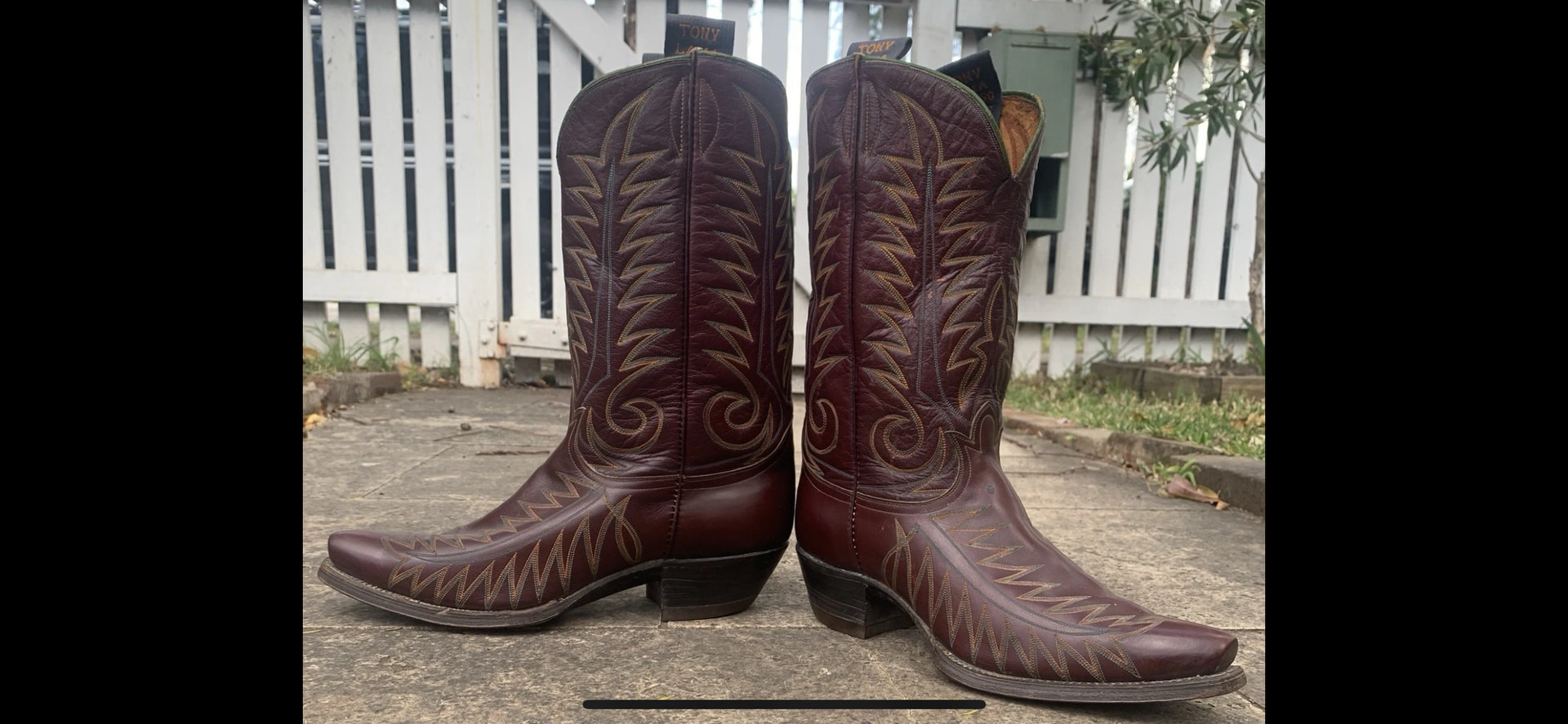
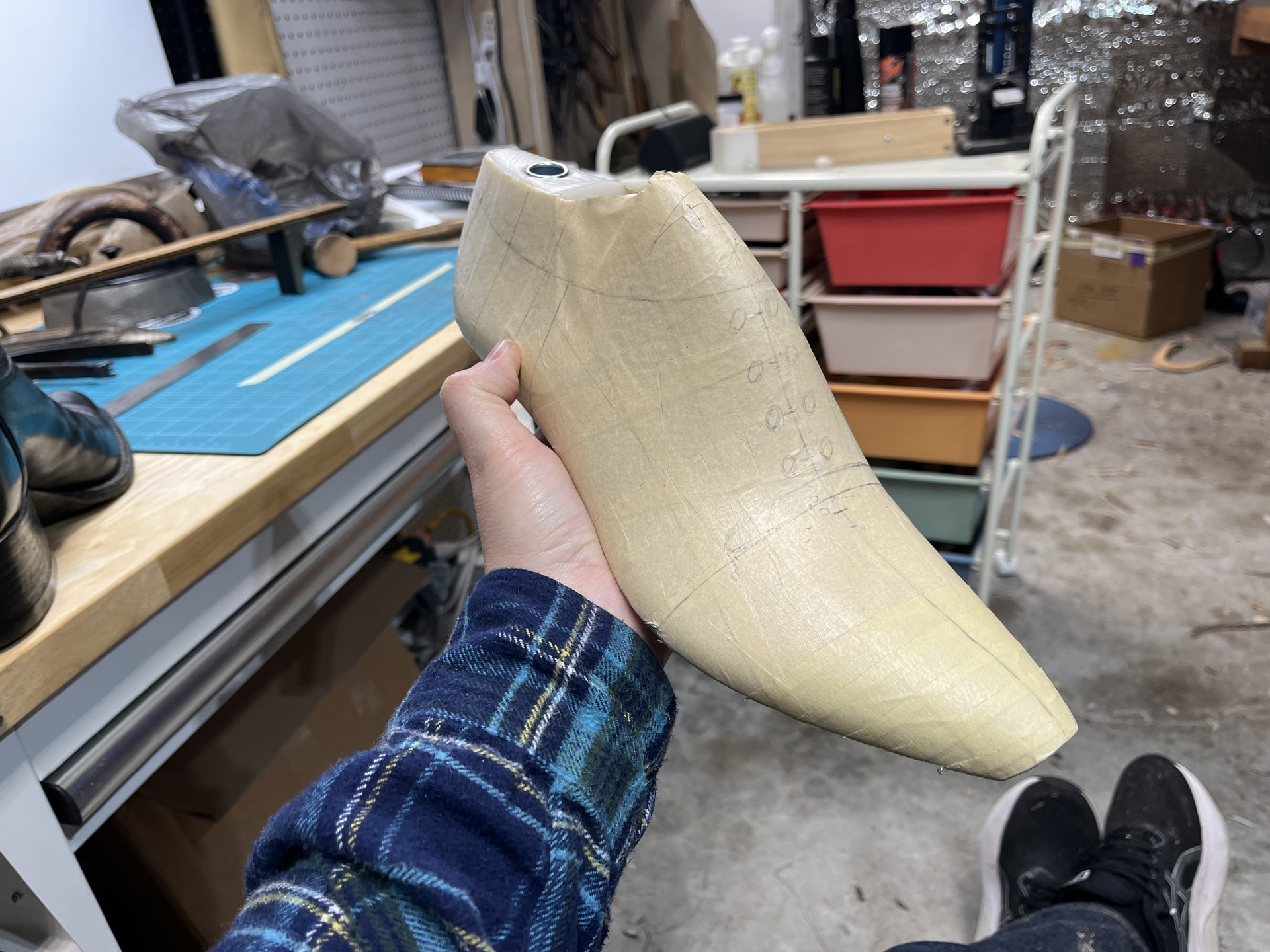
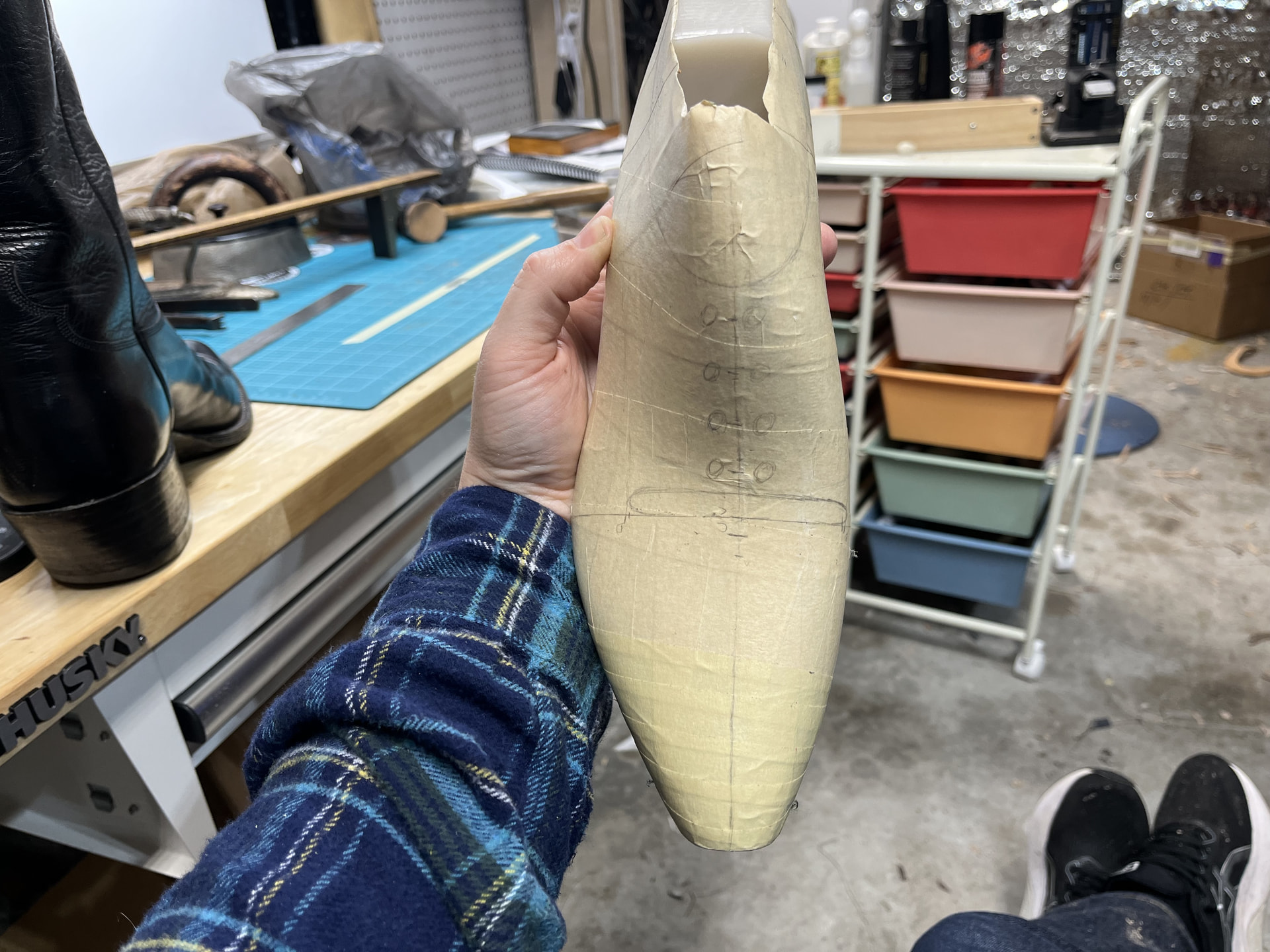
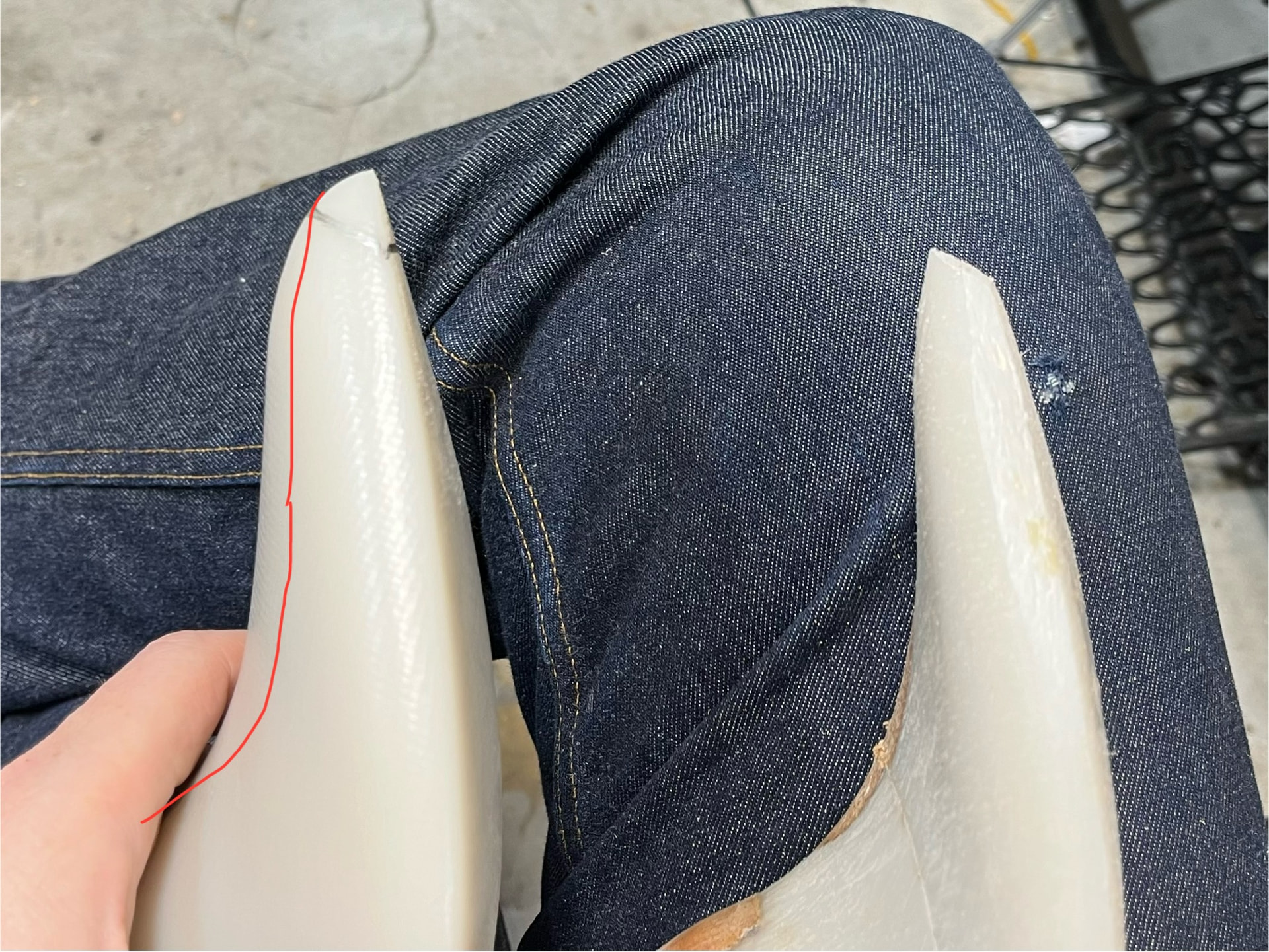
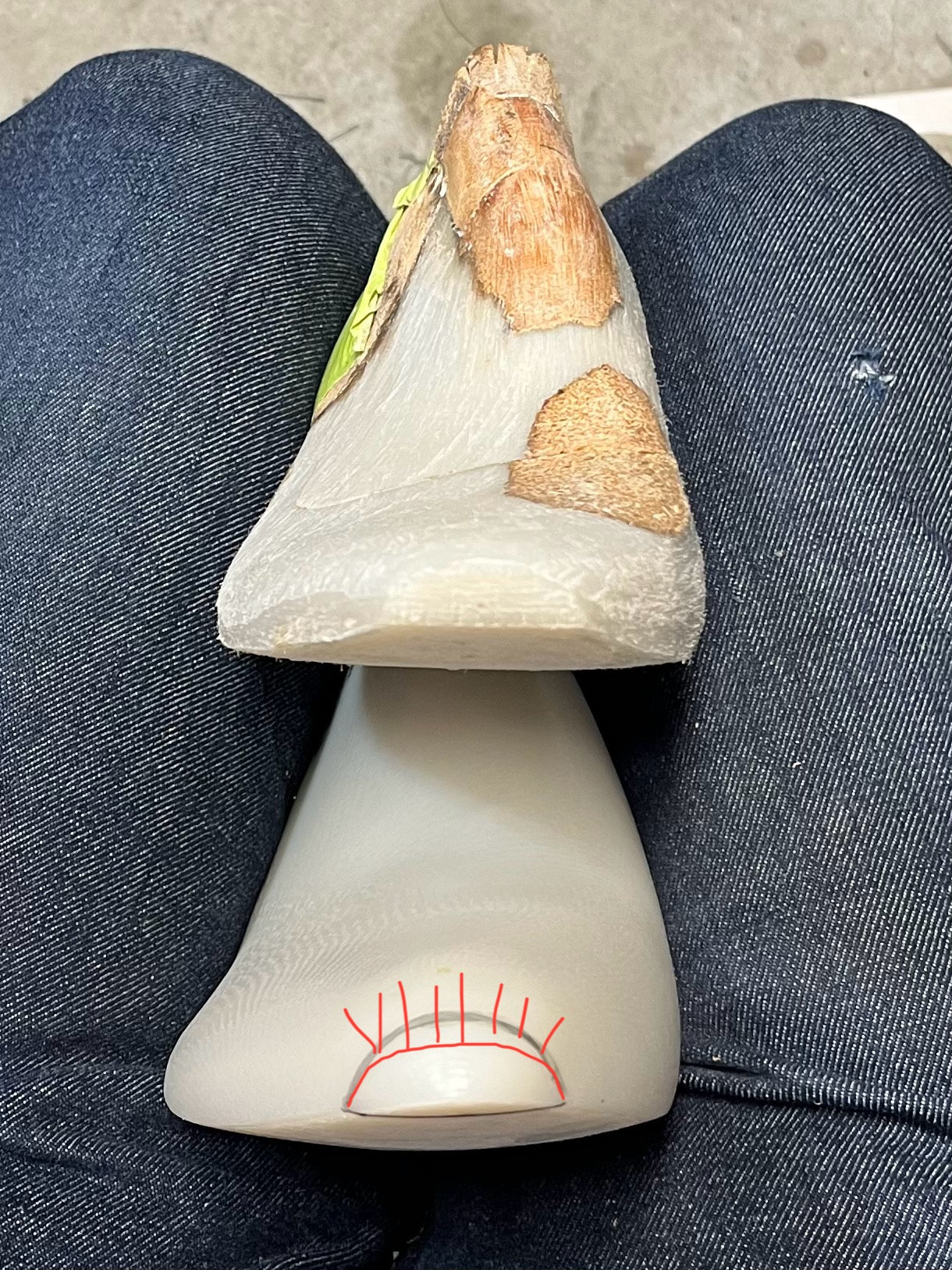
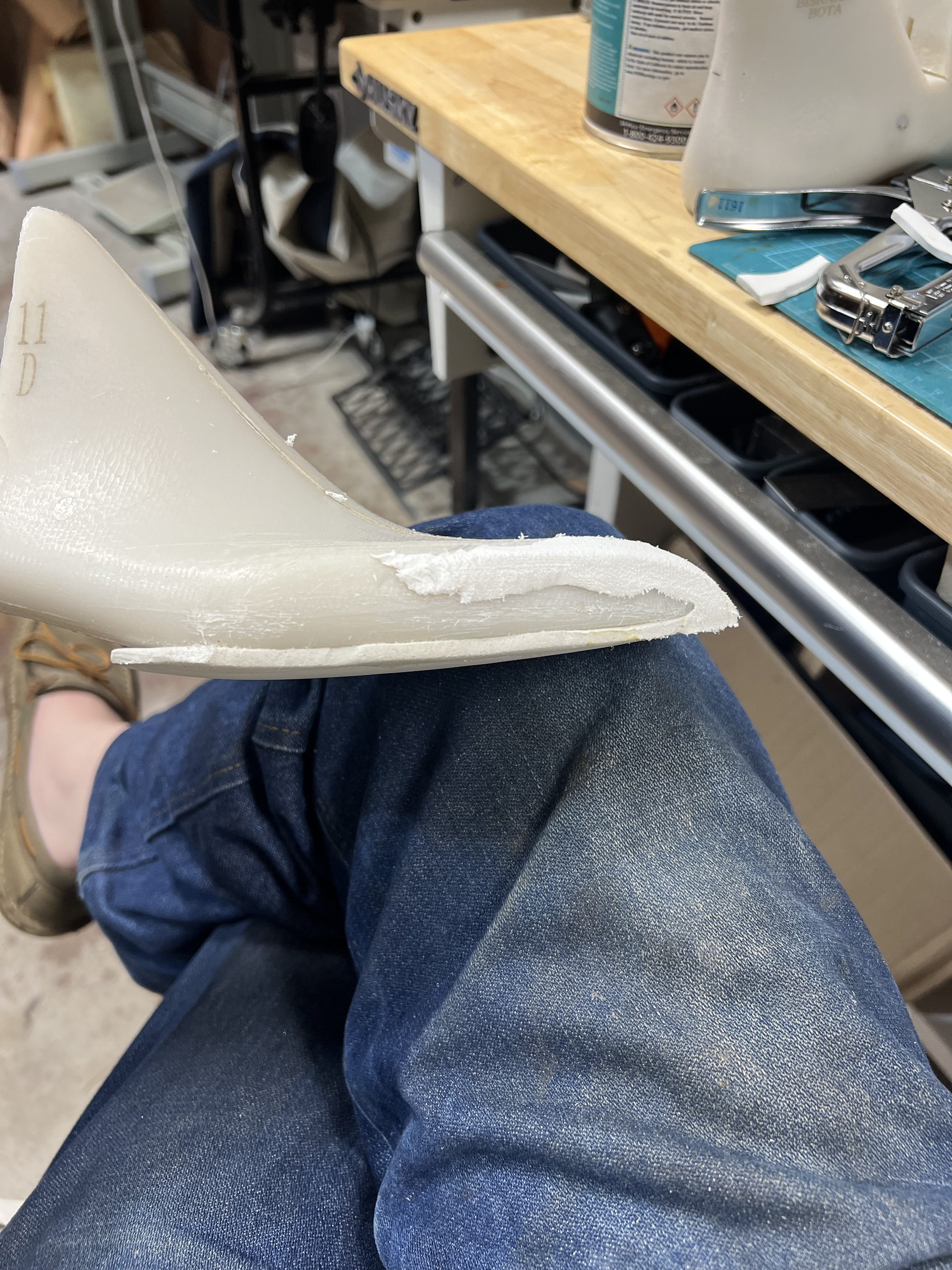
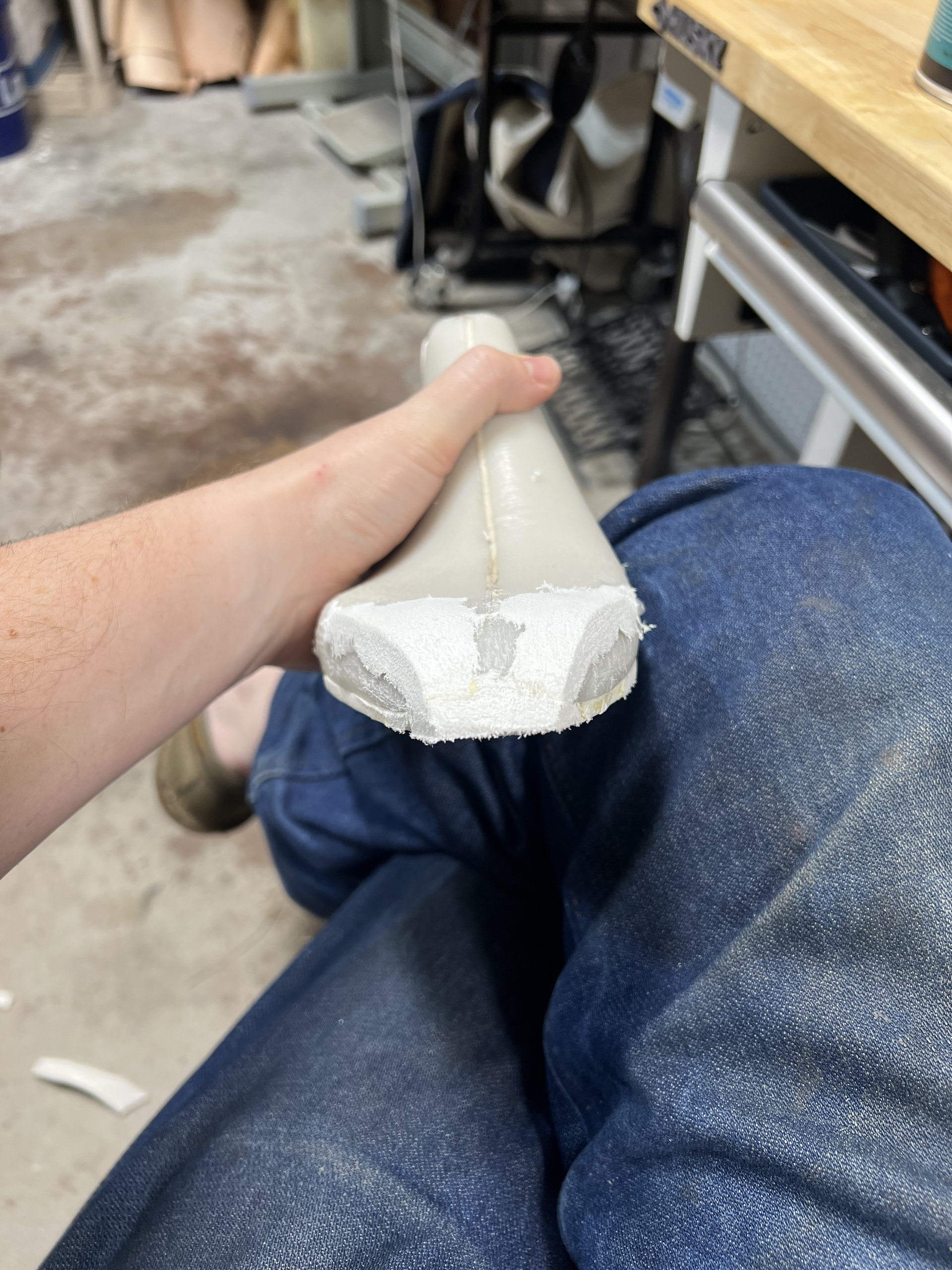
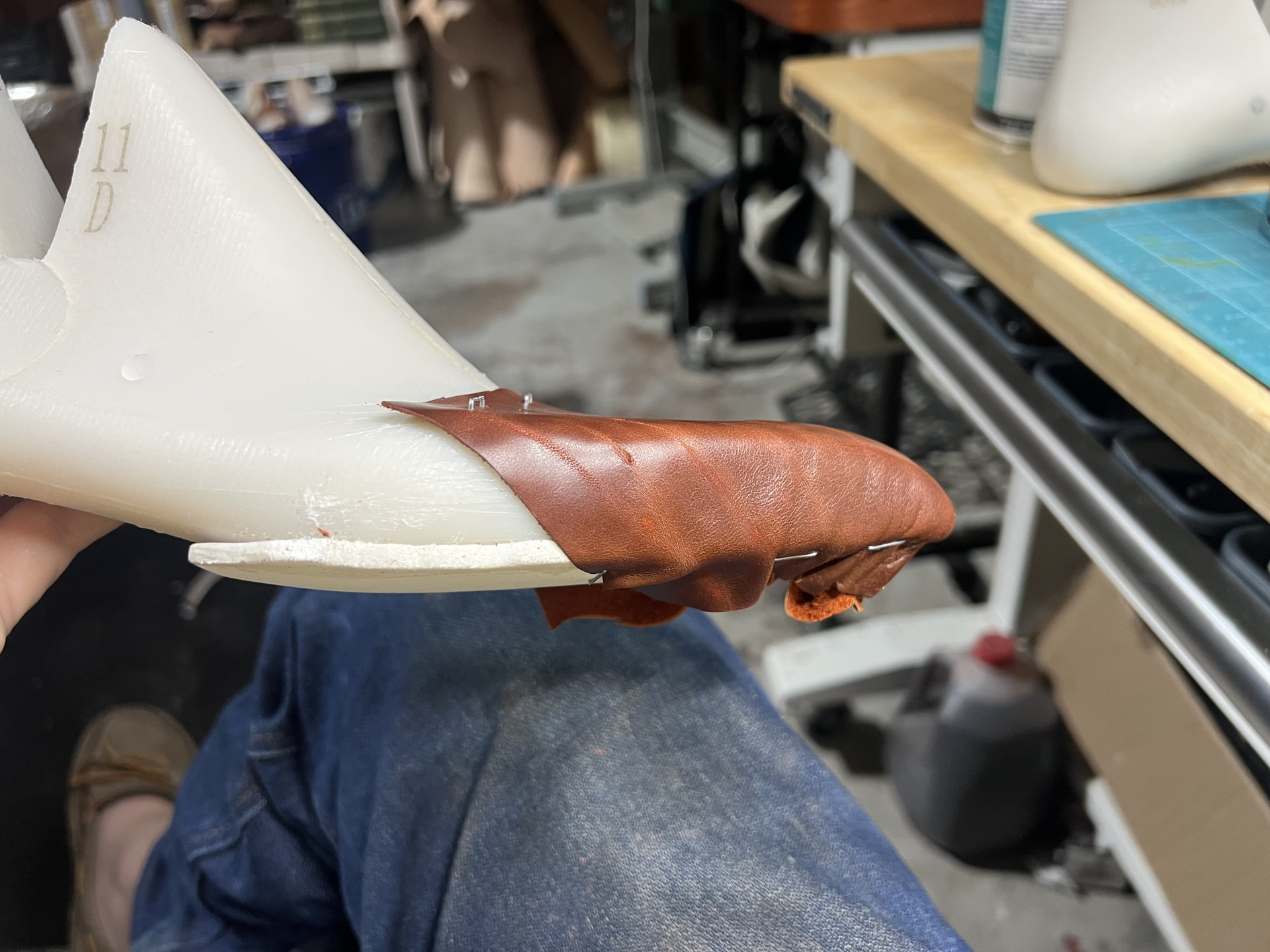
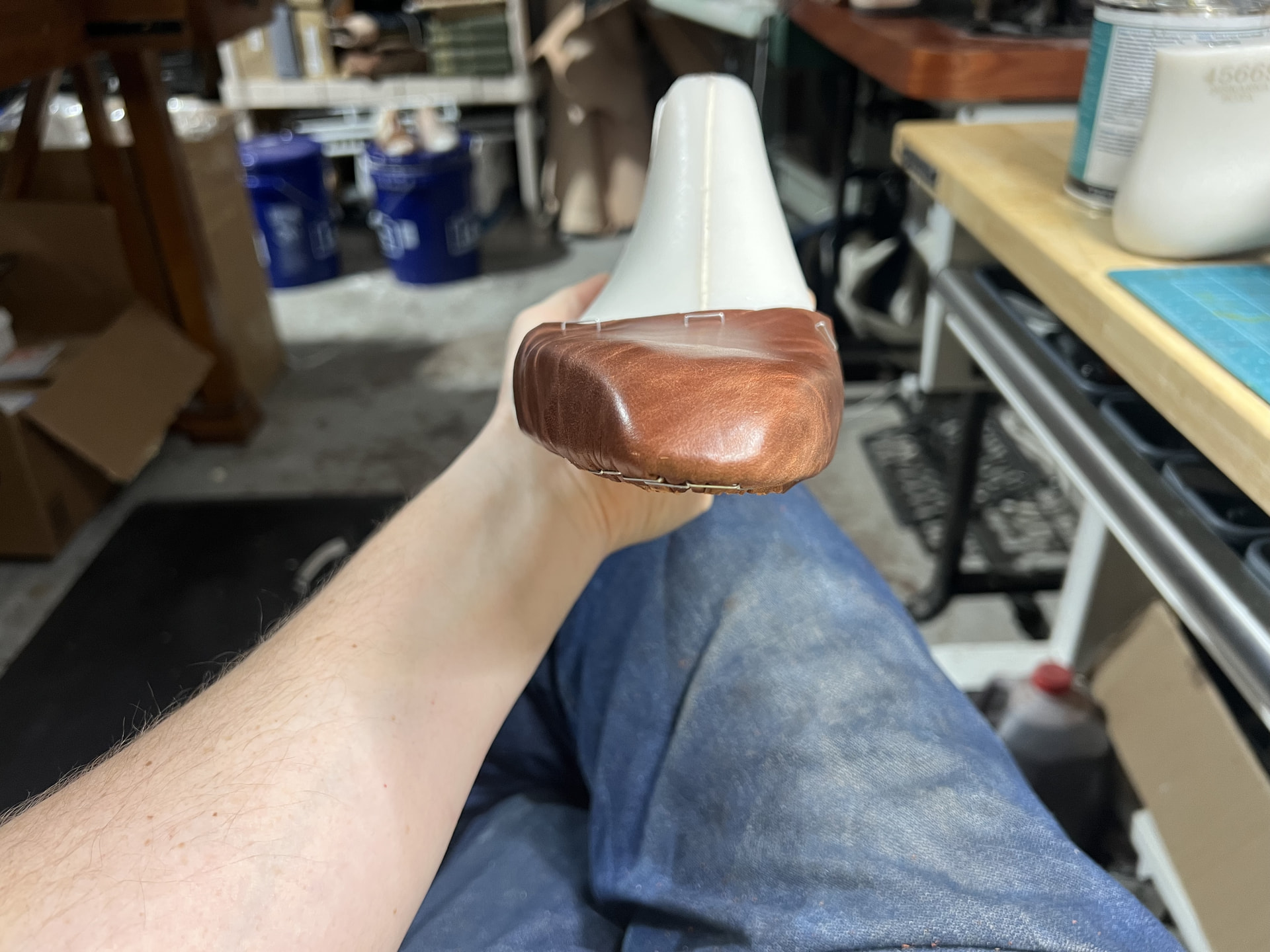
One lesson I keep learning and forgetting or maybe I’m lazy, is to really get the look of the toe you need a little leather tacked under the toe too to show visually what the added thickness of the insole will do to the toe shape. And probably if I’m being proper should just tack another little piece to simulate the welt. Oh well. For the full boots I’d like to come back and lower the whole profile of the toe similar to my Van Curen lasts (the one with the build ups in these pictures).
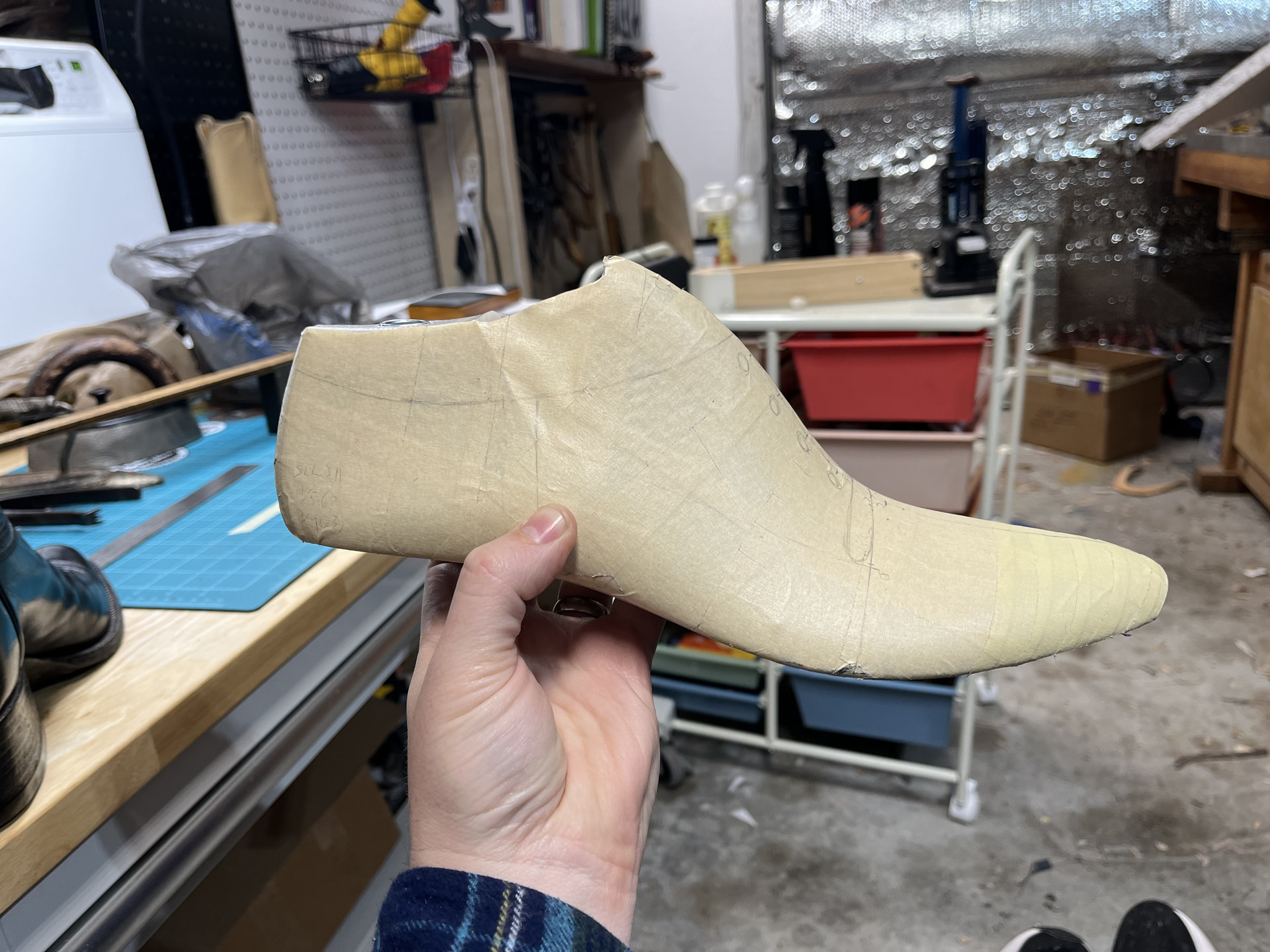
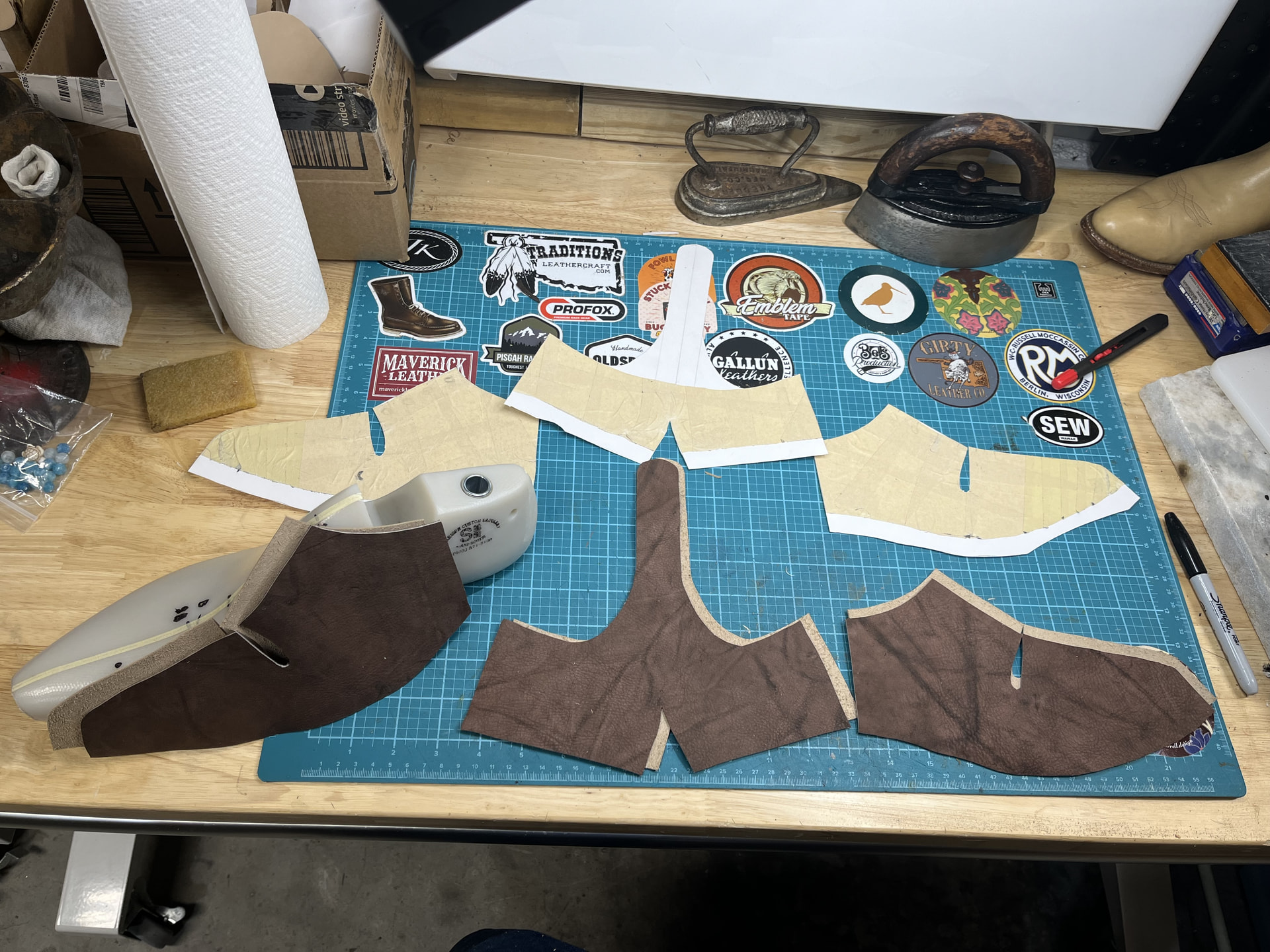
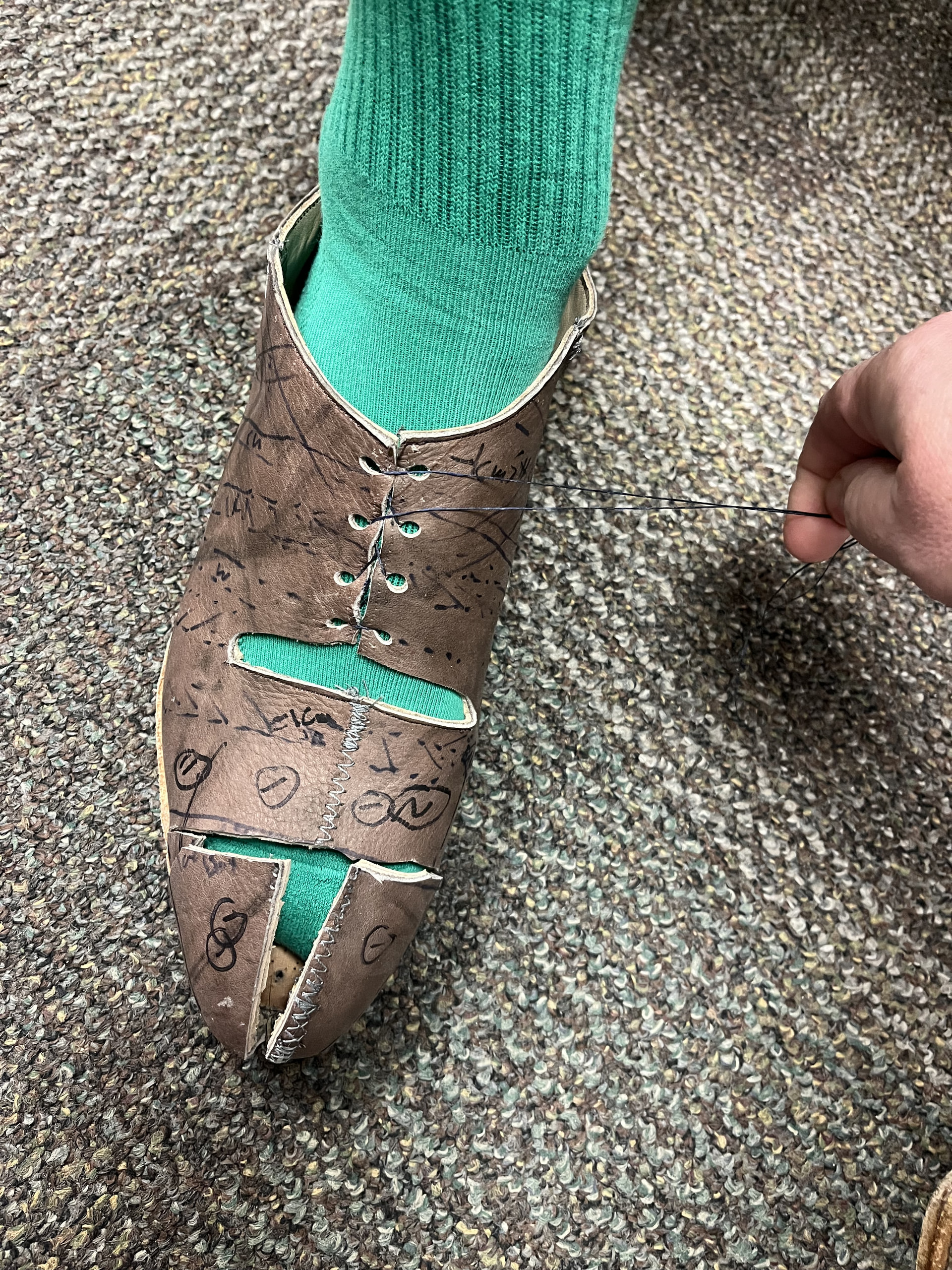
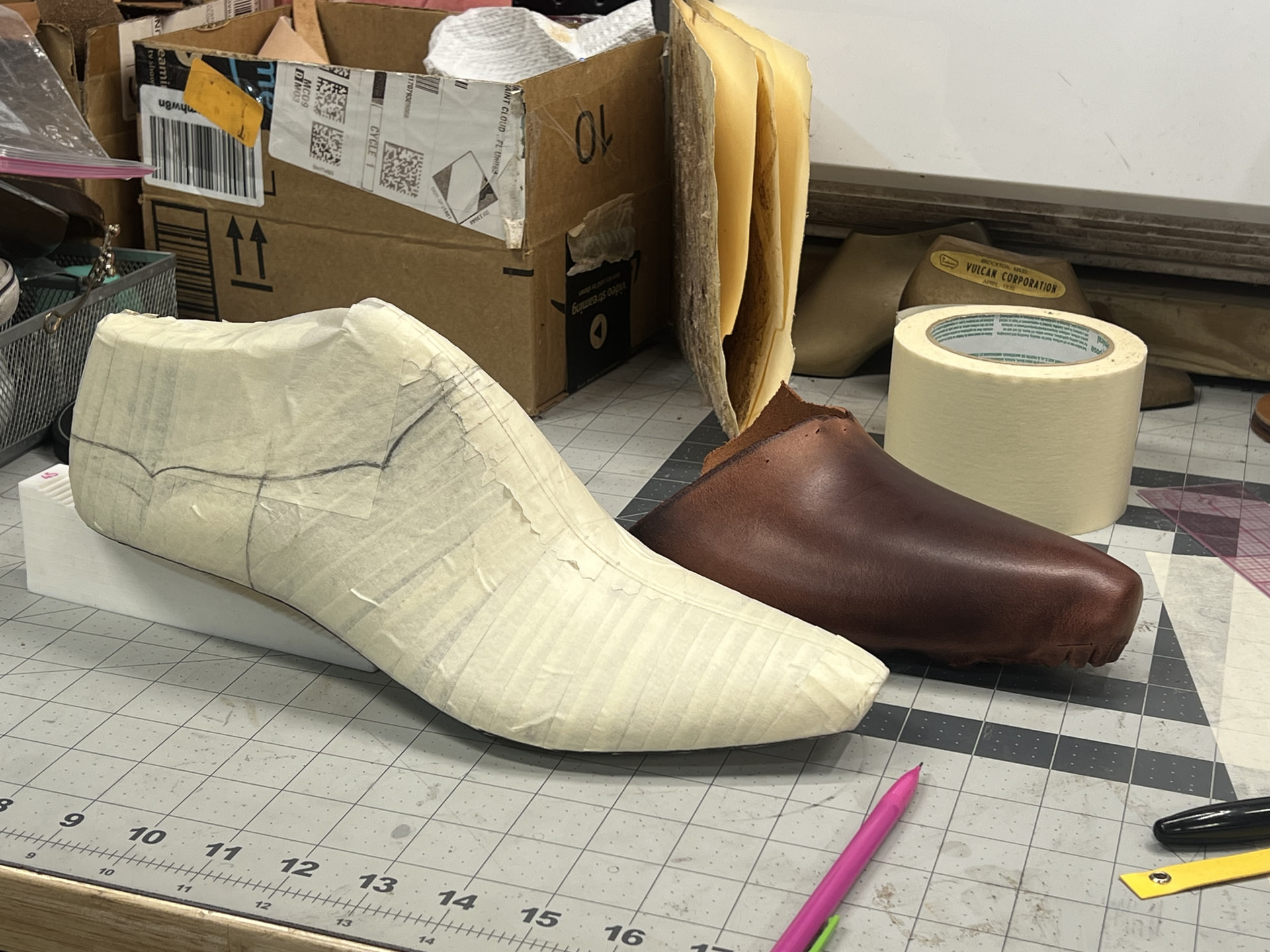
On to patterning, taped the last and worked out some proportions. Put the front of the heel at 1/3 SLL and the side seam about 1/2” behind that. Brought the tongue up about 1” above the instep, high enough to show the curve of the last which worked out about the same as the usual topline of a low shoe about 7-8cm above the vamp point. Then kind of freehand trying to recreate my sketch.
I have thought about putting together a fitter sheet that has a list of all the things I need to measure/note/etc. Adding some process sounds like a good plan.