Actually, it’s celluloid and acetone or at least that’s what I was told. I can probably get an MSDS for it, and I will try to remember to do so.
2 Likes
I got my own order in from Mamoru today, via Buyee, per @lexar4h1’s example. Mostly trimming tools, awls, and finishing irons.
Photos below are on engineering-pad paper, five squares per inch. Questions welcome.
Awl Blades
Square Awl Blade
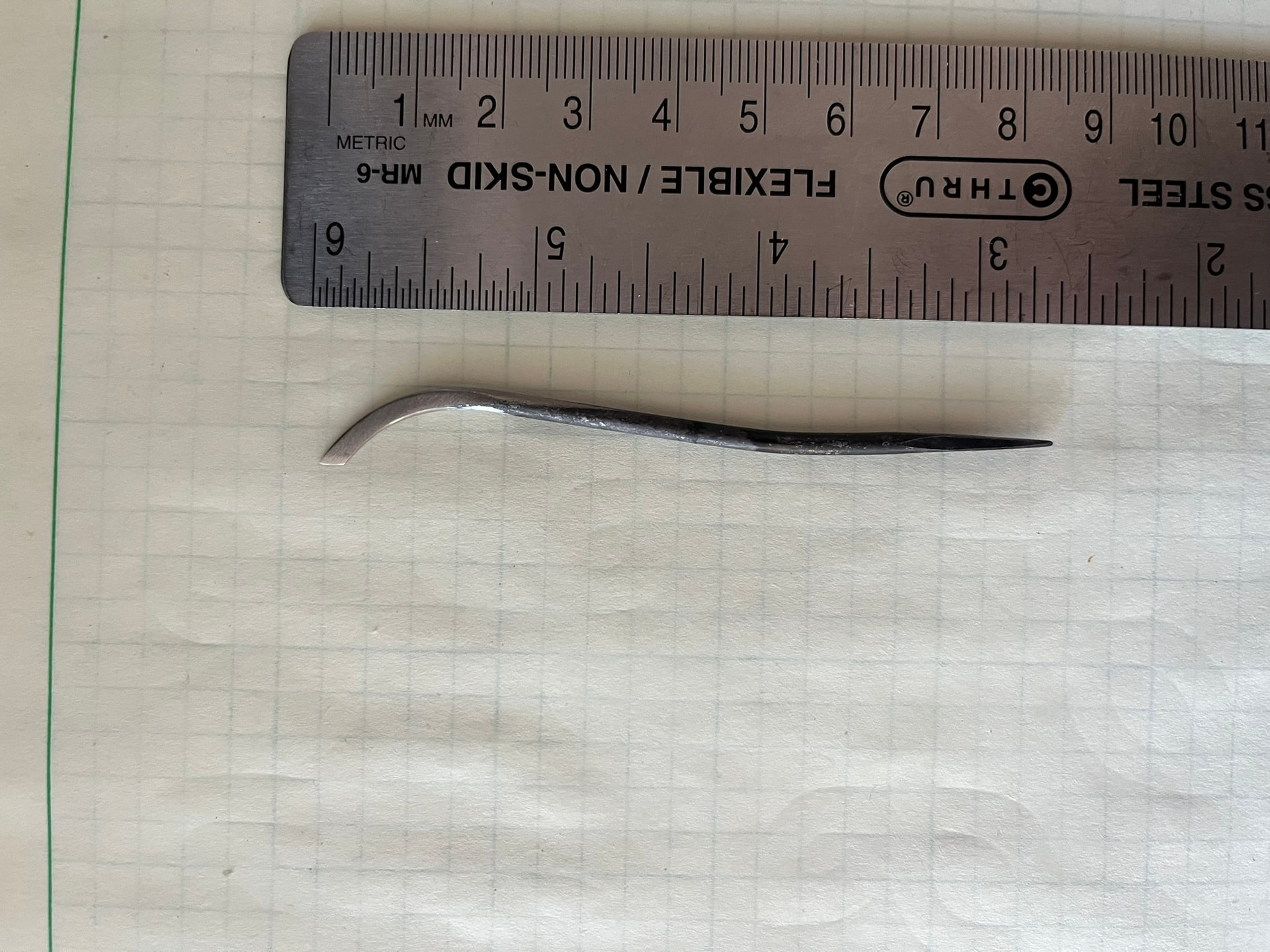
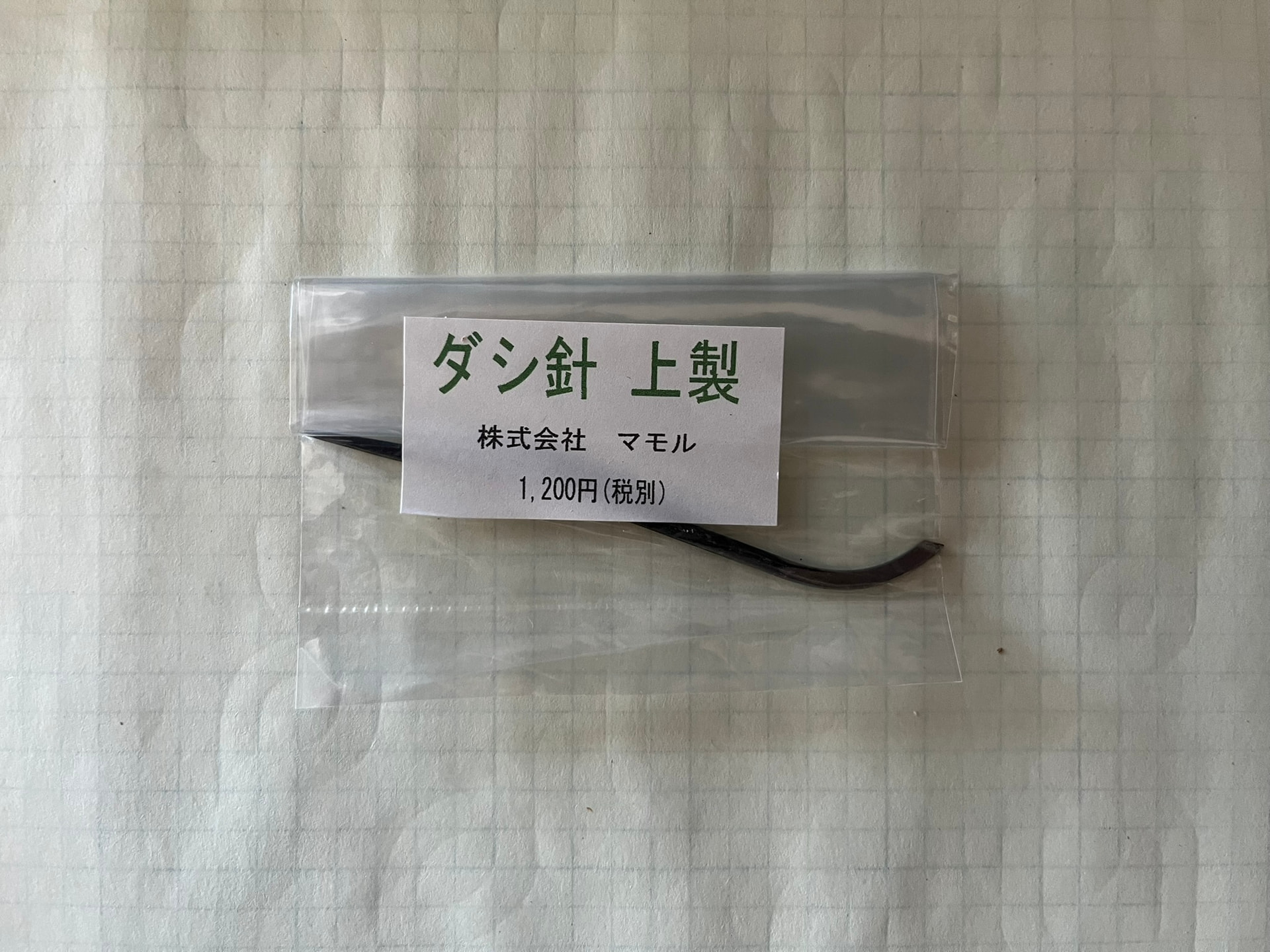
colored-coded green
Google Translate renders the name “Dashi”
Round Stock Thickness: slightly less than 3 mm
Linear Length: 84 mm
Blade Length: roughly 2 mm
Tang: rectangular, tapered
Large Inseaming Blade
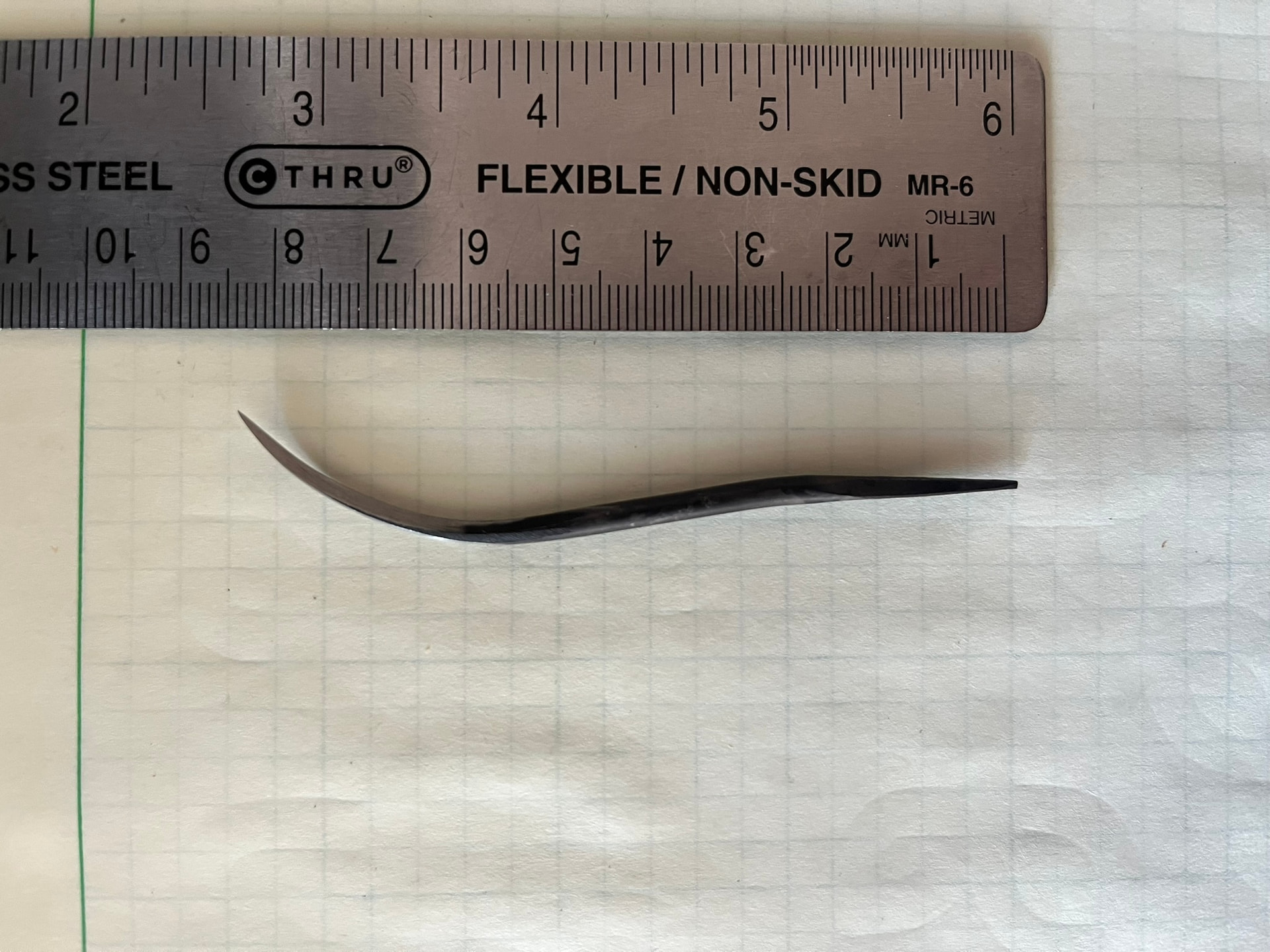
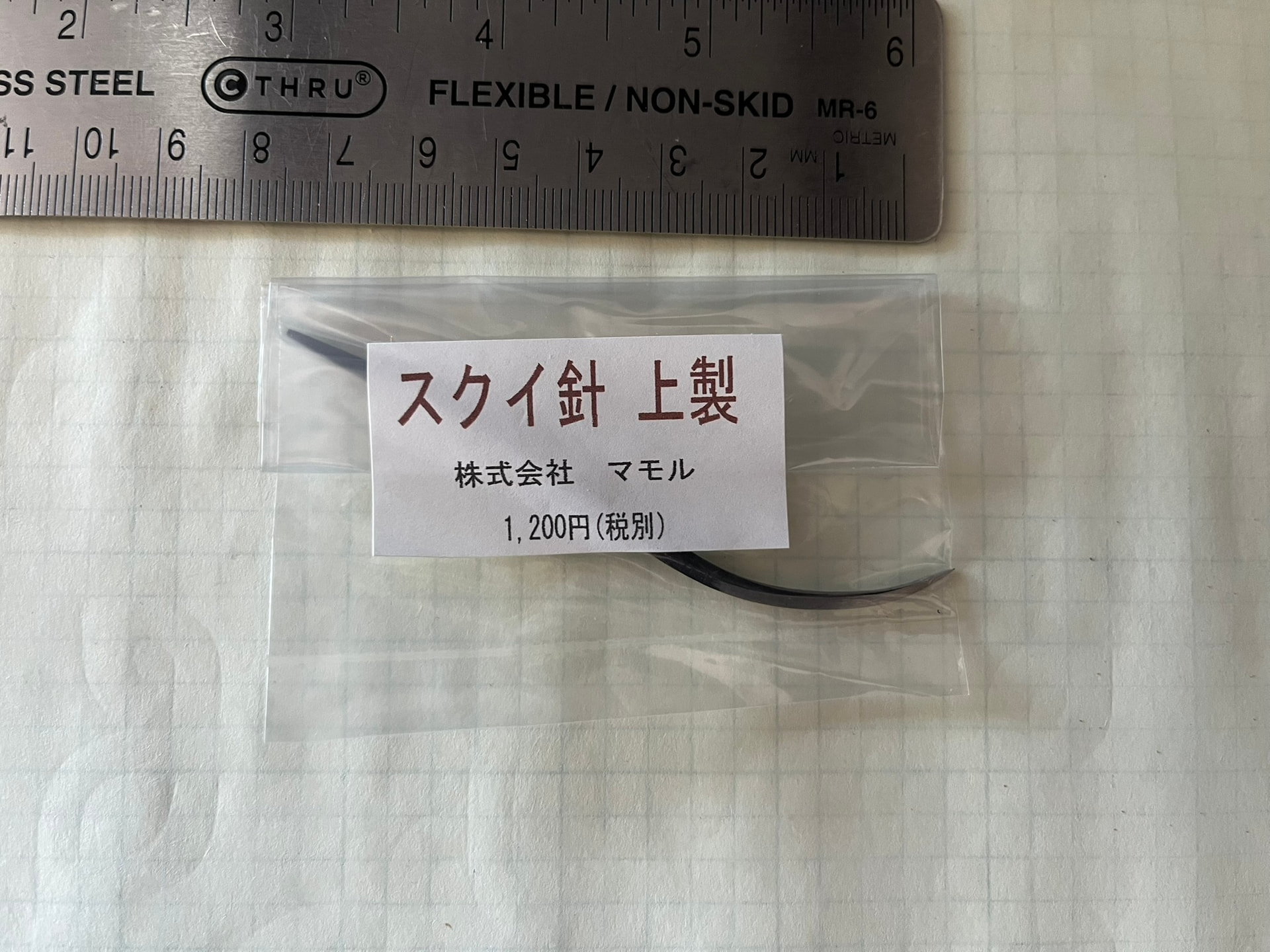
color-coded brown
Google Translate renders the name “Fumas”
Round Stock Thickness slightly more than 3 mm
Linear Length 85 mm
Point: wide diamond
Several makers seem to use these as their primary inseaming/welting awls.
Fine Waist Blade
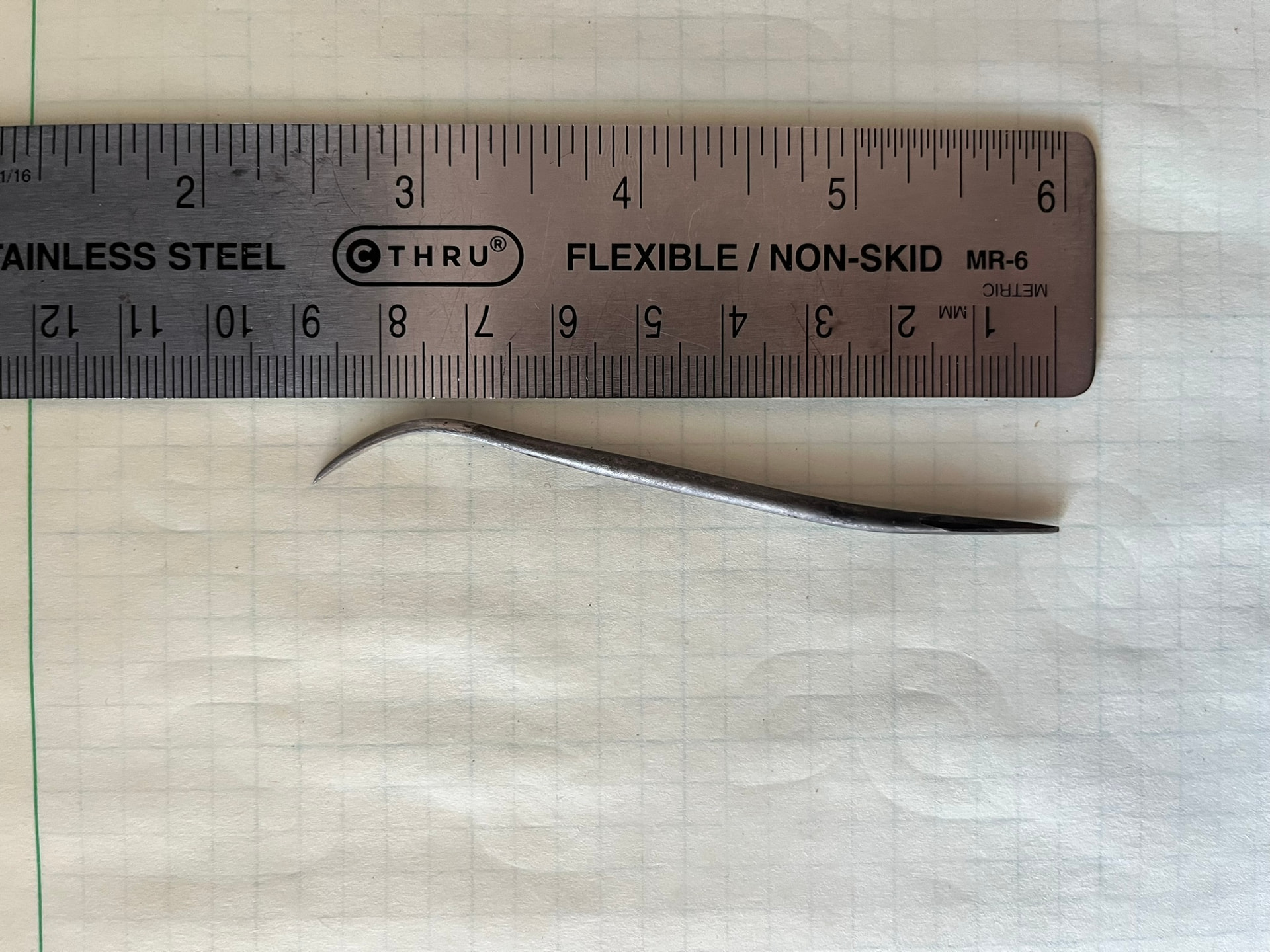
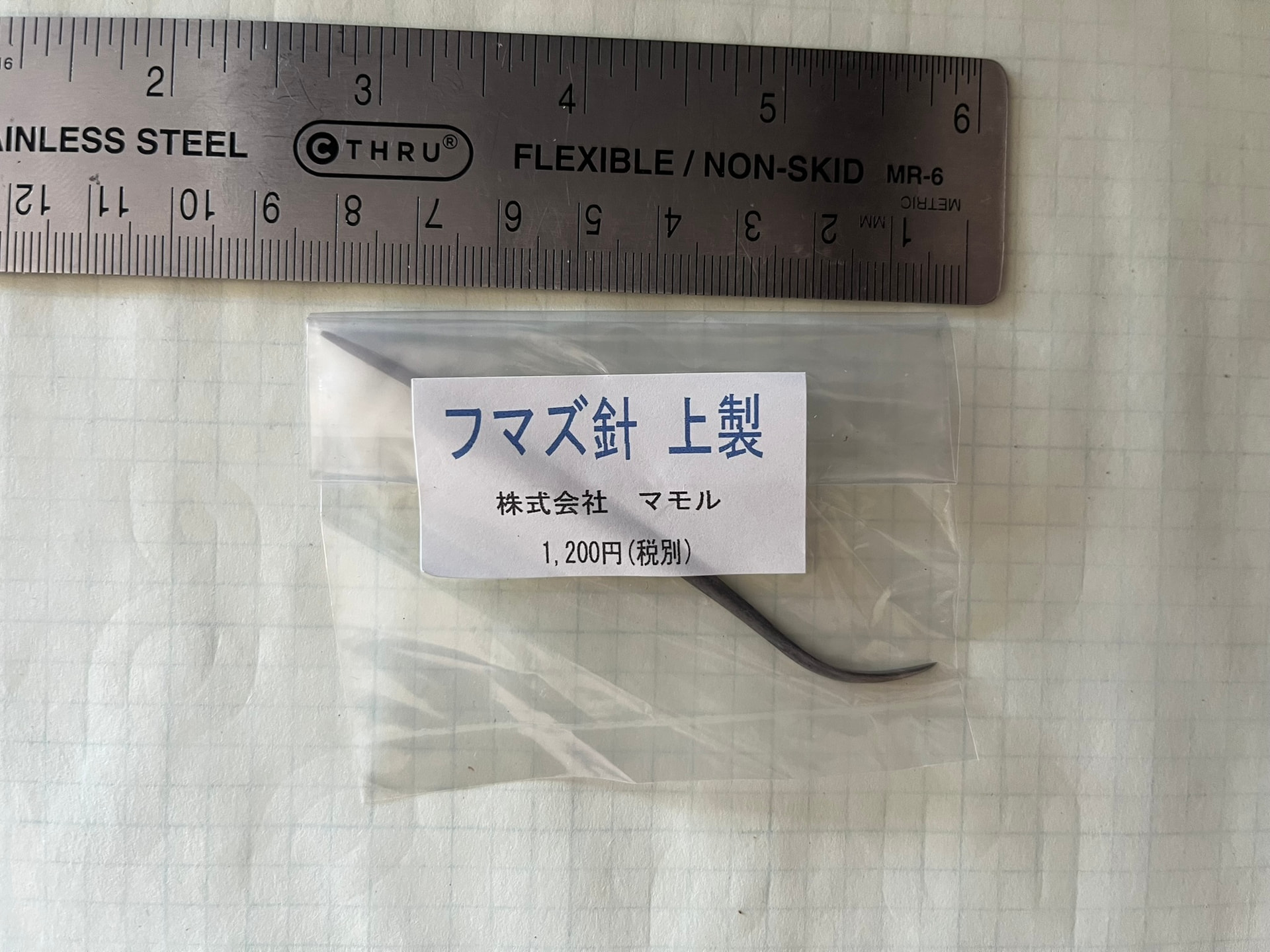
color-coded blue
Google Translate renders the name “Fumas”
Linear Length: 89 mm
Round Stock Thickness: very close to 3 mm exactly
Point: round on bottom, flat on top, tapered to fine point overall
Some makers switch to these to sew blind welts through the waists of dress shoes.
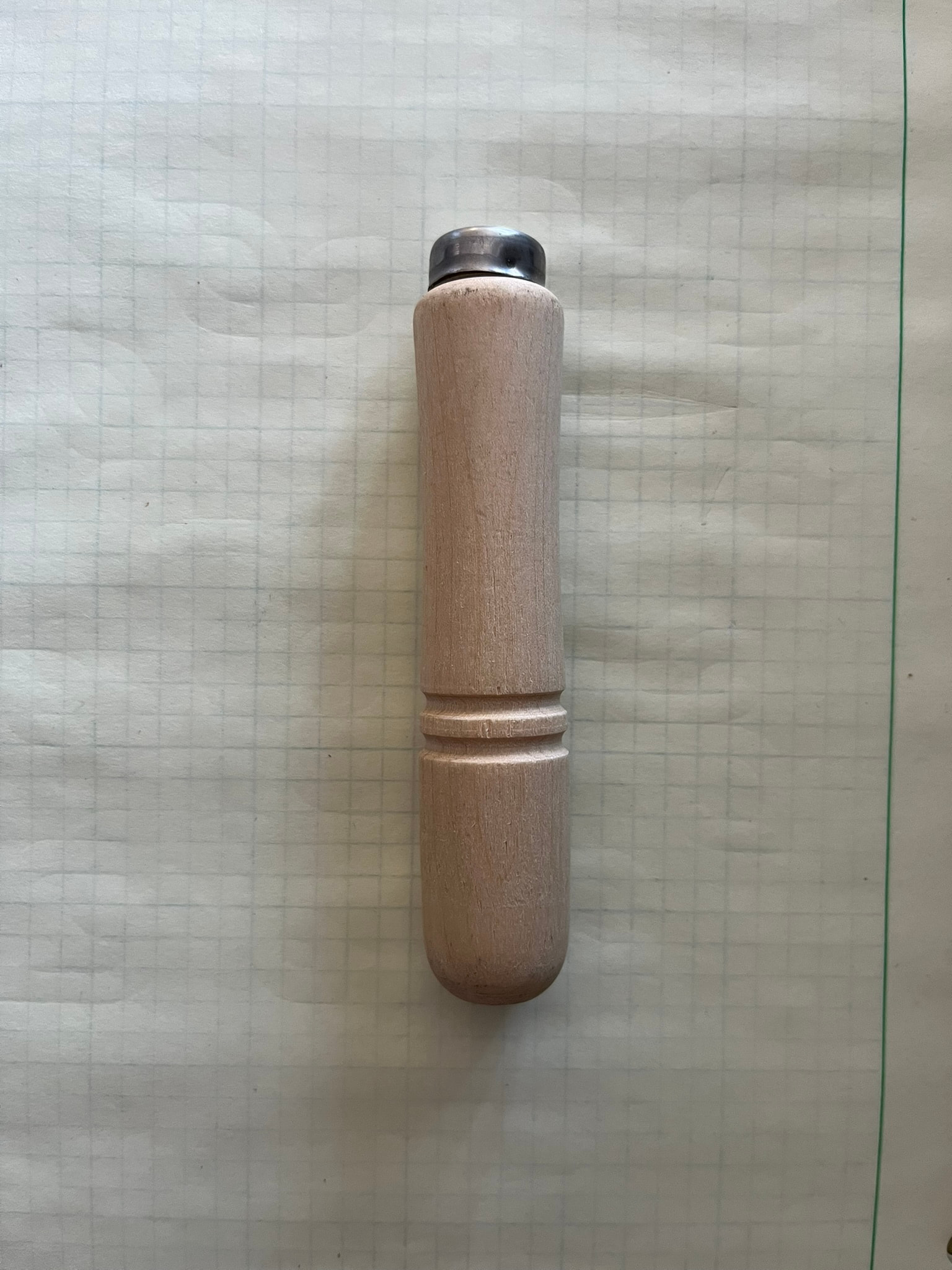
Awl Hafts
Both imported. Wood unfinished. Four-jaw chucks. The chuck units appear to be pinned in place with nails whose heads are visible on the side of the hafts.
Small Haft
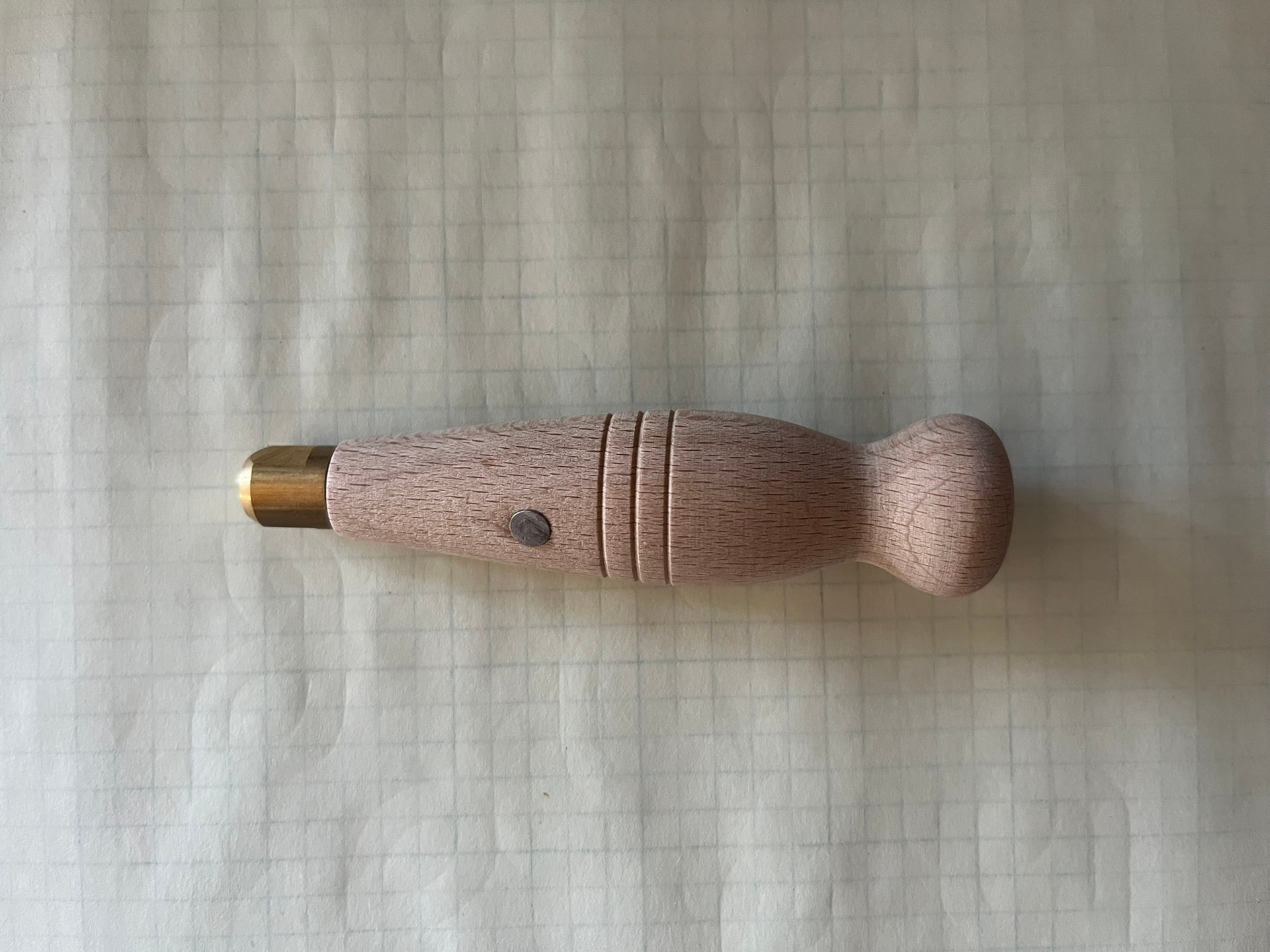
listed for use with square and waist blades
Length from Back of Pommel to Tip of Chuck: 97 mm
Widest Diameter: 23 mm
Gap Between Chuck Jaws: 3 mm open, 2 mm closed
Large Haft
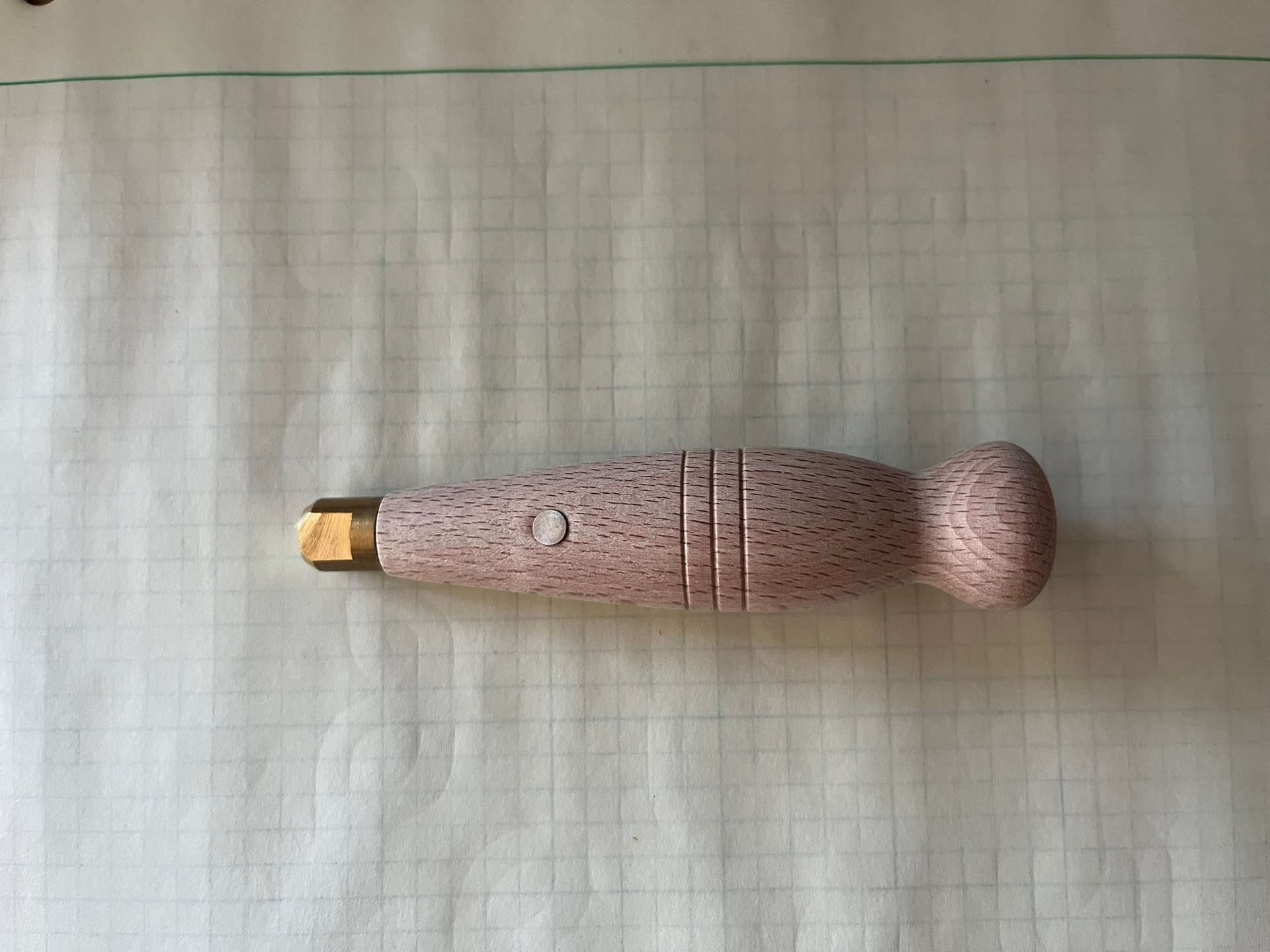
listed for use with large inseaming blades
Length from Back of Pommel to Tip of Chuck: 117 mm
Widest Diameter: 24 mm
Chuck appears identical to small haft.
1 Like
Trimmers
I ordered one of each of the edge trimmers, hafts included.
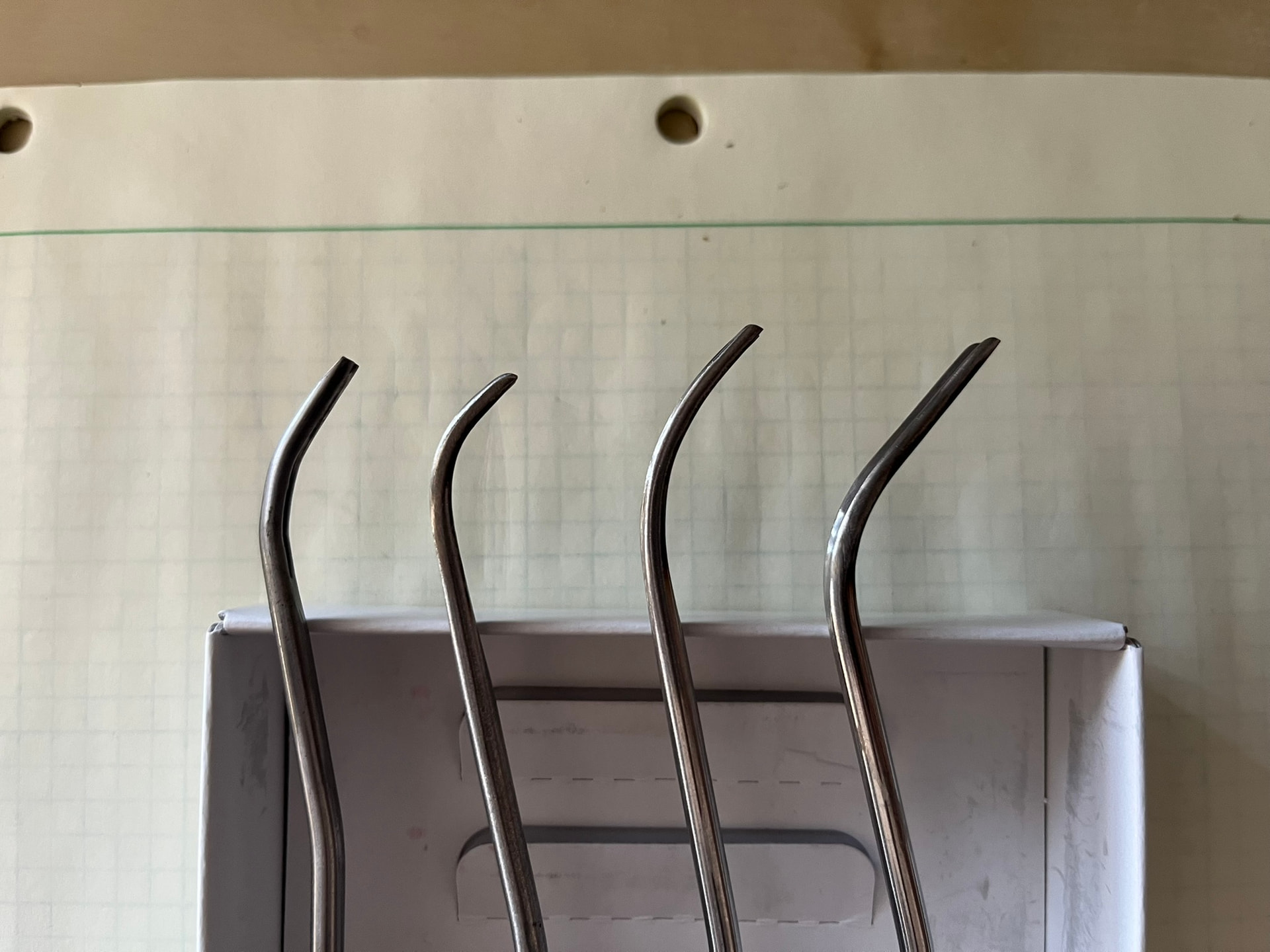
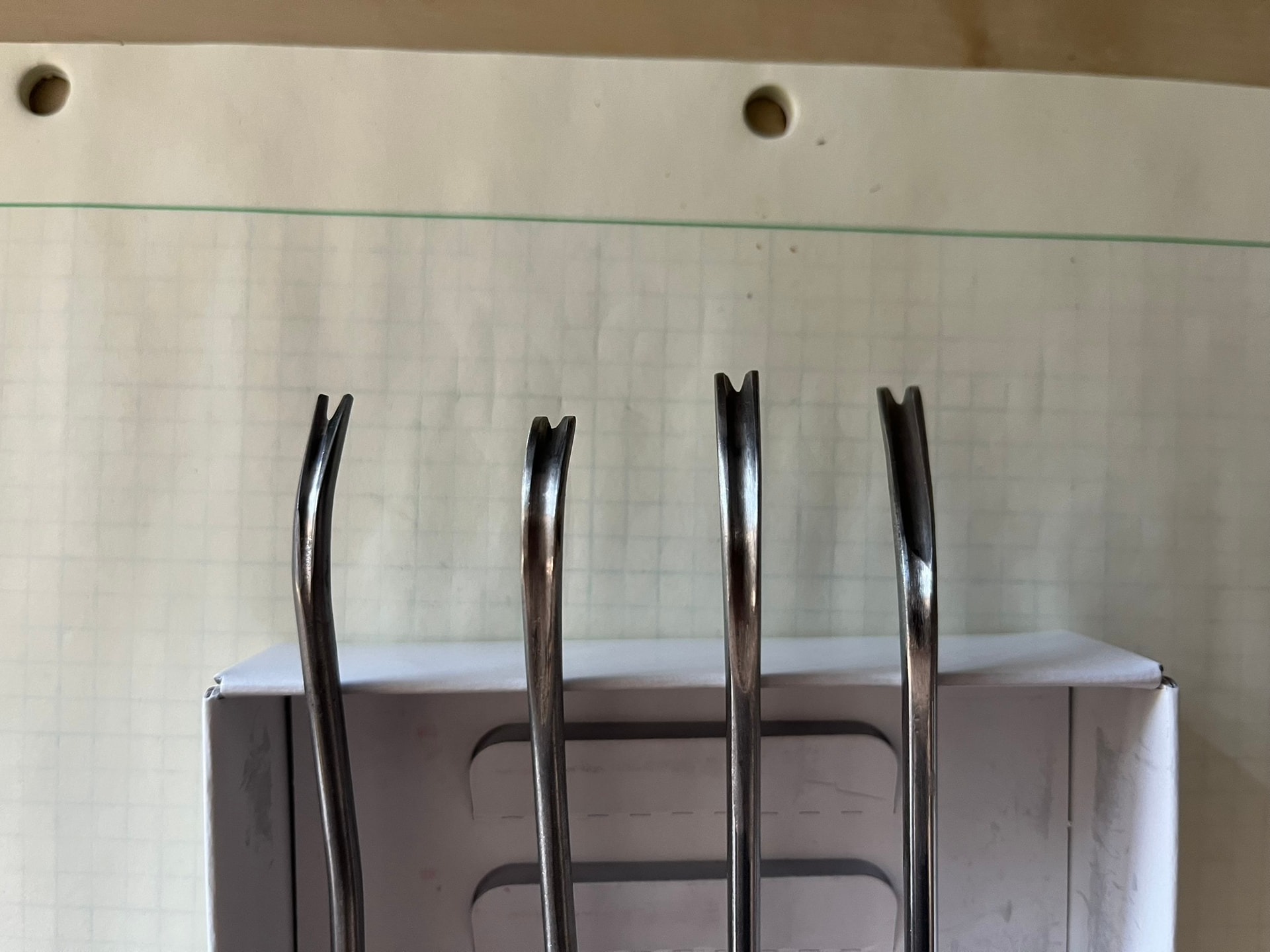
Men’s
市切り 紳士用 上製 (柄付き)
Linear Length 134 mm
Tape Length Following Curves 140 mm
Round Stock Diameter 4 mm
Width Across Tips of Tines roughly 5.75 mm
Women’s #1
Linear Length 140 mm
Tape Length Following Curves 145 mm
Round Stock Diameter 4 mm
Width Across Tips of Tines roughly 5.5 mm
Women’s #2
Linear Length 125 mm
Tape Length Following Curves 130 mm
This trimmer does not have a tapered tang. It has two tabs or ears sticking out to the sides of the shaft about 20 mm up from the end.
Round Stock Diameter 4 mm
Width Across Tines roughly 4 mm
This edger came with a longer, wider haft.
Bottoming
市切り 底付け用 上製 (柄付き)
Linear Length 120 mm
Curve is sharper. Shorter after the curve.
Tape Length Following Curves 125 mm
Round Stock Diameter 4 mm
Width Across Tines roughly 5 mm
Takeaways
They are indeed different shapes, though they all seem to be made from the same 4 mm diameter music wire.
The one noted for bottoming has a sharper curve, and its cutting point is much closer to the curve than the others.
The two women’s trimmers are indeed smaller than the men’s one. One of the women’s trimmer is much smaller. But the larger women’s and men’s trimmers are very close, so close I wonder if it’s worth owning both of them.
I have yet to go out and firmly seat the blades in the hafts. They seem serviceable. They’re very light, unfinished, and a bit hasty feeling overall. The thin metal ferrule caps don’t all sit flush or level with the ends.
Update: I tapped the blades into their hafts. No splitting, misaligned holes, or other issues to report!
Buying Mistake: Throwing in a couple rolls of topline tape.
I added a couple rolls of Ideal topline tape to my order from Mamoru, since I’d been meaning to get some and saw they had them at a good price. I didn’t think about how differently wide, flat rolls of tape would be from the rest of what I ordered.
Of course, the good people at Mamoru had to use a slightly bigger box to fit the tape next to the tools. I’m sure I paid for that on shipping charges, once to ship within Japan, then again to export to California.
To be clear, I think Mamoru did a great job of packing overall. Nearly all the tools came in low, flat boxes 25 by 12 by 3 cm. Awl blades came individually bagged. Hafts were laid neatly in rows. Nearly everything was labeled. Any mistake was mine.
Glad you were able to put your order in! I found a blog with some more information on the smaller inseaming awl.
It’s normally used to outsole stitch the arch area. Not sure if it’s a mistranslation but the article says it is also used for other parts of the shoe (maybe skin stitching).
I found an old blog post that mentioned there being a period where domestic awls weren’t available because the blacksmith that made them fell ill. He says a new smith took over and they were available again. Not sure if that information applies to the awls currently sold by Mamoru but I figured I’d share it.
すくい針 | 【オーダー靴のShoe Republic・シューリパブリック】
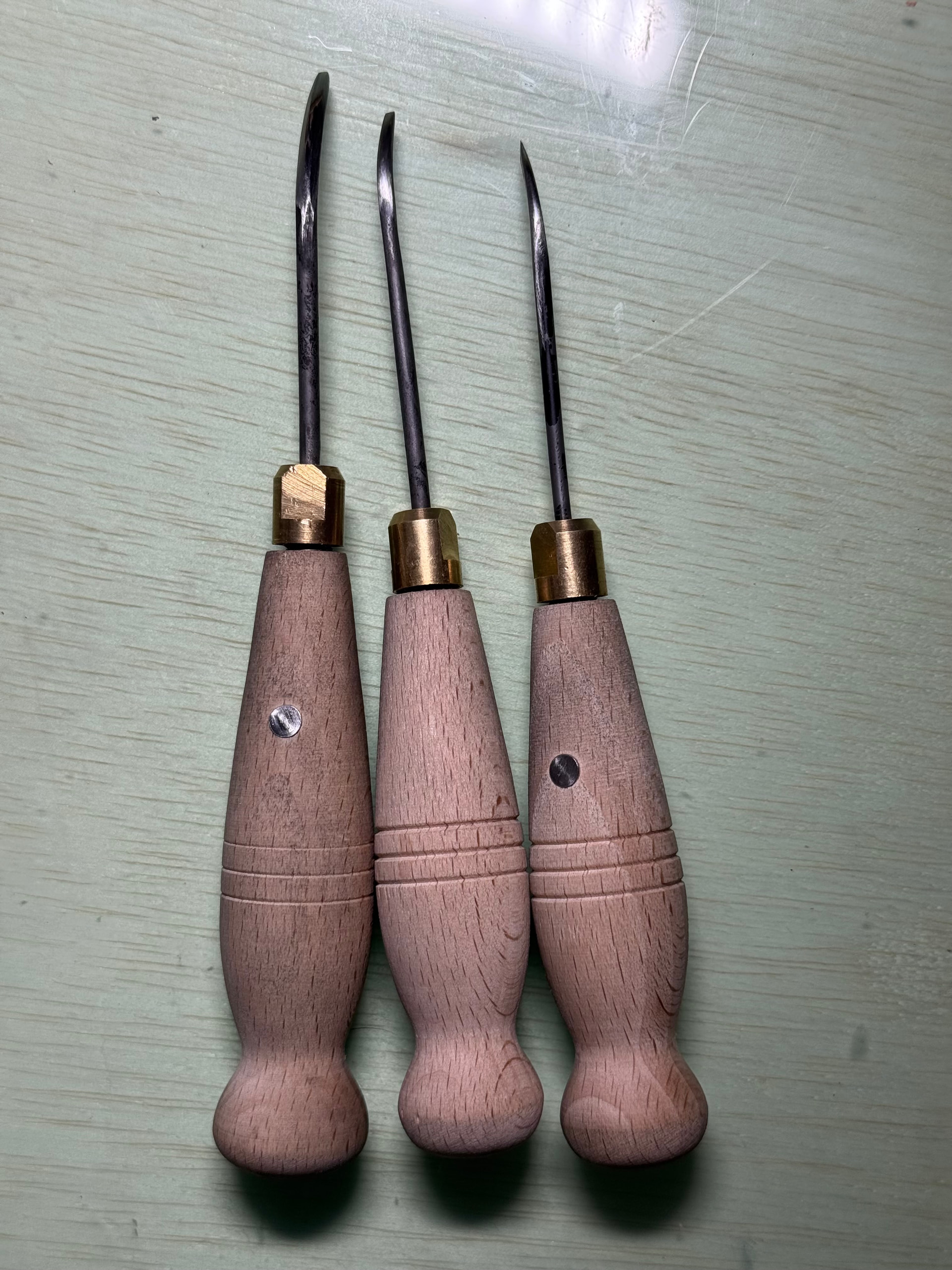
I haven’t fully used the Mamoru awls yet, just testing on insole and outsole scraps. I chipped the welting awl when sharpening. The damage isn’t too bad just not pointy anymore. This is the awl I’ve been able to sharpen the best but that’s just due to how narrow the sides are compared to other awls. I used low grit stones to remove the diamond point in the middle and then sharpened like Kazuma Nishimura shows.
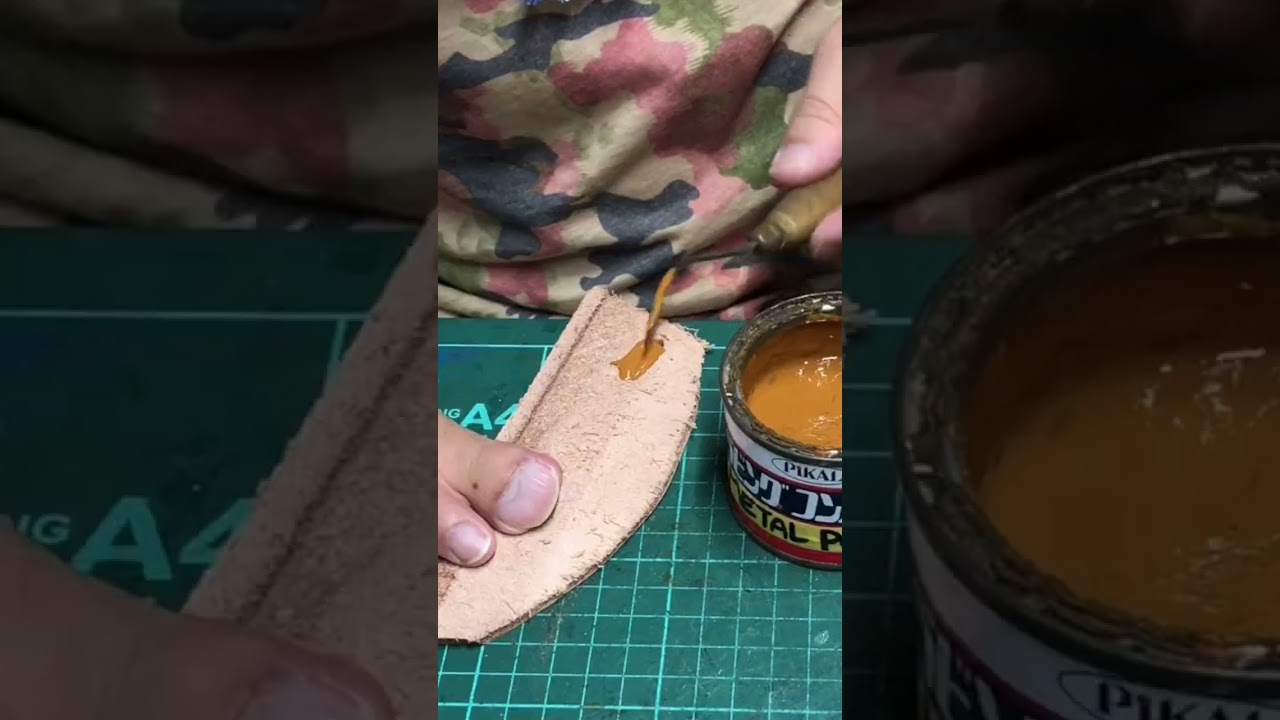
I tried using the small inseaming awl to resole a pair of boots and ended up breaking the tip twice. I didn’t sharpen it well enough and wiggled it too much. It is still usable thankfully.
I’ve tried the square awl too and I haven’t cracked it yet but I have a hard time using it. I got it to be sharp enough to cut paper but I have a really hard time pushing it through the material because of how thick it is. I’m not really sure how I should be sharpening square awls. Like what angle to use, should I keep the cutting edge straight or make it diagonal, etc.
here is what they look like now. From left to right: welting, waist, square.
Thanks for sharing!
You’re right. I’ve seen that, too. I’ve updated my headings above to refer to it as a “waist awl”, rather than an inseamer.
Thanks also for this! I did notice that Mamoru’s product pages mention the same maker produces the awl blades and trimmers. Google Translate renders it “Kajiya”, which I think means “blacksmith”.
I’m sorry that happened to you! I know how frustrating it can be.
I’ve just made a note to pull out my other square awls, compare, and share some notes.
Personally, so far, I’ve just followed the existing line and bevel angles of the square awl blades I’ve tried. I’m sure I never get it perfect. The bevel angles in particular. But I haven’t reground anything intending to change its shape.
Here’s a lineup of square awls currently in my possession. Dick Anderson. Tom Carbone. Wivos. Maeder. Mamoru. I know these photos aren’t ideal, but I hope they give a general sense of blade curve and cutting edge shape.
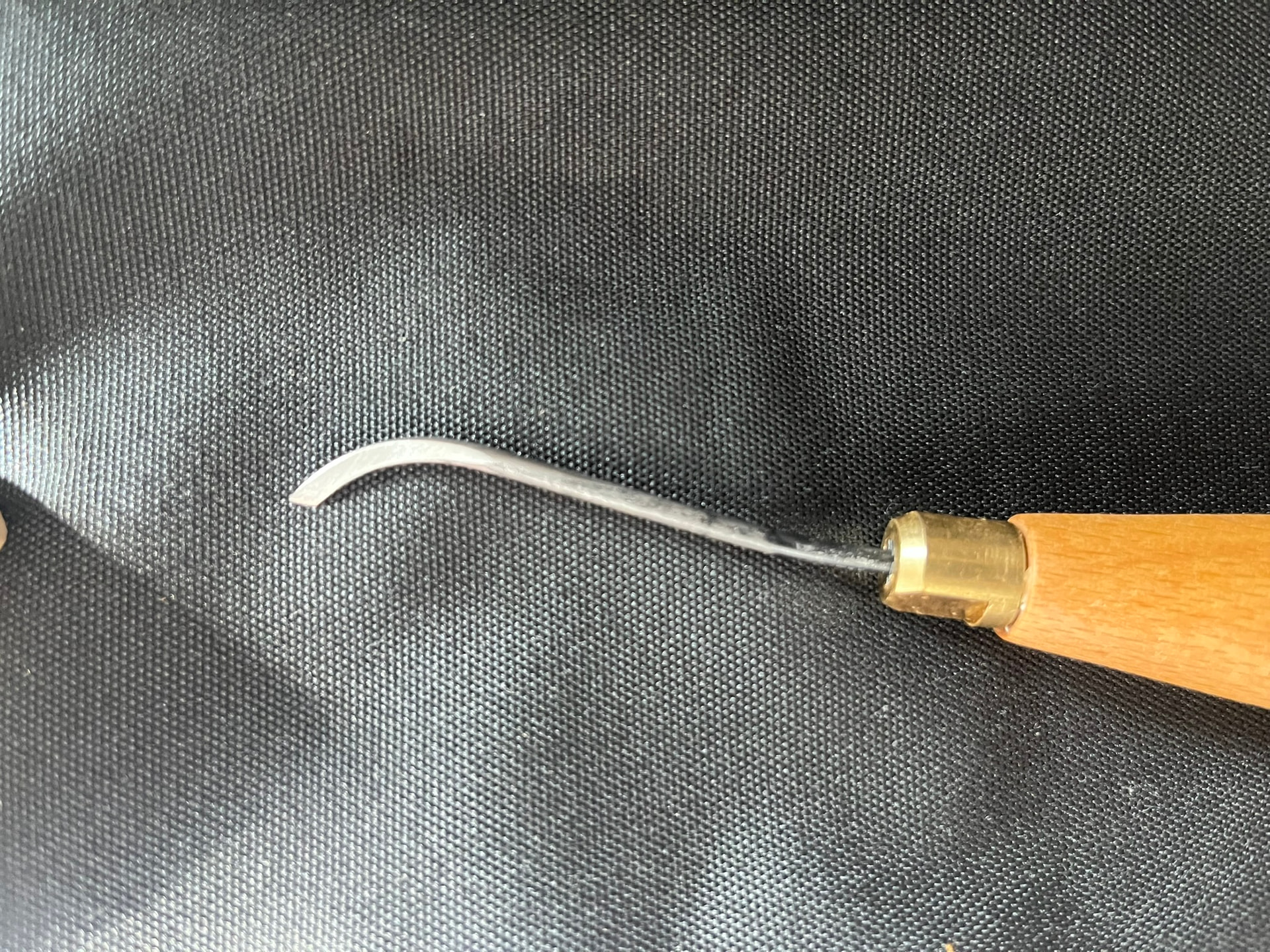
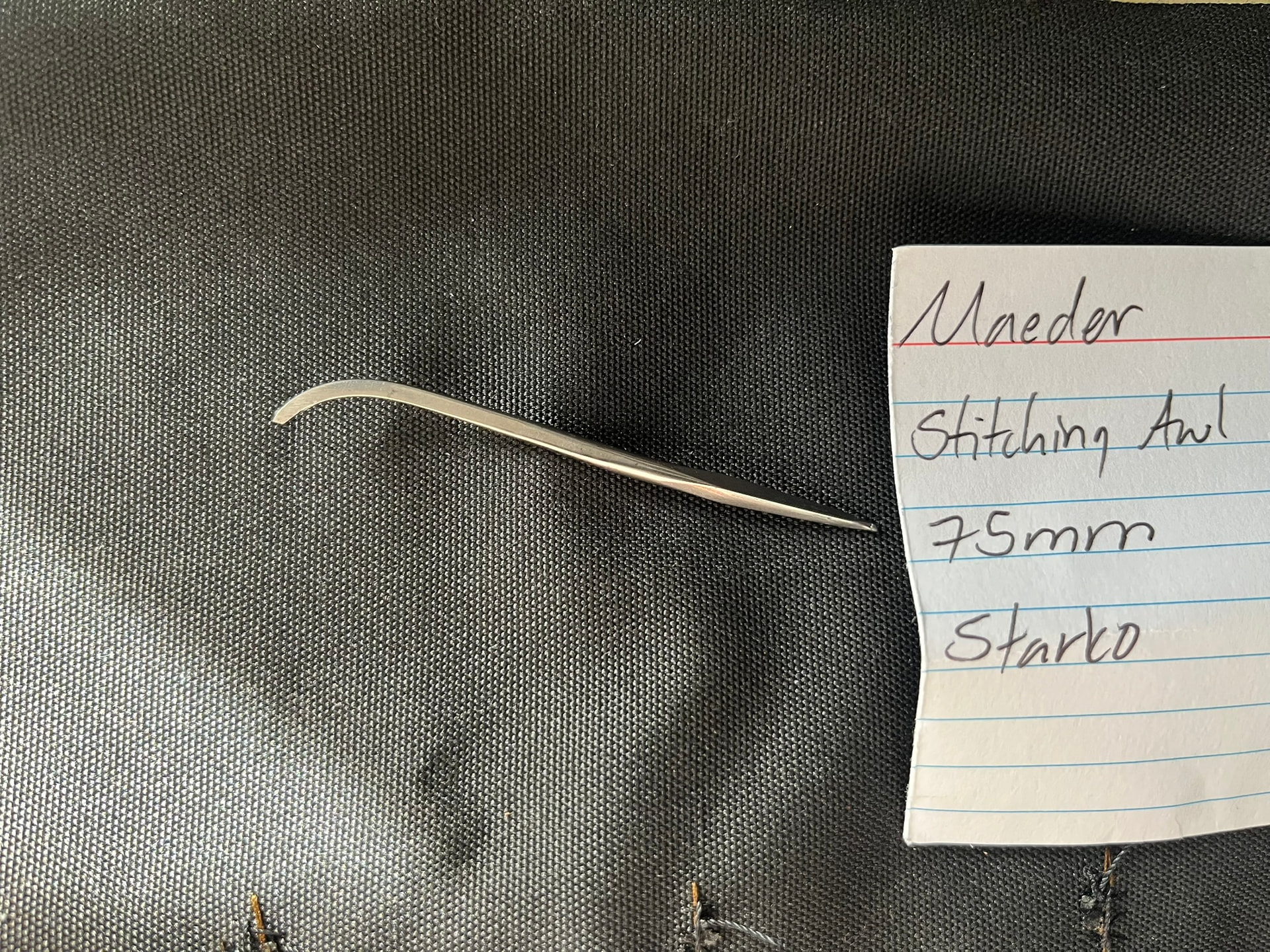
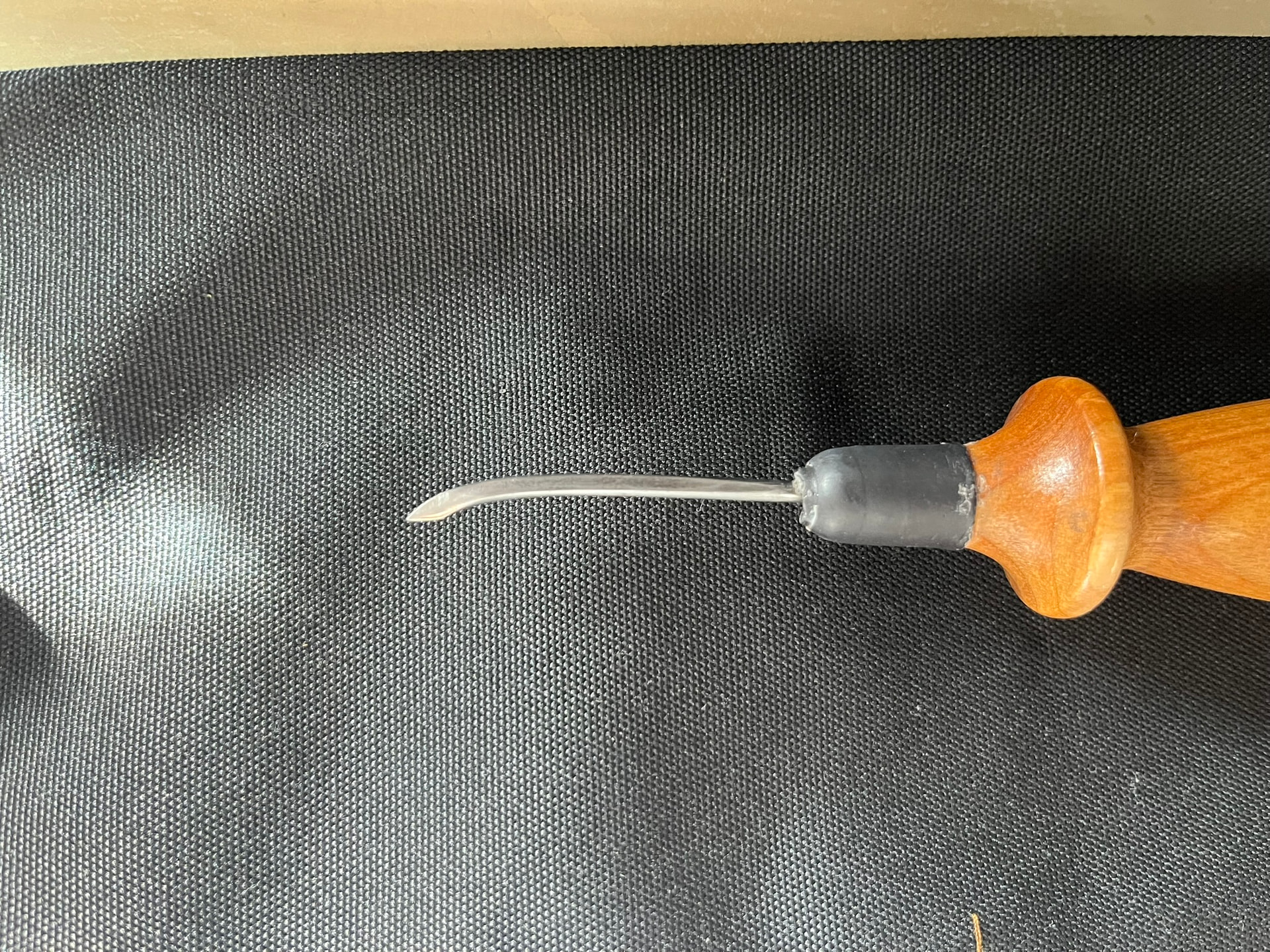
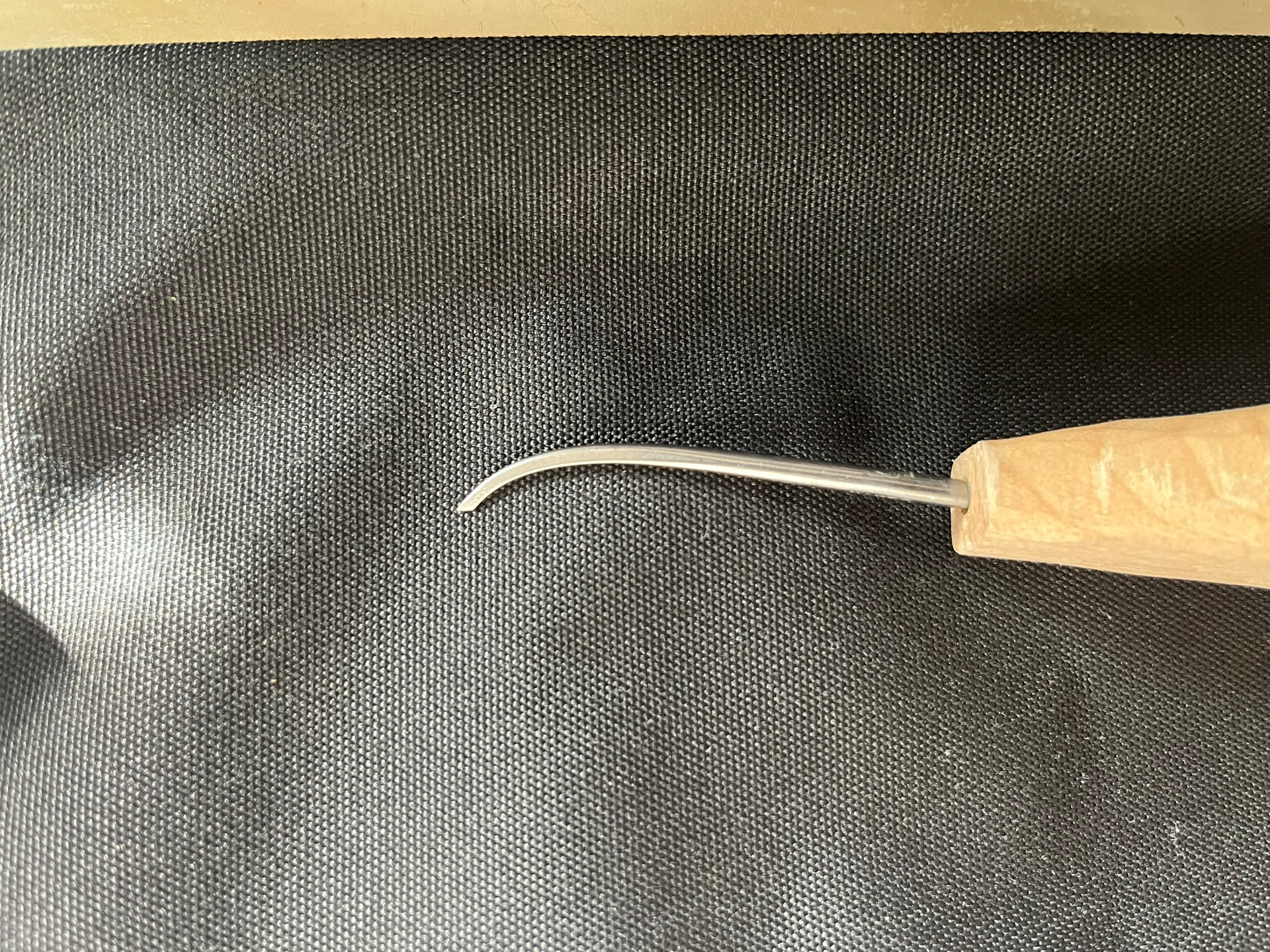
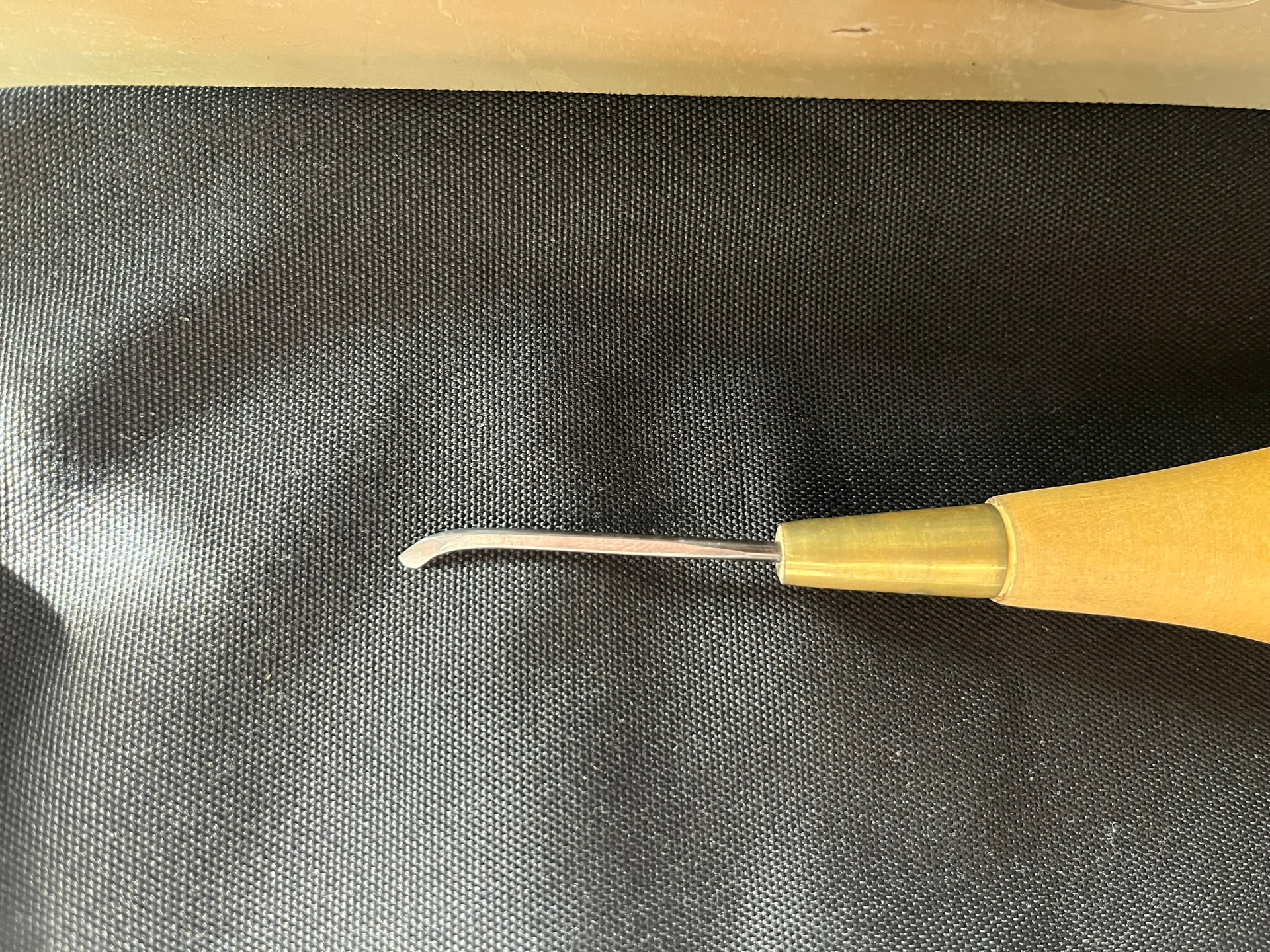
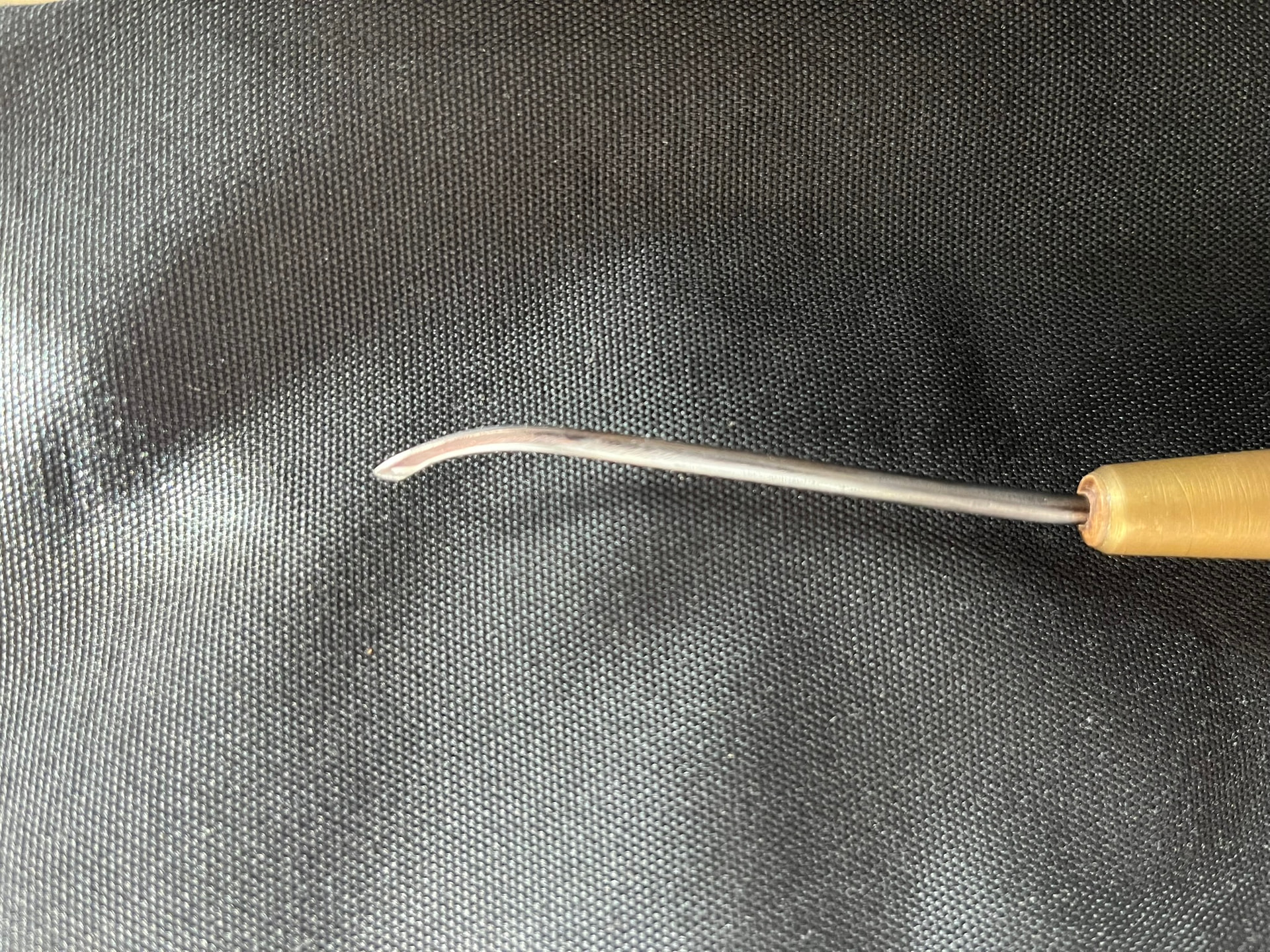
I’d say most have cutting edges largely in line with the thrusts of their shanks.
1 Like
Thank you for the pictures!
1 Like
After my pleasant experiences importing from Mamoru I’ve been semi-regularly checking the Yahoo Japan auctions and Mercari Japan listings.
Most of the imported tools from Barnsley and other European makers is very expensive, even more so than in America. However, the second hand domestic offerings are very affordable. The best deals I’ve found are from shoemakers retiring or people just moving on from the hobby.
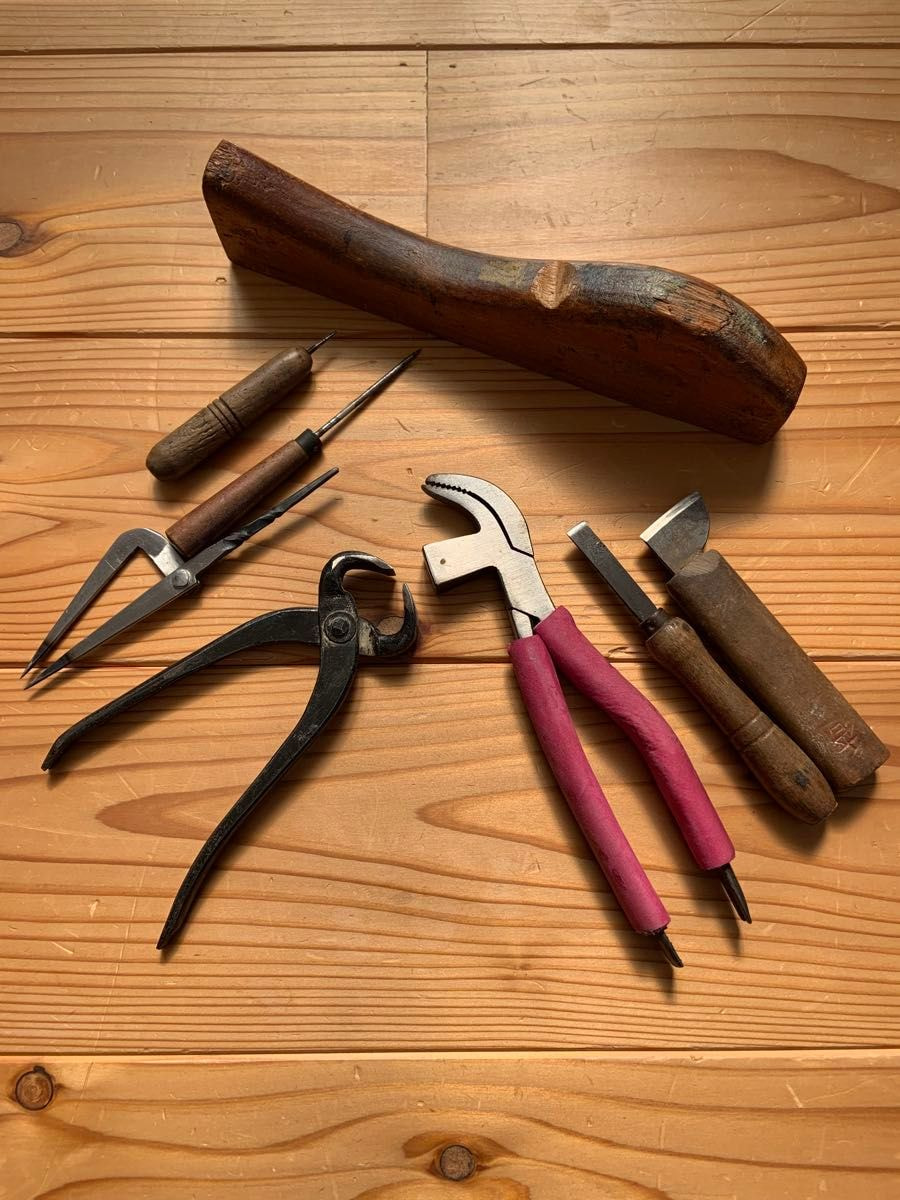
I purchased everything seen above for just $20! Even with shipping and tariffs its much cheaper than anything I’ve seen on eBay in the US. I wanted to wait until I received my items to make sure its not a scam but things sell pretty quick so I wanted to let people know. I’ll give an update if things go wrong.
I’ve done a little bit of research on vintage lasting pliers (called “wani” in Japan) and I’d like to share some of the things I’ve found. This adventure into the second-hand shoemaking tool world was inspired by a post of lasting pliers from Fumu:
In this blog post Tor mentions that there are no craftsmen in Japan that make lasting pliers anymore. Mamoru sells a reproduction but it is made in Taiwan. The vintage pliers that remain go for a decent price.
I have these and I love the shape and balance. The metal quality is better than the cheap chinese pliers but not as good as my vintage and Minke pliers. They are cast rather than forged. They also have some kind of matte coating (maybe cerakote?).
In the book of men’s shoemaking Noriyuki Misawa uses pliers from a brand called Mani and Standards. I’ve also seen Ken Kataoka use these. After some digging I found that sometime in the early 2010s this company produced shoemaking tools. Their website is no longer functional but I was able to find an archive of their products page from 2021. The prices are super high especially if you consider the conversion rate back then.
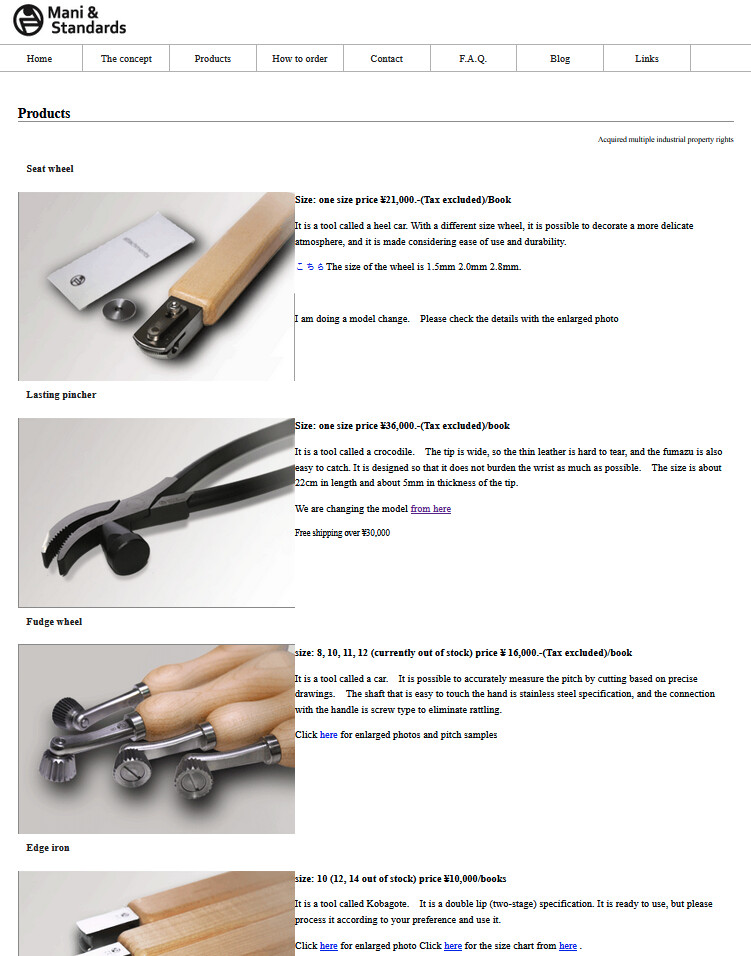
Someone has a fudge wheel for sale on mercari but the price is crazy.
I’d guess that any second-hand product from this brand will sell way over msrp.
The older domestic lasting pliers don’t go for as much but there is also a lack of information. From what I’ve read and seen online I think the most prevalent manufacturers are Otani and Tokyo DK. I found a nice article that discusses Japanese-made pliers and shows an example of one from Tokyo DK.
The article links to an address for Otani and it seems to be the same as the Otani that sells the famous rasps.
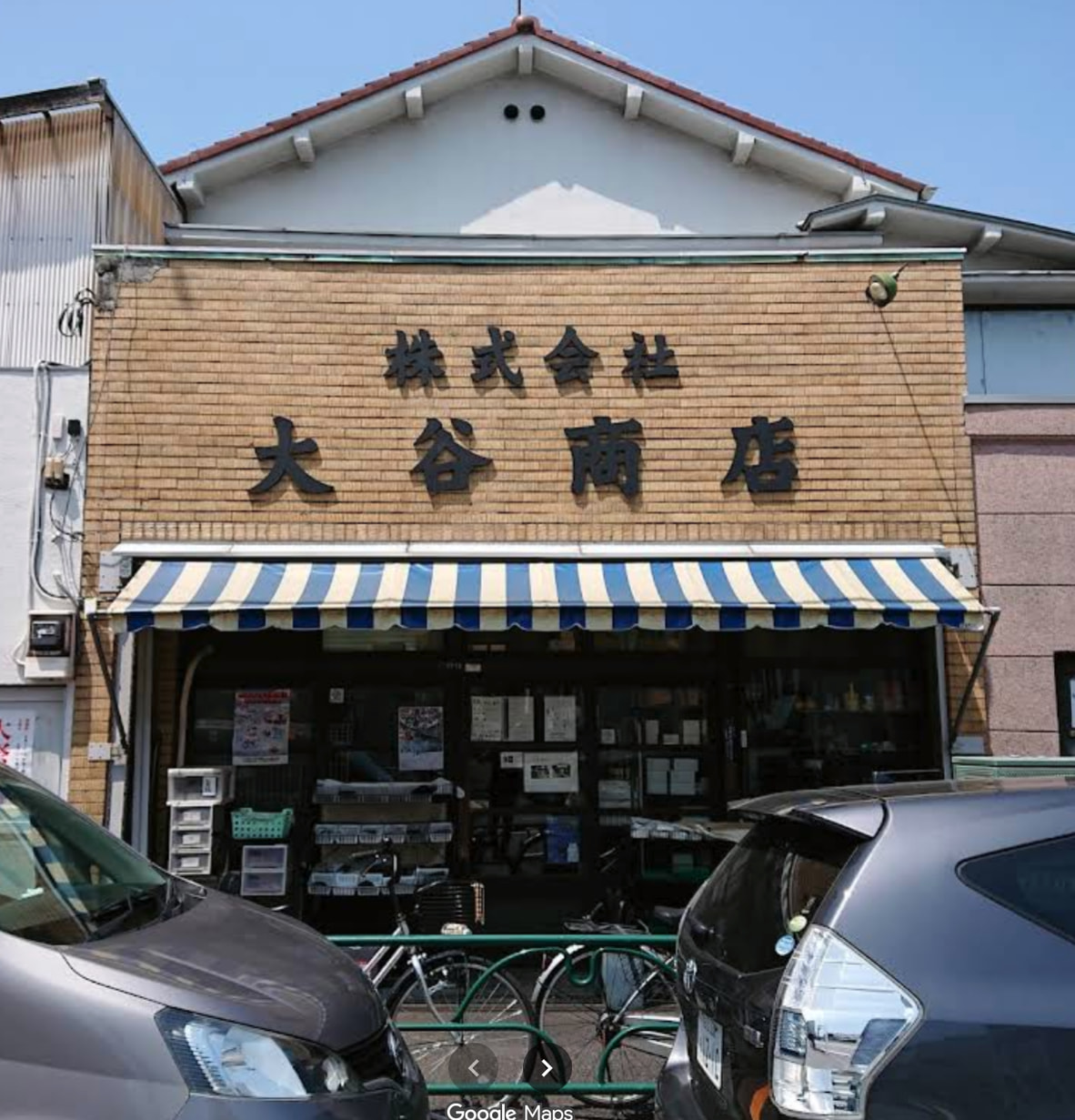
The vintage Otani pliers have a huge range in value. I’ve found ones sold around $50 to almost $200. The cheaper vintage lasting pliers tend to have the top teeth really worn down. I am not sure if that is the only reason why some sell for so much more than others though.
I’ve also found a few listings for Tokyo DK pliers. One that sold for around $50 and a set of 3 currently for sale for $95. The set of 3 is tempting but none of them have any teeth left at the top. Realistically, I’d only keep 1 and sell the rest, not sure how easy something like this is to sell in the US. I wonder if there is some kind of quality difference between the Otani’s and other vintage pliers. They tend to go for more money but I’m not sure if thats just due to rarity or preferences in quality. The shapes look almost identical.
There is also a ton of vintage pliers for sale that don’t have a makers mark visible. This can be from age or they were never marked in the first place. This listing for 3 pliers for $135 is also tempting. The top teeth have plenty of life but there is a bit of rust. Again I have no clue how pliers like this are looked at in Japan so its possible they are overpriced even though in dollars they look good value. I also have a coupon (no clue why). A lot of people list vintage shoemaking tools on eBay for high prices and they never sell. All costs in I’d probably have to sell these for $65+ just to break even. Don’t think too many people would be willing to pay that for a random no name tool. If it was just 1 plier I would definitely buy it just to satisfy my curiosity.
Something I’ve been really after are edge irons. Starko tools has increased his prices by like 20% since the tariffs started (a glazing iron I got for $46 is now $66) so I started looking at vintage and second-hand sources. Unfortunately, most online listings don’t put the actual millimeter size that the irons correspond to so you are just left guessing if it will work. If I can get them cheap enough then I’ll take the gamble. Of the 4 irons I have from ebay only 1 is in a usable size for the outsole leather I have. Even then the sole bend I have goes from 4mm to 5mm so multiple sizes are needed. Sadly, I haven’t seen any thing on the Japanese second-hand market, just expensive European irons.
I have been able to find some pretty nice lasts for great prices. I actually have never paid more than $60 for a last. I basically just look on ebay or local listings and purchase anything in my size. I kind of regret this approach because I’m not happy with the fit of any of the lasts I have. The problem I always have is that my toes are long. My second toe is about 5mm larger than my big toe. This means the issue I have with almost every shoe I have (made by me or not) my pinky toe is pinched. My Truman boots are the only one I don’t have this struggle with. I have kind of accepted that my foot doesn’t really work with base lasts so all my lasts have buildups (which I really suck at). Still any chance I get for a cheap last I take.
I was already surprised with how cheap Mamoru offered made to order lasts, only about $65. But in the auction sites you can find them as low as $15 but I usually see them around $20-40. Sadly, almost all of the lasts I’ve seen are for smaller sizes. Speaking of sizes, I am not really sure where I land on overseas lasts. My brannock is a 7.5D, in vintage US lasts the 7Ds fit well (ball and back) except for the toe issue. In Eu sizing this is about 40.5 and a Japanese 25.5 cm. I have a pair of RTW lasts from Francis Waplinger in 41 Eu and they feel tiny. The ball to ball length is fine but the toe is super crammed. My Chinese shoe lasts in the same size and toe style are much larger and seem more aligned to what I would expect in a direct Brannock to Eu conversion (8D). I have no clue what to predict with Japanese lasts so I am a little hesitant to order even with how cheap they are. From what I’ve seen in Ken Hishinuma’s youtube channel Japanese people tend to have skinnier and lower volume feet. This describes my foot pretty well but I imagine the pinky toe issue will still appear. The only sizing thing I can base my decision on is some Japanese engineer boots I have that fit true to brannock (25.5D). I found a last in this size for $23 and I’m 99% sure its the same last Hiroshi Takagi (2nd place shoemaking competition 2024) used in a youtube video.
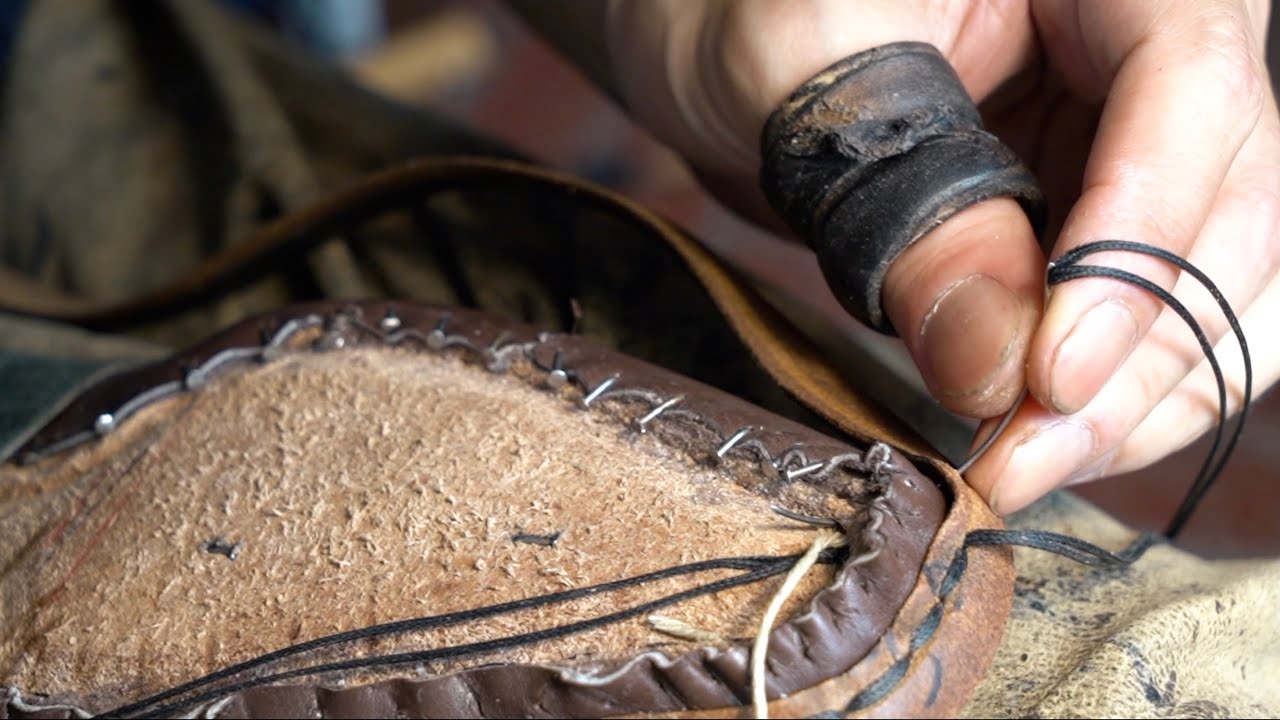
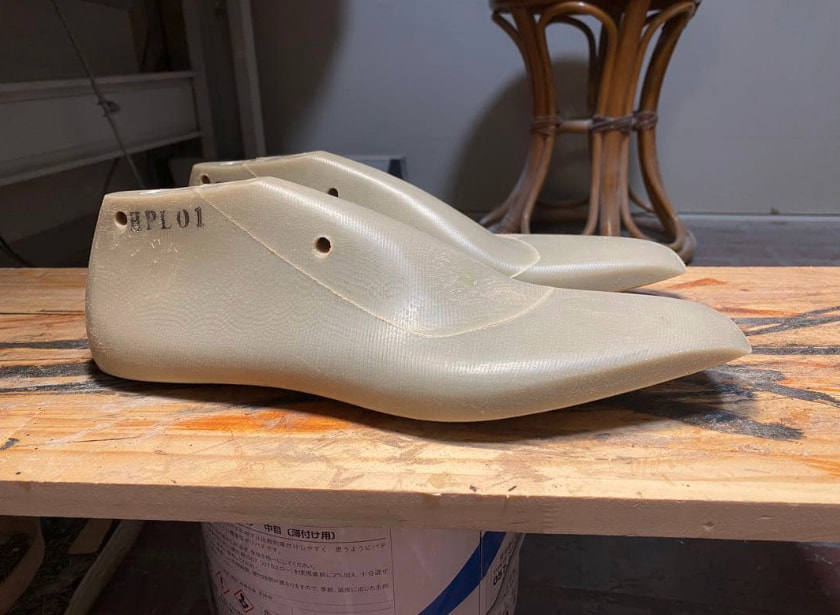
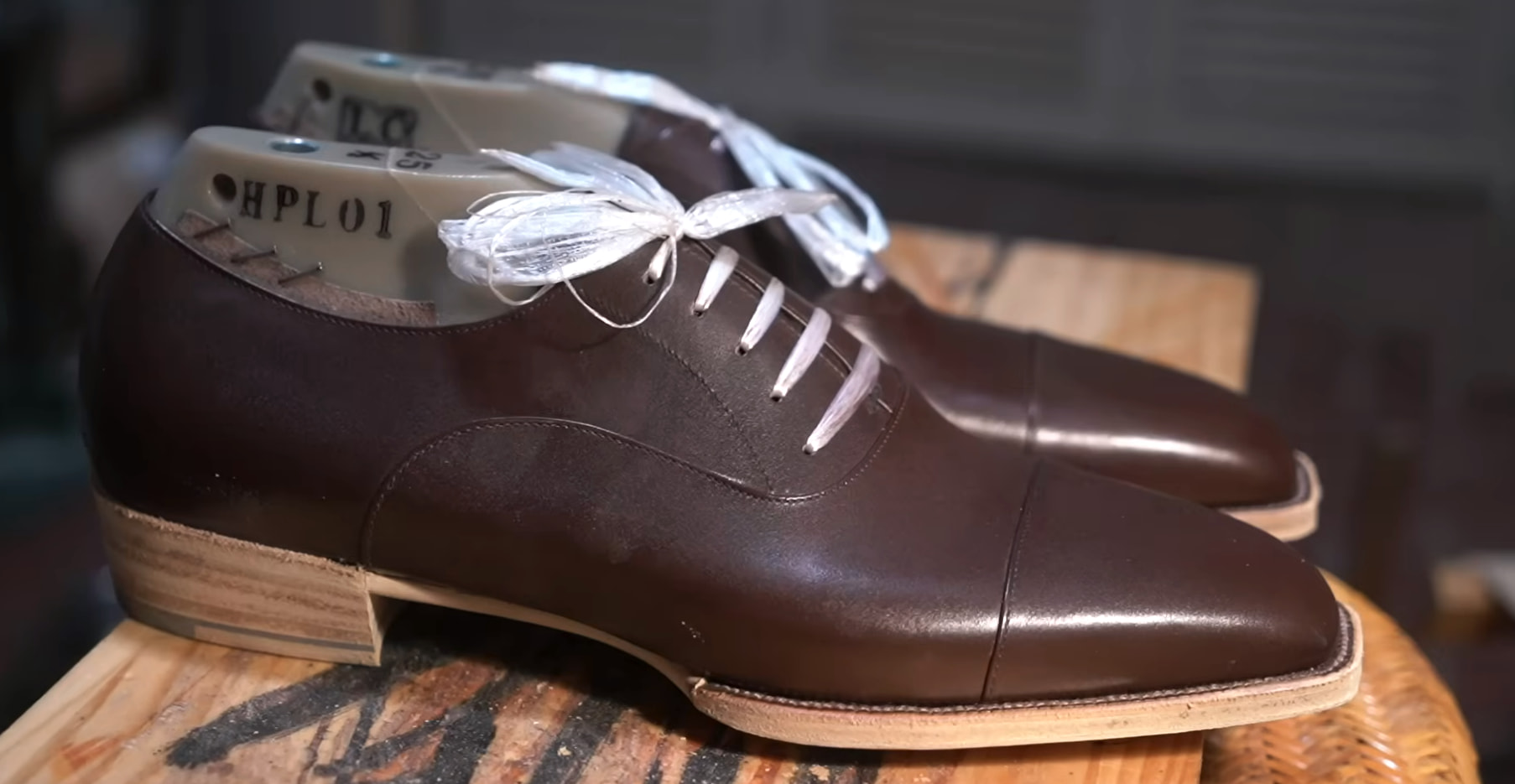
It’s crazy to me that he can sell a last that’s only been used once or twice for $25. Imagine how cheap they get new lasts in Japan. So jealous.
1 Like
Wow! Great research. I’ve added a few entries to my notes for the various toolmakers, though they’re all “help wanted” stubs for now.
I was nodding along to your notes about troubles finding mass-produced shoes to fit. It wasn’t until my mid-thirties that I found shoes other than Adidas Samba indoor soccer shoes to fit my long, skinny feet.
On importing lasts, those definitely sound like deals. And I’m spoiled on Japan shipping, being based on the West Coast, in a port city. But I have heard over and over that Japanese last shapes tend to differ substantially from American and European ones. White’s Boots, for example, has a whole catalog of lasts for the Japanese market that they say not a word of on their US website.
I have some other thoughts developing on US last production. That should really be a topic of its own, when I’m further along and feel I have more to report. But long story short, I think gluing up and carving down blocks out of widely available lumber could be way more common and practical if we did more sharing of contours and profiles digitally. I’m also seeing others have good results with 3D/FDM printing, which boils down to importing printer parts rather than lasts, but offers unmatched repeatability and exact sharing of shapes. People are reporting estimate unit costs of printing pairs of lasts sub $30.
1 Like
Costs me about $6 to print a pair of lasts, depending on how many uses you want out of it. I could probably do it cheaper with some further optimization.
Printing time is really the bigger challenge if you were trying to do production volume though.
1 Like
I decided to search for random shoemaking terms in Japanese on Instagram and found an account with some neat information and tool comparisons.
They have a post on Otani which contains the most information I have seen on the store online.
”Now that I have more non-Japanese followers, I’ll try to post in English once in a while.
Otani Shoten in Asakusa, Tokyo
Asakusa is not only famous as a tourist destination, but also as the center of Japan’s shoe industry.
This store, located away from the tourist areas of Asakusa, is Otani Shoten(大谷商店).
This small store specializes in shoe materials and has been supporting Asakusa’s bespoke shoe manufacturers, shoe repair stores, and shoe school students for many years.
One of the most famous items handled by Otani Shoten is this shoe file.
There are many Japanese handmade shoemakers who love to use this file, and many foreign shoemakers who visit Japan also buy this file.
I sometimes see shoemakers from overseas using this file in their Instagram posts.
The blades of this file is made by craftsmen who hammer them in by hand one by one.
I shaved some wood to test it out, and you can see how sharp this file is.
Unfortunately, the production of these files is in danger of dying out due to a lack of successors.
If this file disappears, it will be a big loss for shoe manufacturers in Japan and abroad.
I hope someone will come along to take over this business.”
https://www.instagram.com/p/CQtHUw2rCz6/?utm_source=ig_web_copy_link&igsh=MzRlODBiNWFlZA==
This confirms that the Otani rasps are hand-stitched.
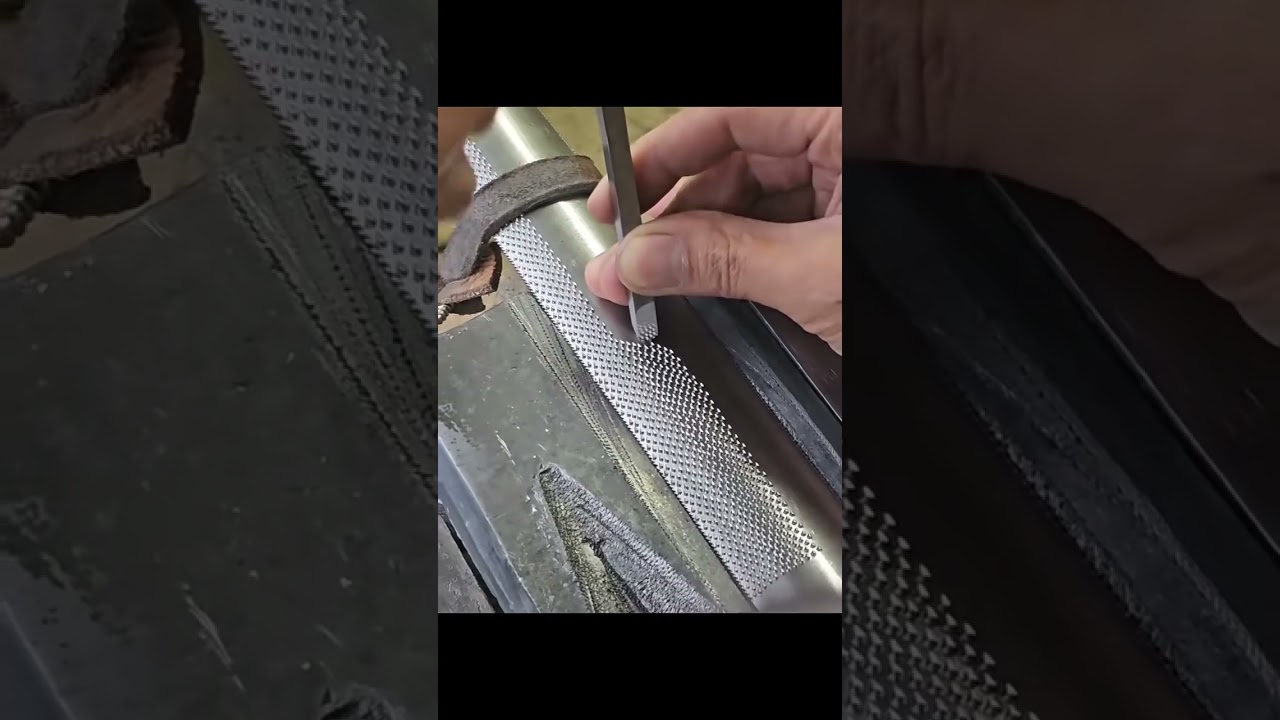
I realize I never explained what a hand-stitched rasp is. It just means that the teeth were individually set by hand which means there is random spacing between each tooth on the rasp. This makes it so that the rasp cuts more efficiently and doesn’t leave large markings (more important in wood than leather IMO). With it being handmade it usually means the heat treatment is also much better than other rasps. I found a nice youtube video that shows the hand-stitching process.
1 Like
Great stuff!
I’ve read that there is also a French toolmaker still hand-stitching rasps, which are popular among European lastmakers:
Then again, they all seem to like Shinto saw rasps, too!
1 Like
Liogier is popular too. I asked Louis Lampertsdörfer and it’s what he uses for his lasts. I have basically no knowledge of last making but I imagine they probably use multiple different rasps.
1 Like
I’ve also seen rand files with their name on them.
In another forum post I shared a Japanese last manufacturer that I found, Tomizuka. I wanted to put that information in this discussion too and share other last suppliers I found.
Mamoru
- Made to order lasts.
- No measurements given other than foot length.
- No MOQ (minimum order quantity).
- Only available overseas through a proxy.
I really like the look of the round toe men’s last. I will try to order one at some point and share measurements here.
Tomizuka
- Made to order, measure, bespoke lasts.
- Wood or plastic
- Shoe trees
- Examples of finished shoes.
- No MOQ.
- Only available overseas through a proxy.
I never received a response to if they ship overseas but their online store no longer allows me to even add to cart so I think the answer is no. You can probably still order through a proxy but I don’t think you’d qualify for the discount after the first pair.
Kobe Leather Cloth Co.
https://www.kobe-leather.co.jp/
- Ships overseas.
- MOQ of 1 last.
- Wood or plastic
- No catalog
I had seen Japanese makers use lasts with an “LC” logo but I couldn’t figure out which company was producing these lasts. I believe one of the Japanese shoe schools I follow on Instagram tagged an employ from the company and that is how I connected the dots.
Oyama Last Co.
- MOQ of 1 last.
Another last manufacturer I found on Instagram. They haven’t responded to my messages so I don’t know much about them.
KLC and Oyama last mention working with CAD to make their lasts. I’d be curious about buying a CAD model off of someone and sending it to these companies to make the last from more durable plastic than available from 3D printing.
Edit 3/21/2026: Talked more with KLC, confirmed MOQ is 1 last not 1 pair. The 1 last service is used to make samples. Lasts can be made of wood or plastic. No catalog just asks for what kind of shape you want. Have to pay upfront.
1 Like
Nice work! I added entries on KLC and Oyama to shoemaking.wiki.
After about 3 weeks of shipping I received my first consolidated order from Buyee. The process was straight forward and everything was packed well.
Included in my order were 3 lasts. One of them is the MA-1 last Mamoru sells and the other two are MTO (I think) models from bespoke shoemaker Hiroshi Takagi. I would like to share some pictures and measurements.
Japanese last sizes are given by the cm length of the foot (not SLL). I am not sure what the conventions of Japanese lasts are but Mamoru’s lasts vary by 0.4cm in the ball measurement per 0.5cm last size.
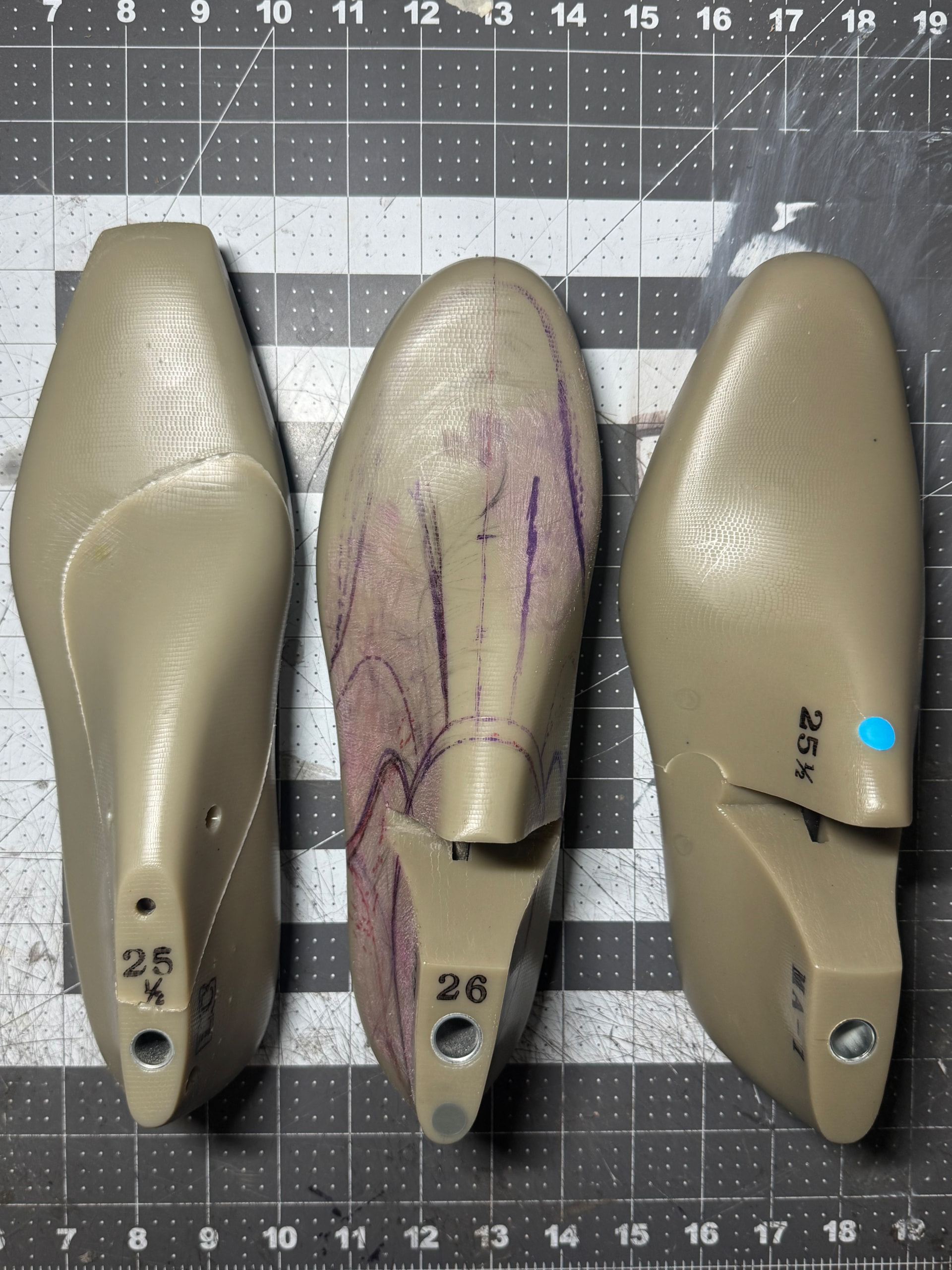
From left to right: Hiroshi square toe 25.5cm, Hiroshi wide round toe 26cm, Mamoru MA- 1 25.5cm
Mamoru MA-1:
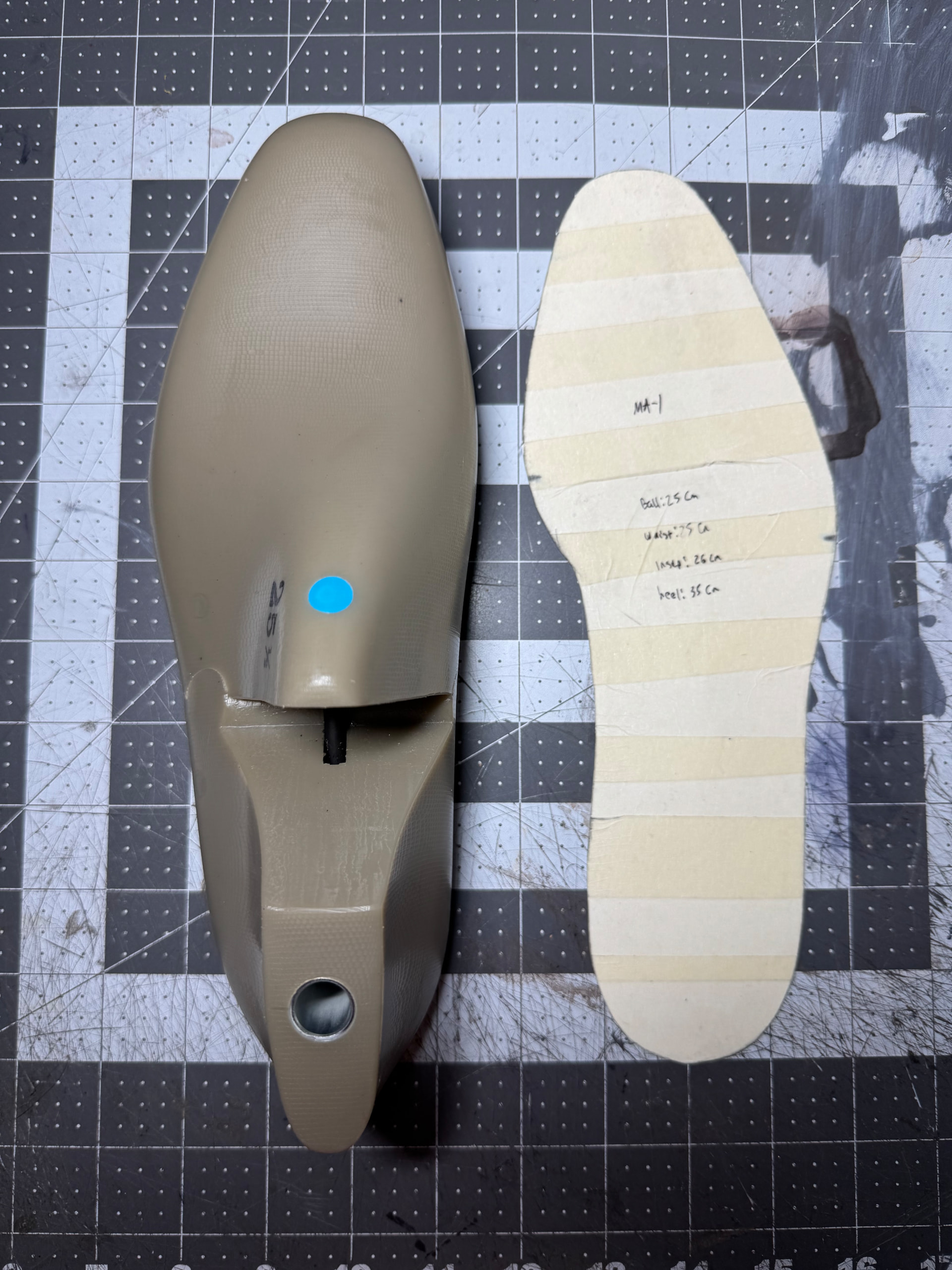
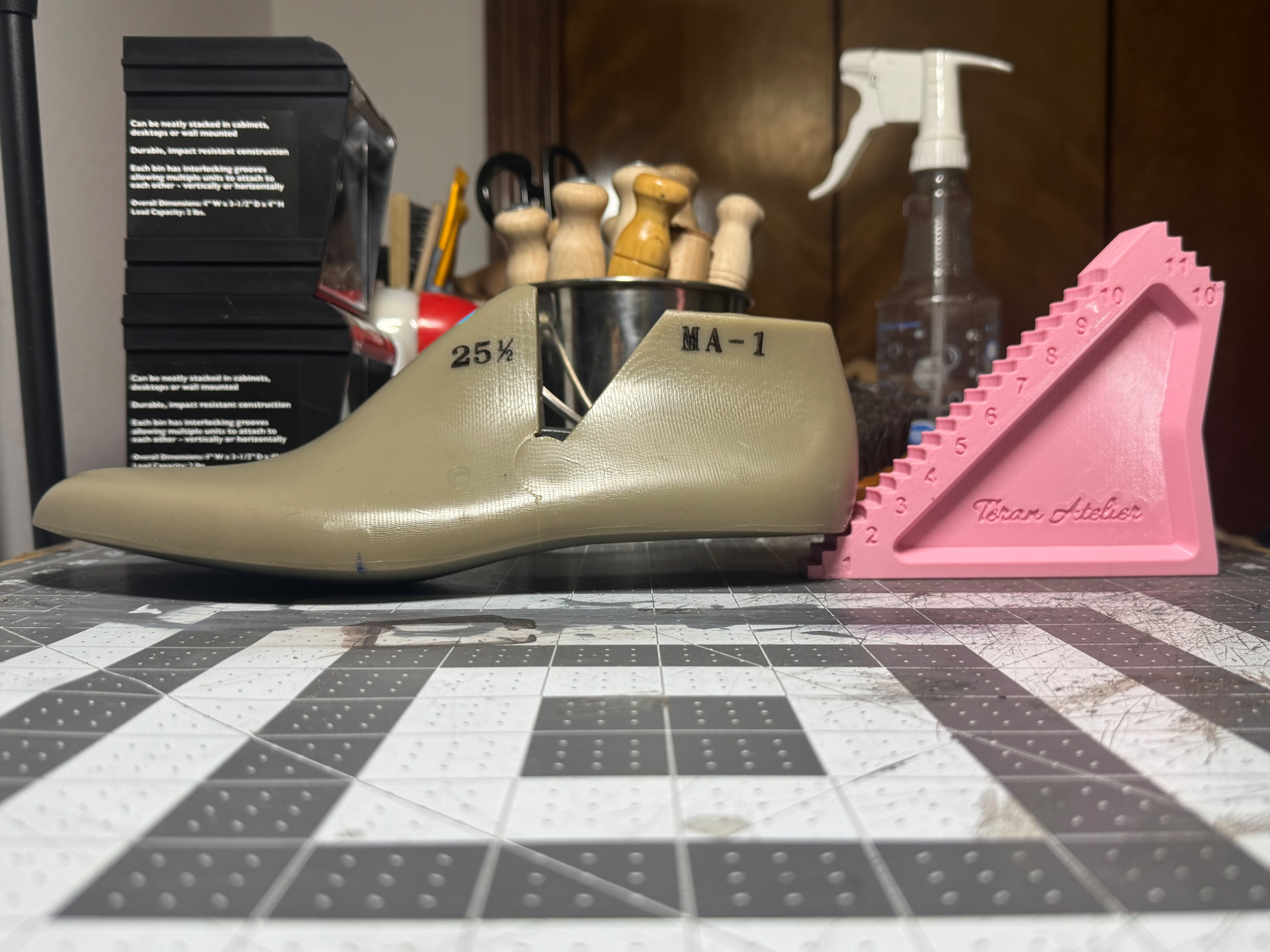
- Ball: 25cm
- Waist: 25cm
- Instep: 26cm
- Heel: 35cm
I ordered the MA-1 true to size and it seems about right lengthwise (both toe and heel to ball). The lasts are made to order and took about 2 weeks to be made. You can order with or without a metal heel plate, I chose without. I don’t think its LC that makes these for Mamoru since the plastic color is different and the size is in a different place. Mamoru says the heel height is 1.5cm and it is flat. I think you could get away with a 20cm heel but I will have to test it. The last is a bit larger in volume than I had hoped I think if this were to fit I would need an additional insole. The good thing is there is enough room for my pinky toe without modification.
Hiroshi wide round toe
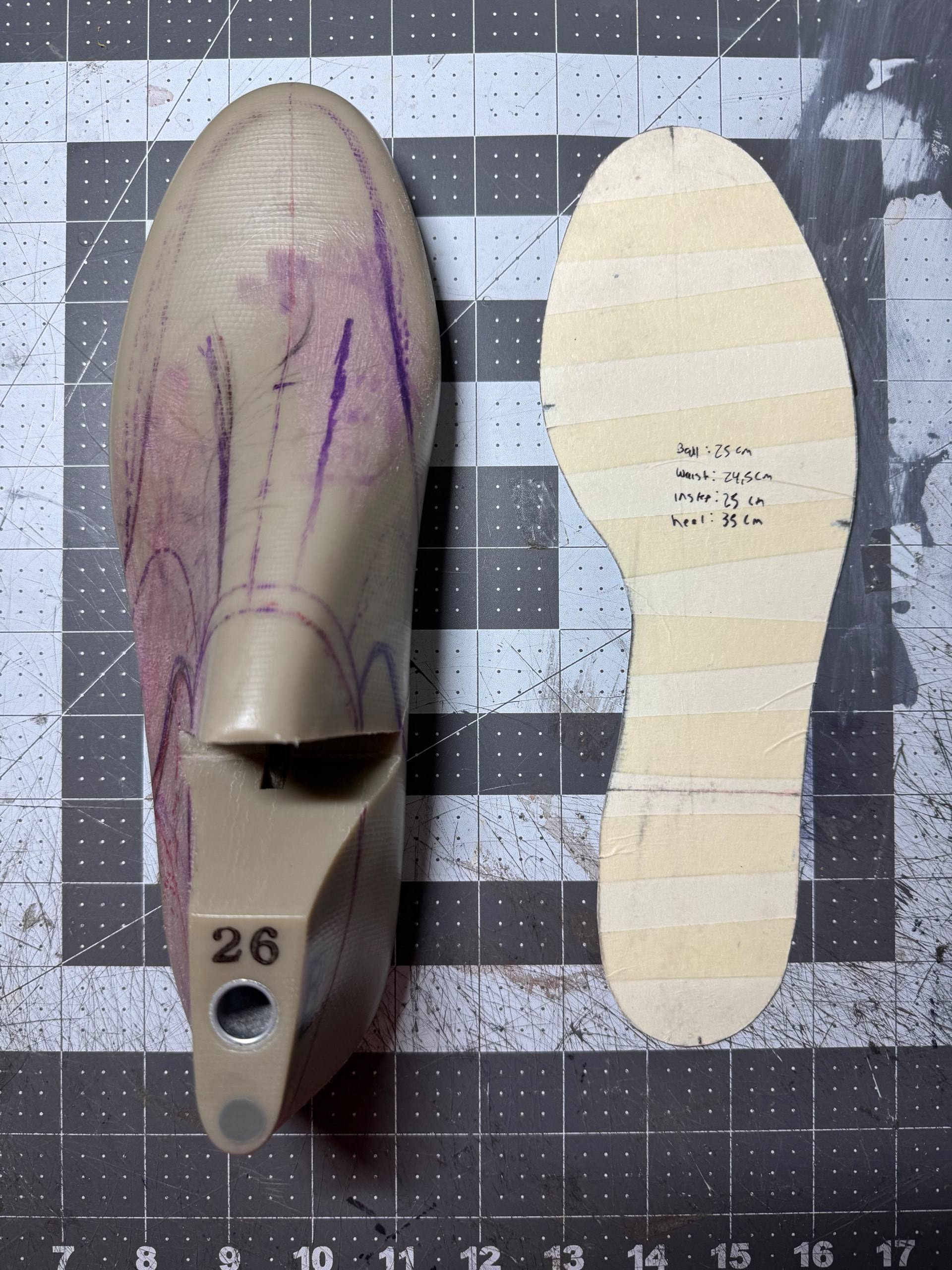
- Ball: 25cm
- Waist: 24.5cm
- Instep: 25cm
- Heel: 35cm
Hiroshi regularly sells on Mercari Japan. I was able to get these lasts for like 20 dollars each. A bargain compared to US prices. The lasts are made by LC. I am not sure if this one is an offering from LC or if Hiroshi designed it and has LC produce a size run. These lasts are very wide compared to the other round toe lasts I own. It’s a very consistent shape with no harsh lines or curves. The main reason I purchased this last was because I was interested in seeing his patterning approach. It looks like he follows a similar approach to Ken Hishinuma where the pattern is drawn directly on the last with a dermatograph pencil and then transferred via transfer tape or masking tape. I am not sure what the pattern is supposed to be for. It looks like some kind of elastic slip on although the apron throws me off.
Hiroshi square toe
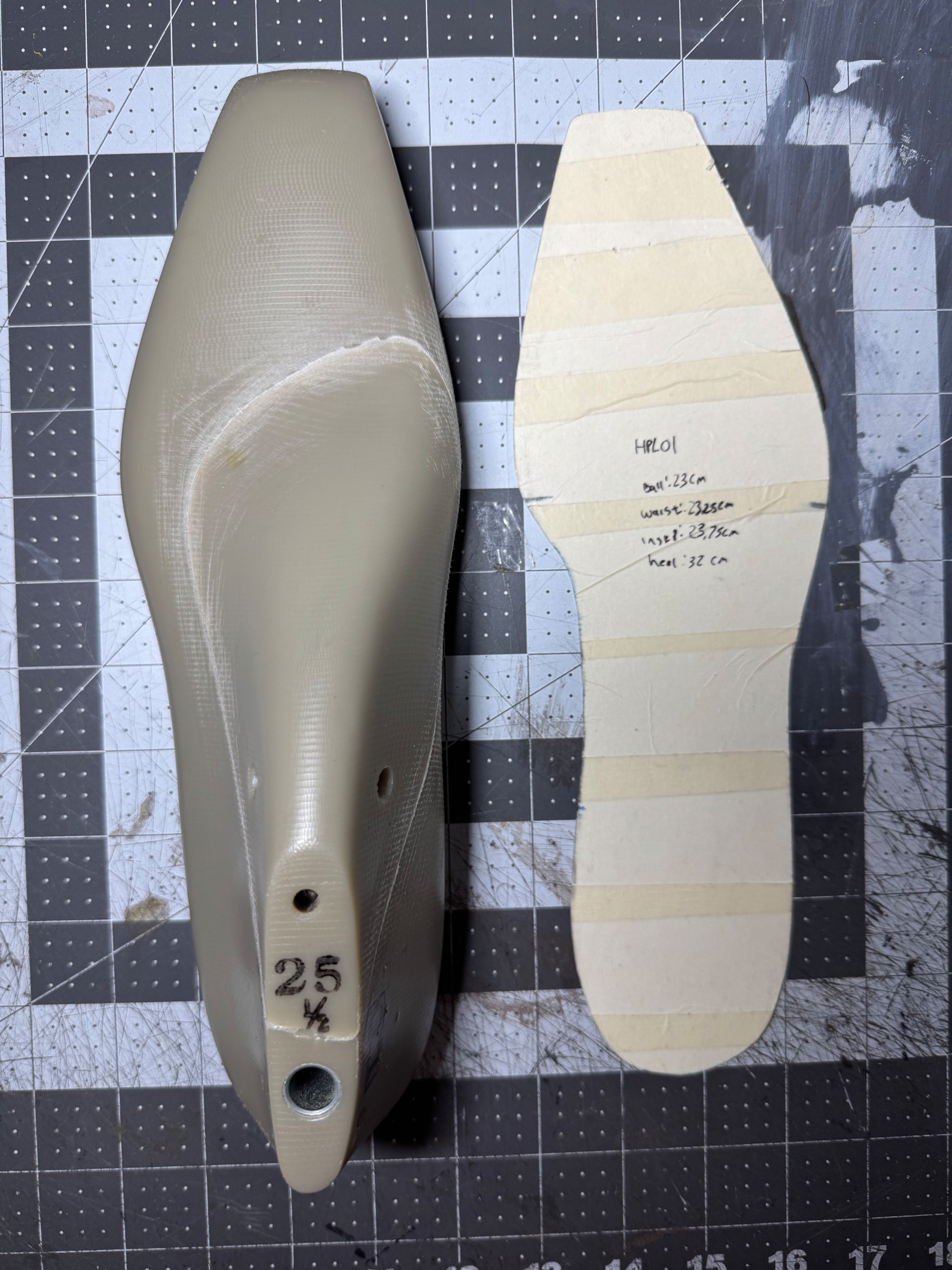
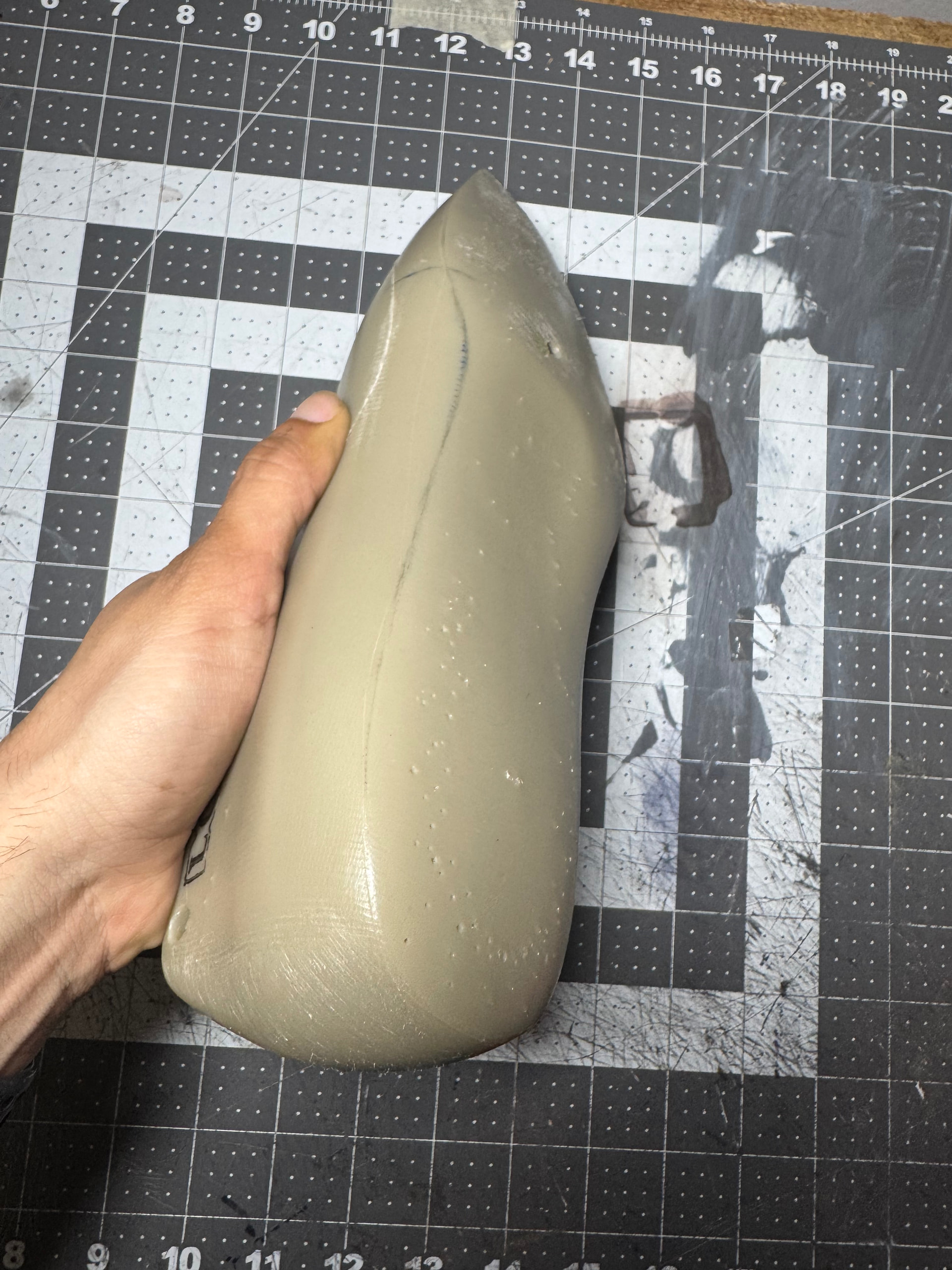
- Ball: 23cm
- Waist: 23.25cm
- Instep: 23.75cm
- Heel: 32cm
This was the only last Hiroshi was selling in my size so I purchased it, even though long square toes are not really my style. I am really glad I purchased it because it is gorgeous. This last is considerably smaller in volume compared to the other two. I believe this last was made/designed by Hiroshi. One of the cool things about both of Hiroshi’s lasts is that the heel is rounded on the edges. I remember Ken Hishinuma talked about this in one of his videos and said it is a sign of a bespoke shoe. I am not sure if it is common outside of Japan. This last (but not the wide round) also has a pelotte. Ken also uses lasts with pelottes but I have no experience with it.
2 Likes
Nice haul!
Do you think shipping costs from Japan to USA might make Japan a coat-effective source of lasts more generally?
For used lasts like these I think the cost comes to be around 50-60 dollars after shipping and fees. This is around what I paid for a used last from Francis Waplinger and what I see available on ebay. Measurements other than size are usually not provided so the volume is a bit of a guessing game. I don’t really see the used lasts as cheap (after shipping), at least compared to used lasts in the states. That said, in my opinion the lasts from Hiroshi are of a higher quality/aesthetic to the other lasts I have (except the one from Francis). It’s hard to put into words but these lasts feel like sculptures versus some other lasts I have that feel more blobby/less refined. I think this video from Ken Hishinuma does a better job explaining what I like about these lasts.
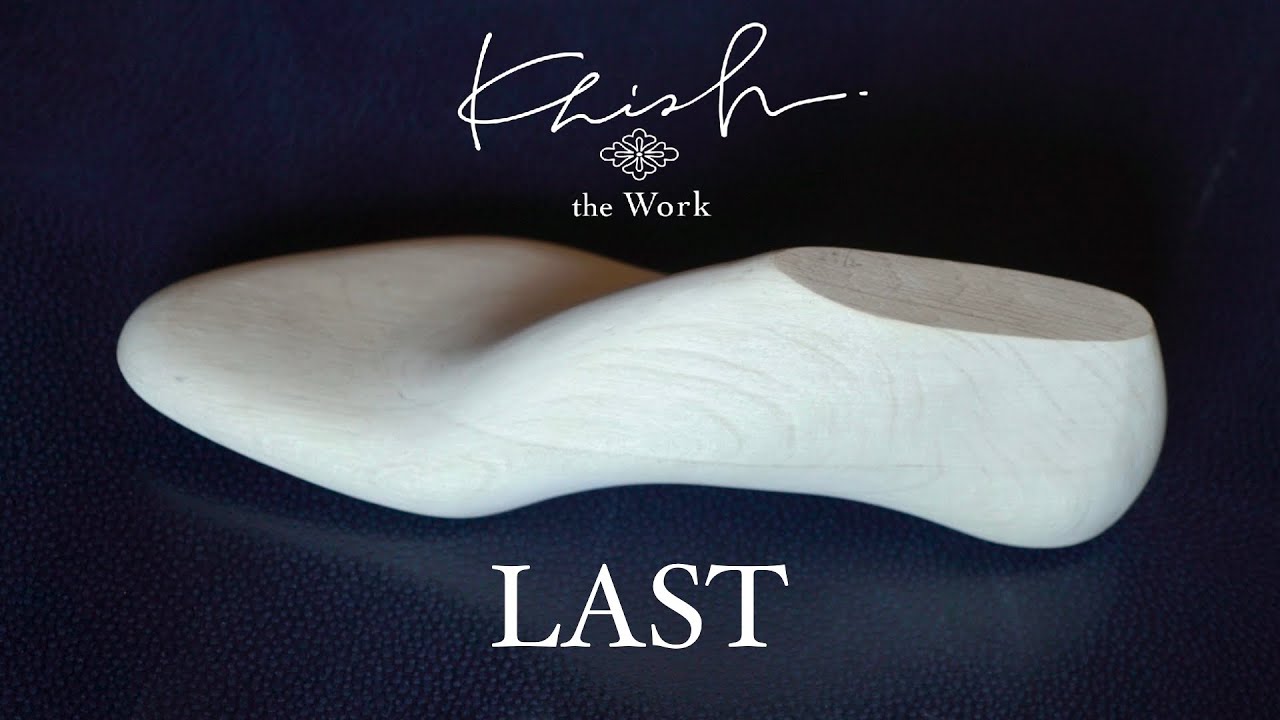
The higher level of refinement from these lasts do make me feel like they are a better value than used lasts I have bought domestically. A big caveat with all this is that most Japanese people have small feet so it is pretty rare to find sizes above 26 cm or 8 US.
The Mamoru lasts do not feel as refined as the ones from Hiroshi but they are still decently priced, I think around 60 USD. This is around the same price as Tomizuka (first order is around 85 USD). After all the fees this ends up being around the same price as new lasts from Lisa Sorrell. I think the Mamoru lasts end up not being a great value unless you really want the particular shapes they offer. Another way the lasts from Japan can be good value is if you ship a lot of things together. That is what I ended up doing and I only paid about 60 dollars in shipping for the 3 lasts and a bunch of other materials from Mamoru.
The most exciting thing for me is companies like Tomizuka and Kobe LC that support individual craftsmen. Tomizuka offers a large catalog of base lasts with examples of finished shoes. They also let you specify almost every detail of the last and can make shoe trees for you. Unfortunately, they don’t ship to the US. I think you could still order through buyee but then I am not sure if you would get the substantial discount for subsequent orders.
Kobe LC told me they can ship to the US but they don’t have a catalog, they just asked me to send a picture of a shape I would like. I haven’t followed up because I have too many lasts I need to get rid of and l haven’t had any time to actually make shoes but I get the sense that they will be as flexible as Tomizuka. If possible, I will try to get a bespoke last to my exact measurements but that will be a while from now. I also have no clue what the cost is but given there are so many last companies in Japan, I assume it is competitive.
I feel a lot of joy seeing how supportive Japan is of the crafts. It is something I see at every level from the consumer to the factories that provide the materials and are willing to sell in low quantities. They are also so generous with sharing their knowledge be it through videos or teaching classes. For that reason even if it wasn’t good value I would purchase from Japan. That said, we don’t have a lot of options for lasts in the US (especially custom) anyways so I am trying to find whatever resources I can and share it with others. It is definitely risky buying from other countries without much information but I am willing to take the risks if it means the chance of finding better products or resources. I definitely wish I had learned about Japanese resources earlier on because I would have saved a lot of money (especially before tariffs  ).
).
2 Likes