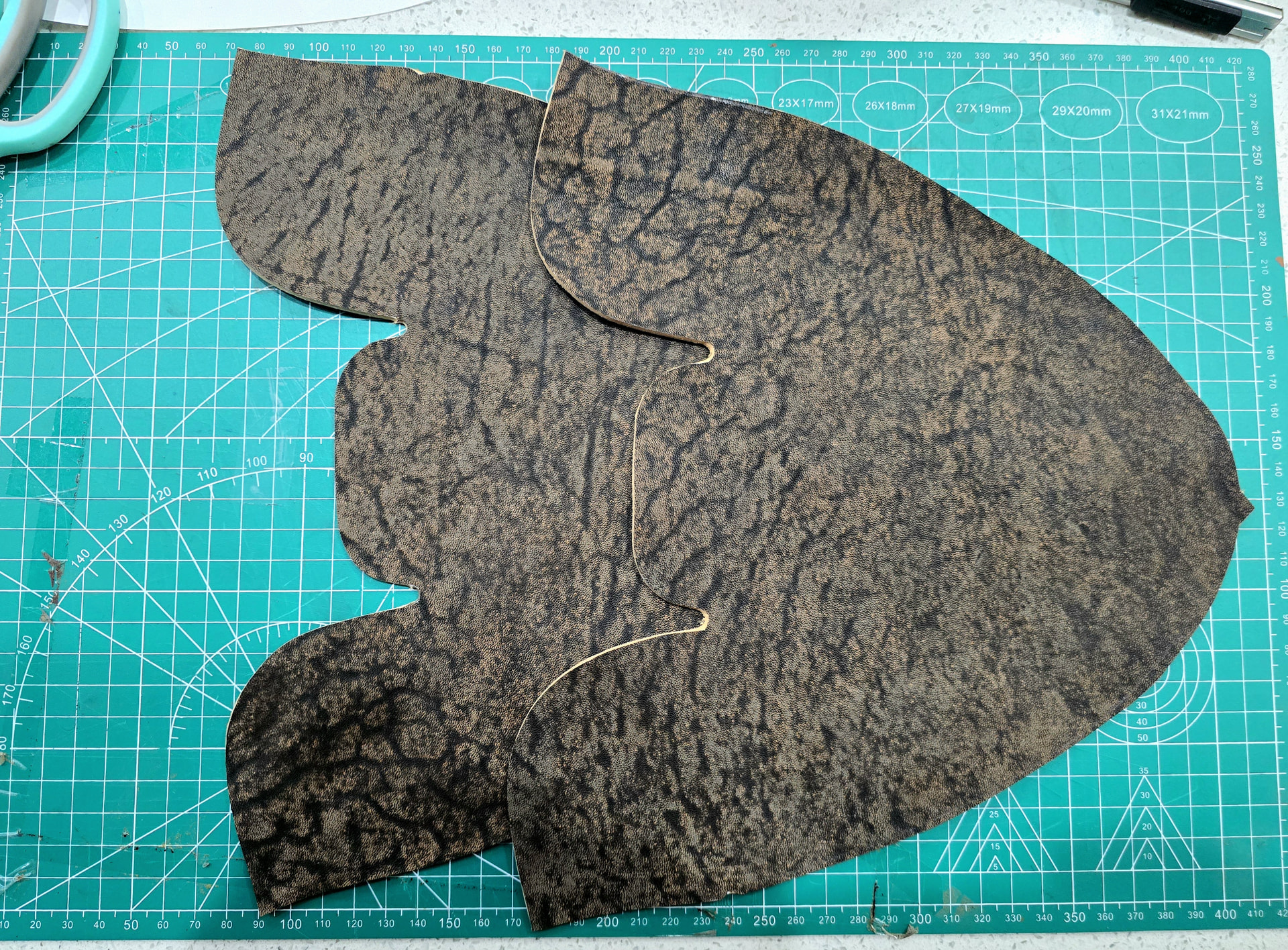
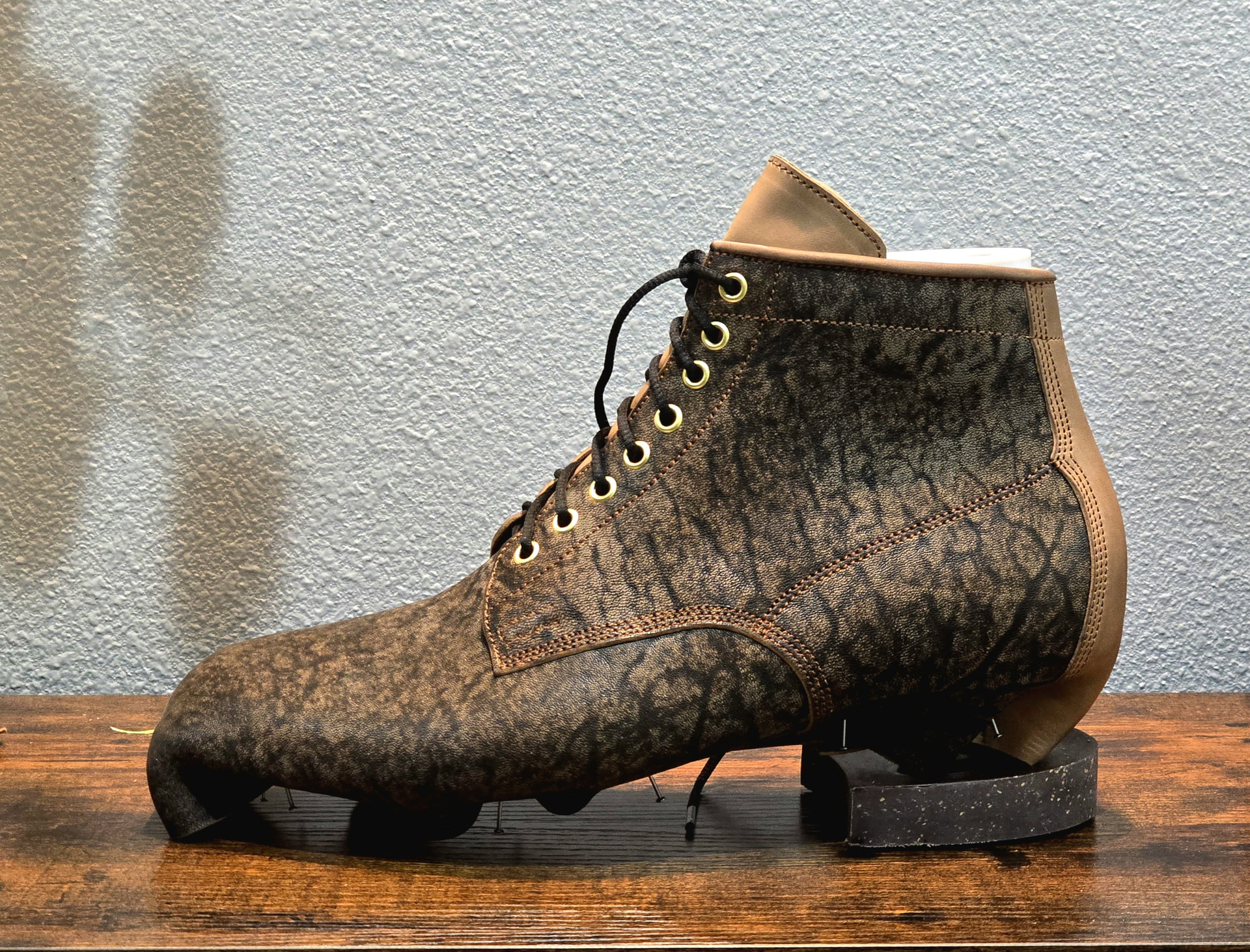
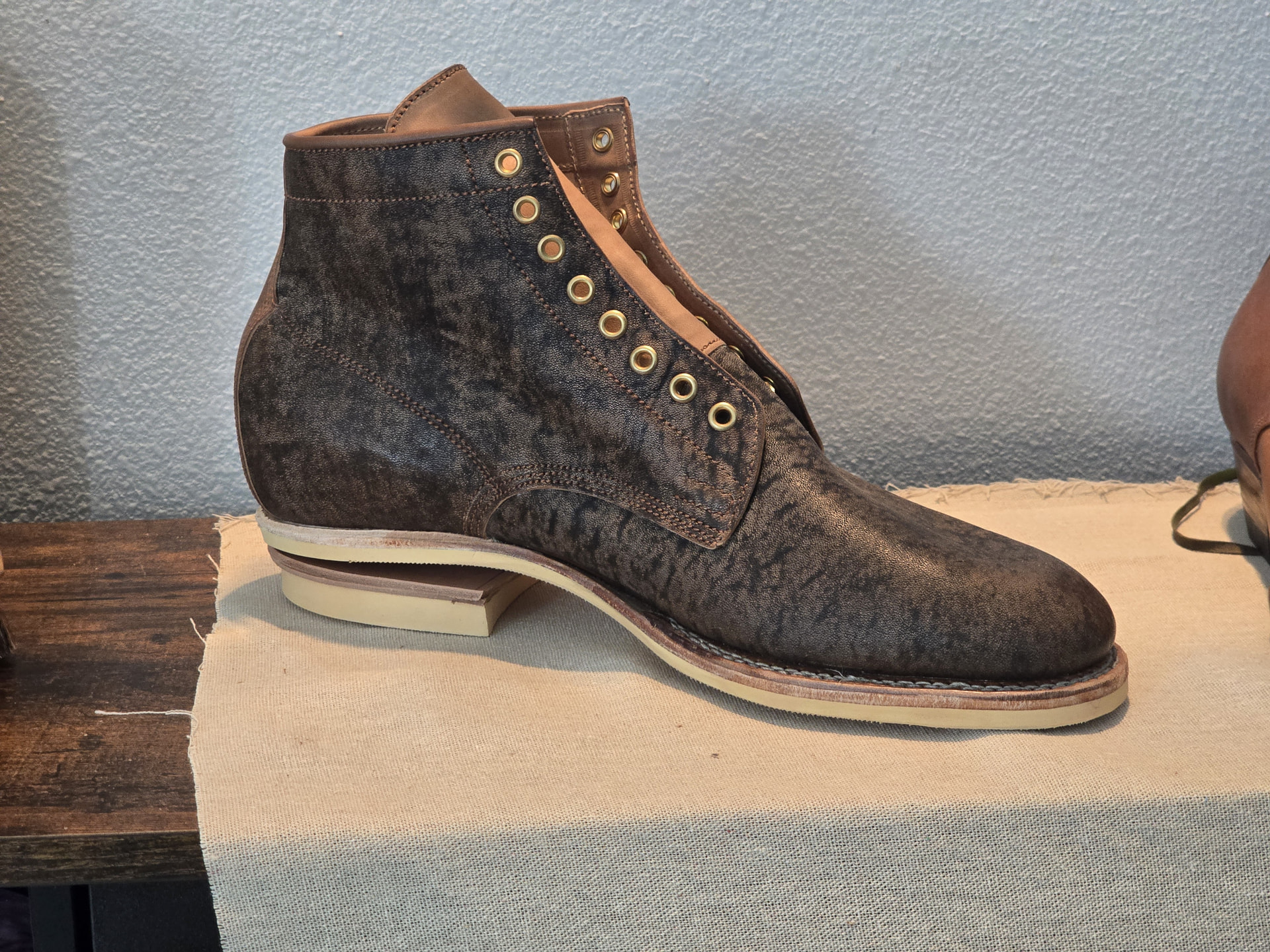
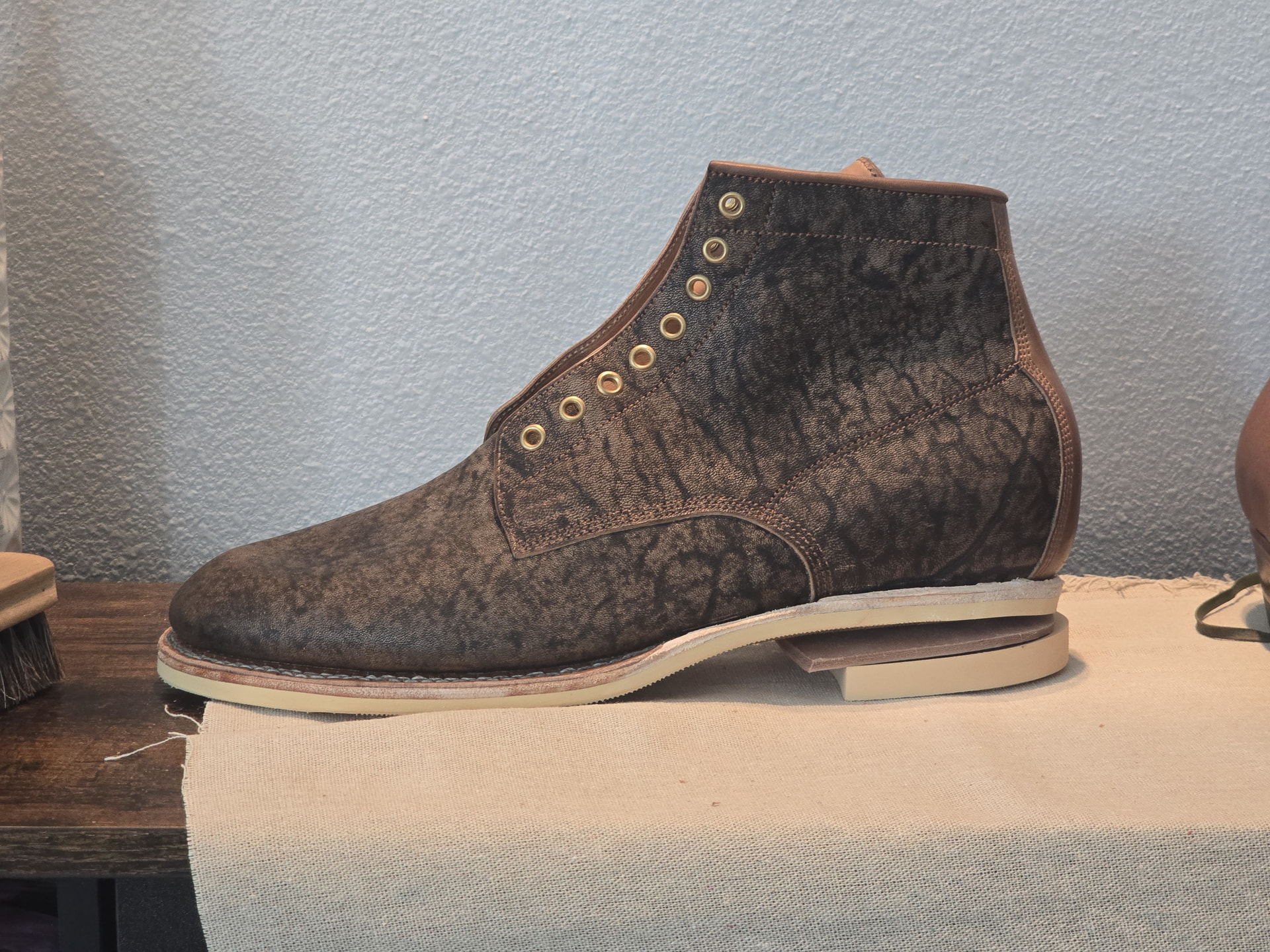
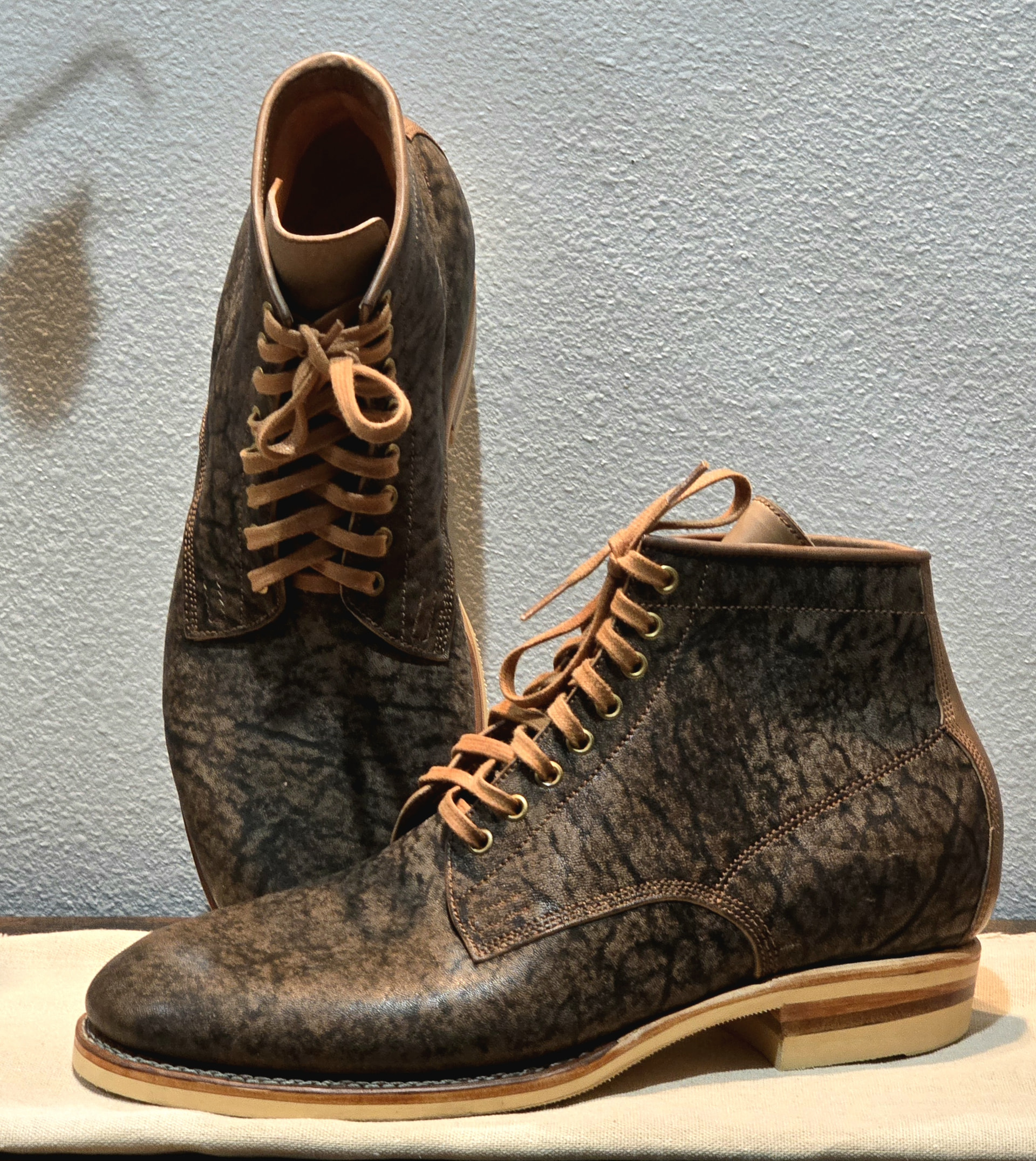
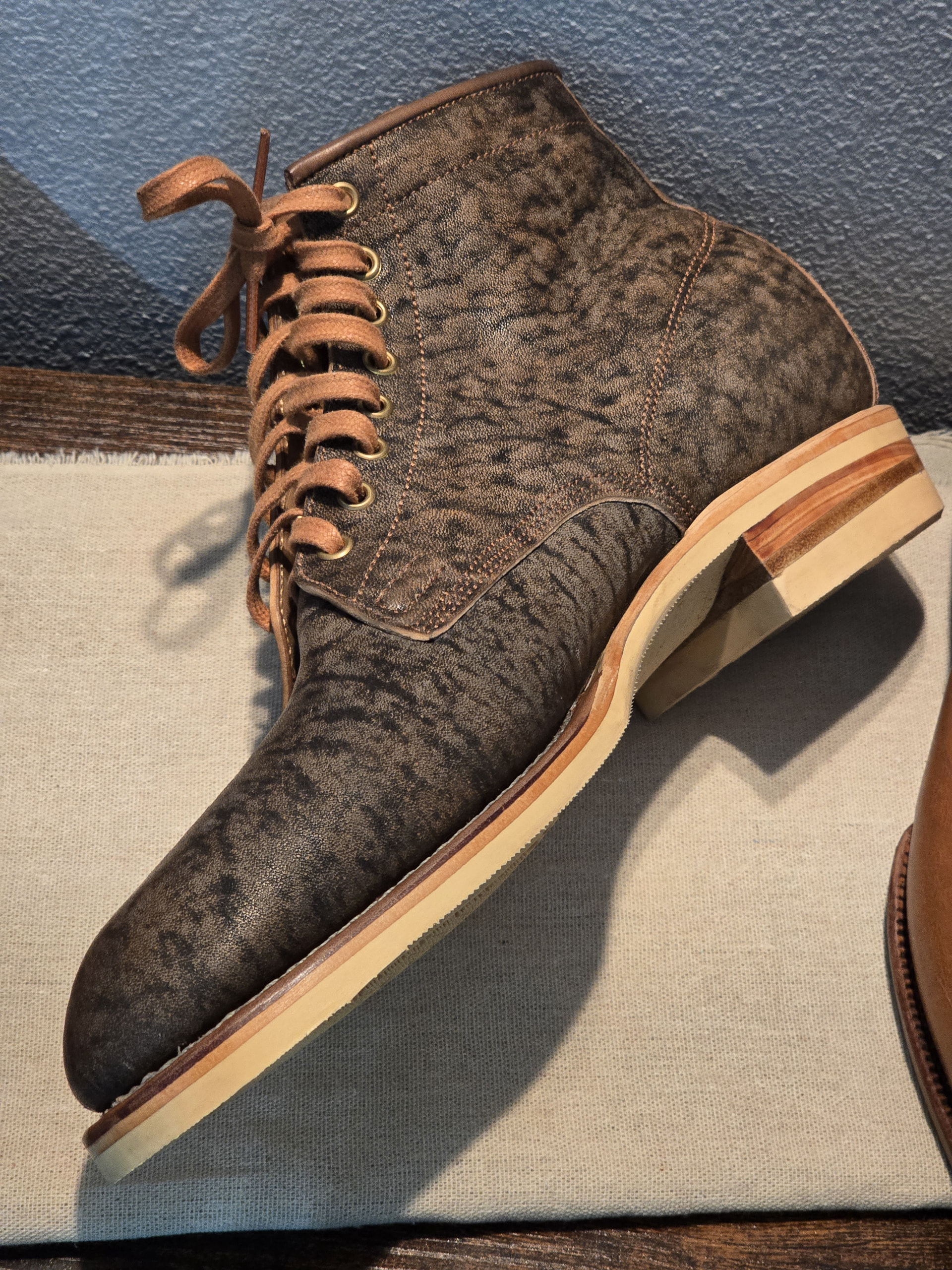
Lavagna is a wild leather

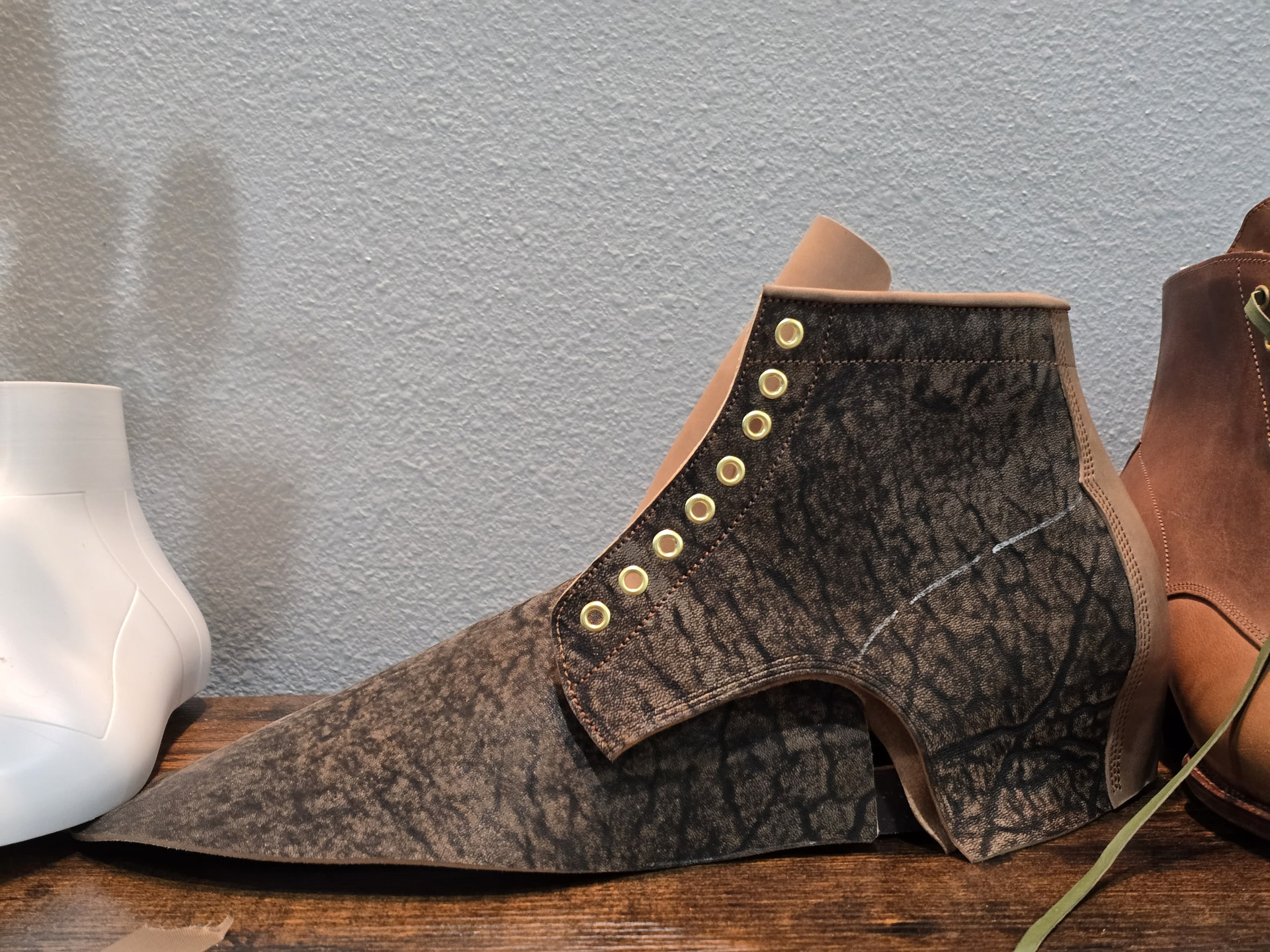
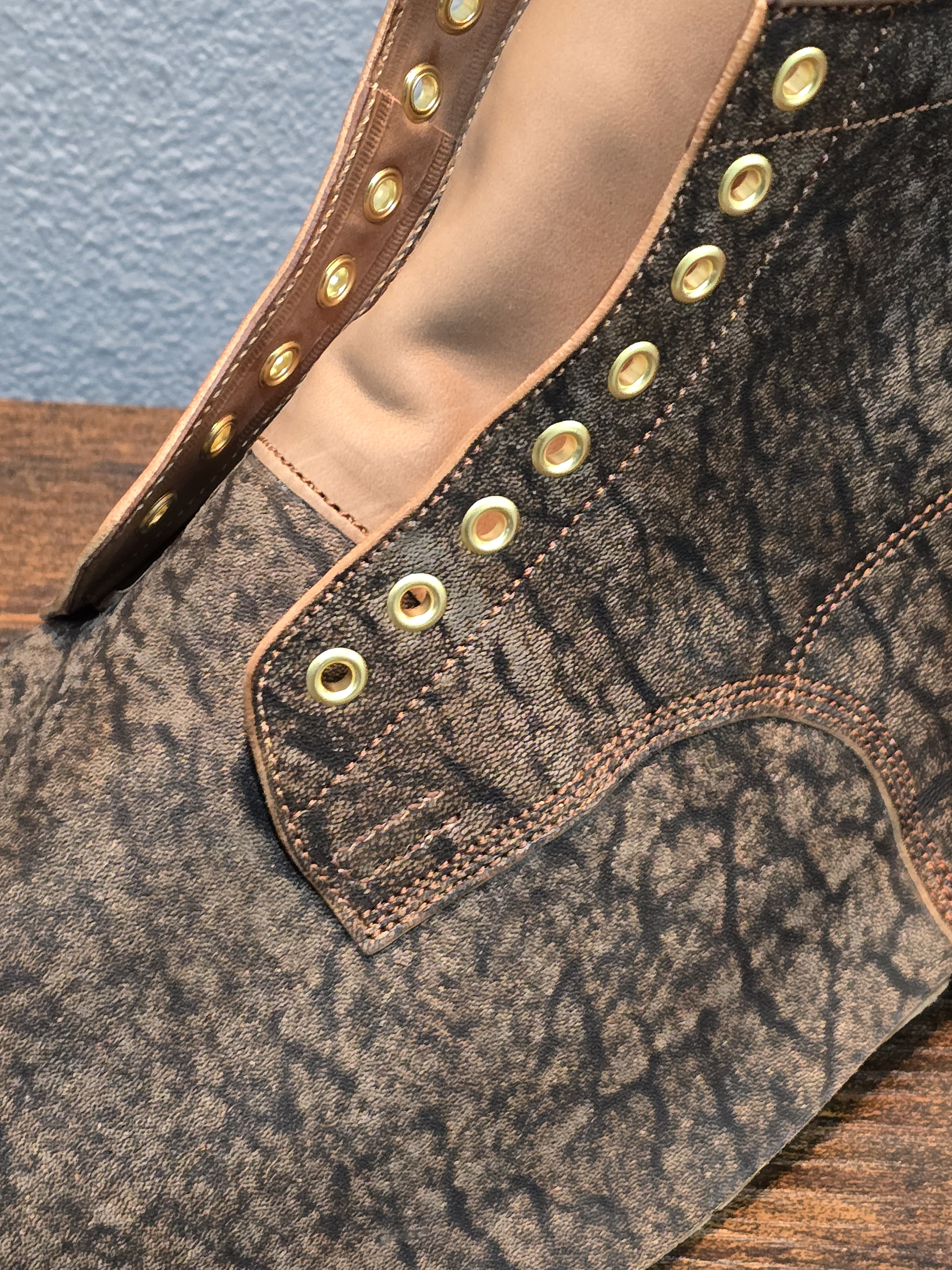
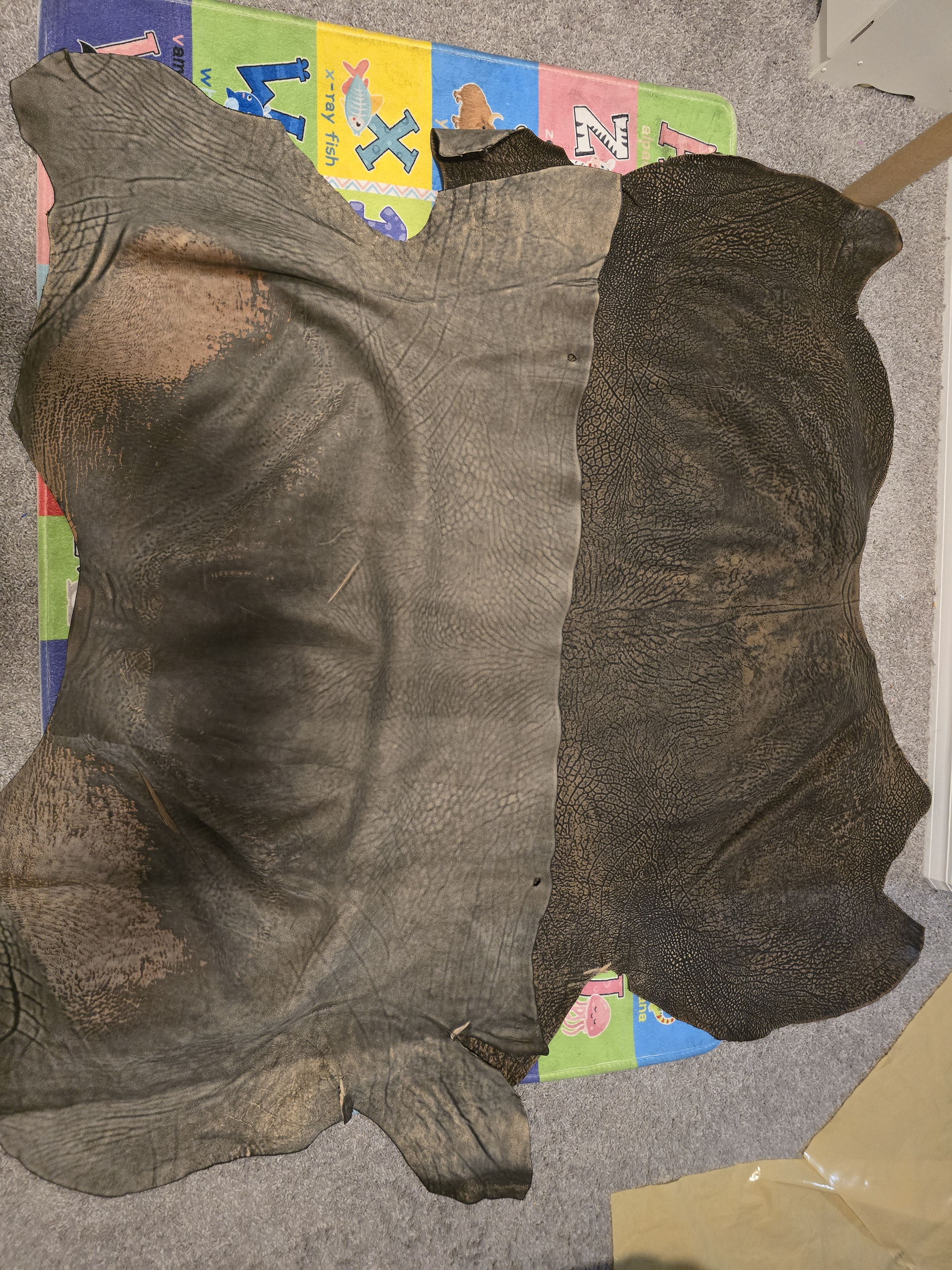
Ended up with a few hides of this Maryam Lavagna horsebutt, so decided to iterate a bit of the pattern I used on the kakishibu kangaroo boots.

The contrasting leather is maryam toscanello matte TPR.

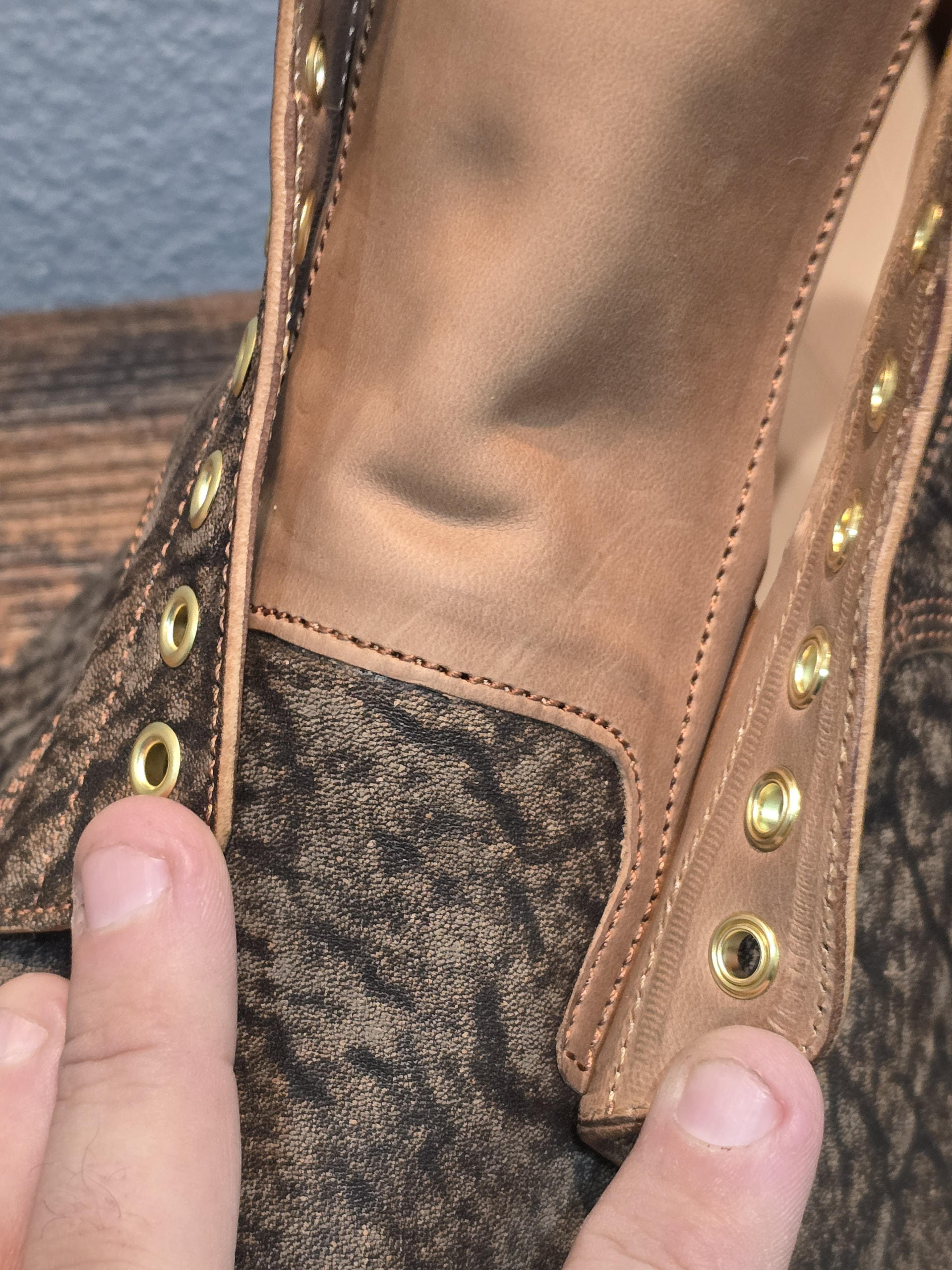
Gave it a squared off topine with some edge binding and a gussetted tongue. Referenced Oldspeed MFG’s video on laying out gussetted tongues. Worked great.

1 Like

Wow, that’s funky stuff! @thenewreligion any idea what tanners call that style?

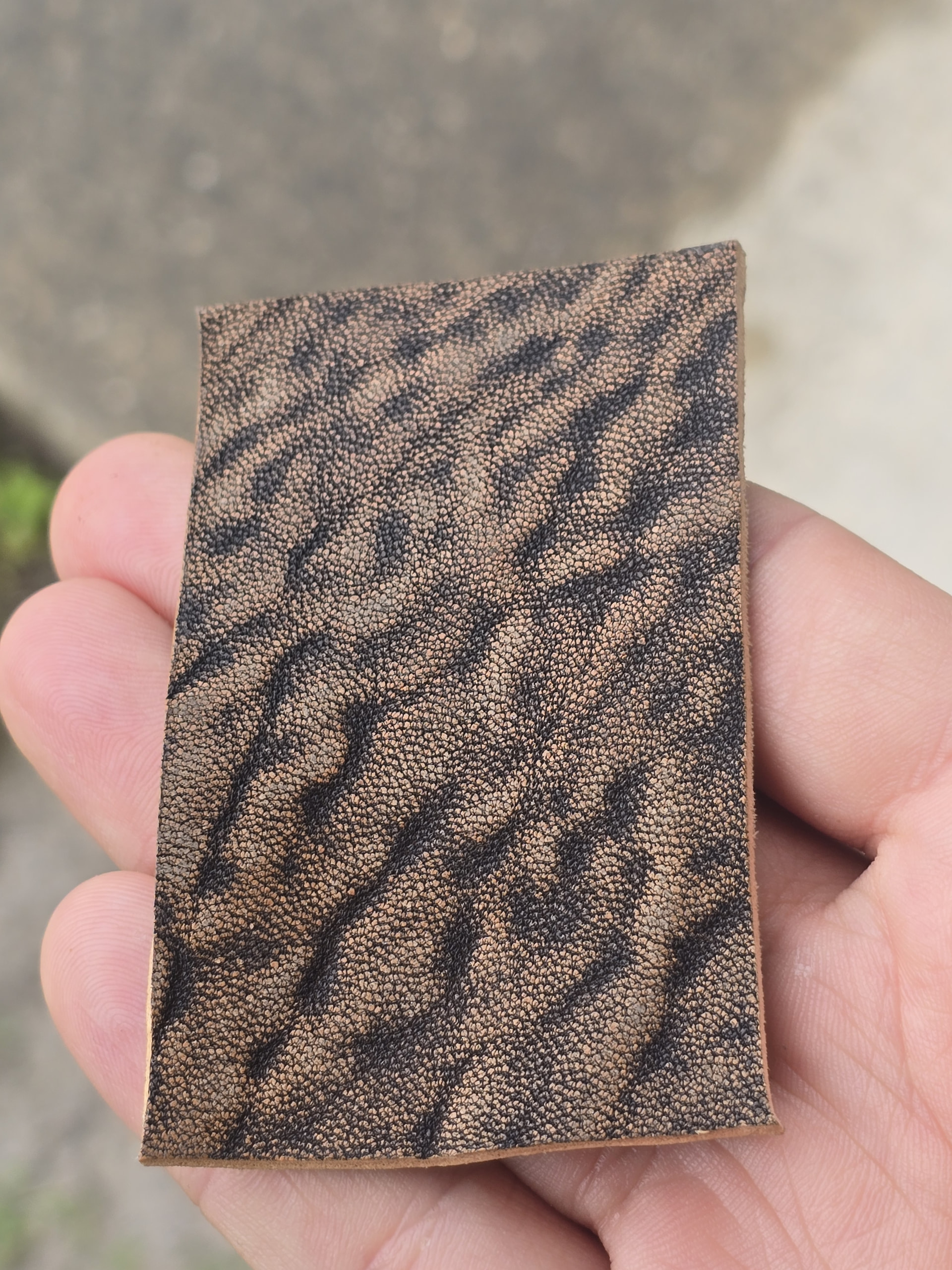
It’s kinda like a tipped leather, but the opposite. Instead of the contrasting dye applied to the high points, this is given a base natural color dye, then thr black top coat is applier before it is washed and tumbled. Basically, you end up with a heavily shrunken horsebutt with the black topcoat down in the recesses rather than on the high points.

1 Like

I love unique grain, but I feel like so often all that detail gets lost once I stretch it around the toe. It looks like this stuff is keeping a ton of that character even after lasting!

1 Like

It definitely isn’t going anywhere during lasting

2 Likes


Coming together pretty nicely. Want to make a few more tweaks to my last and such, but fixed some things I wasn’t happy with about previous builds.

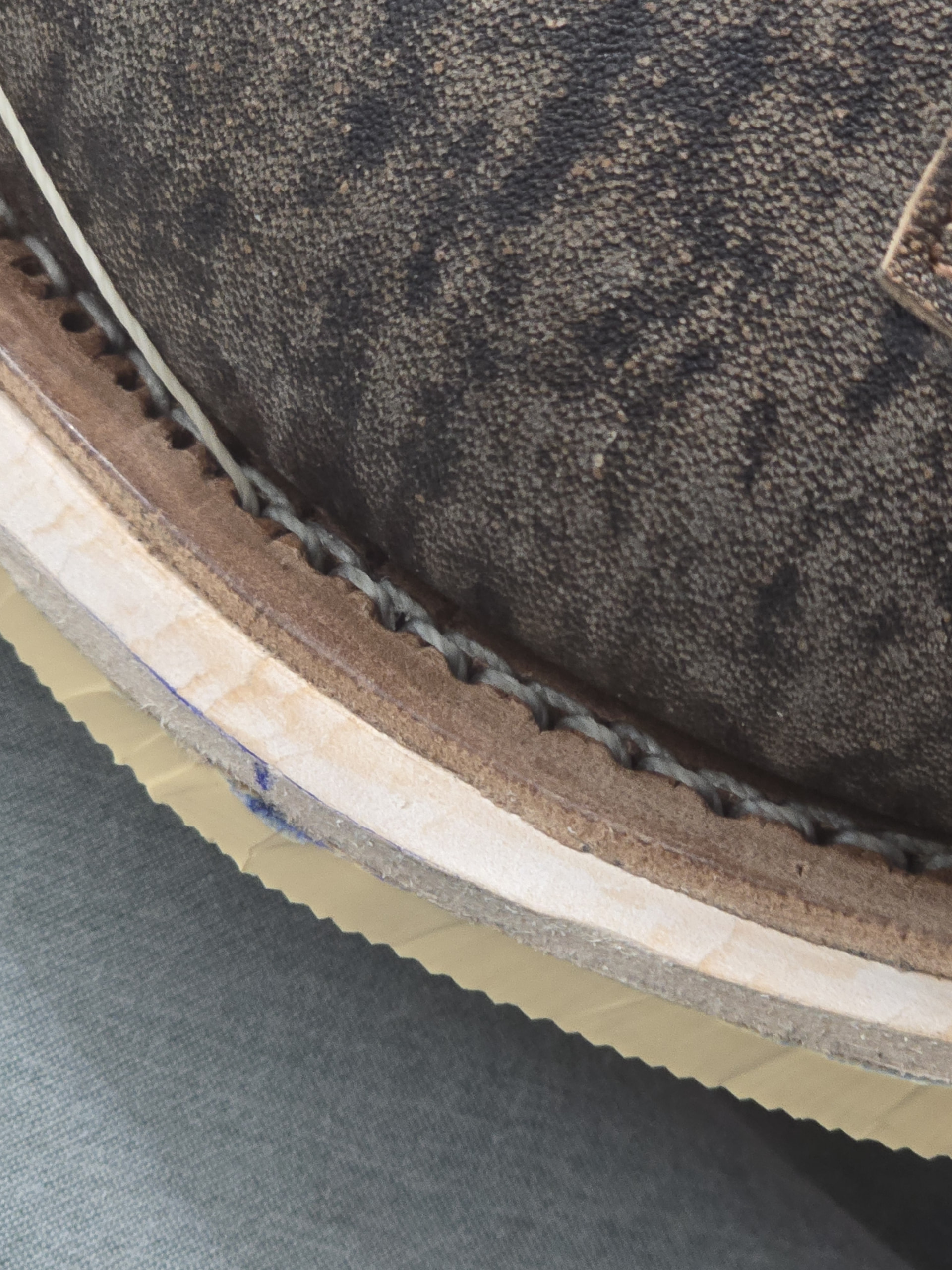
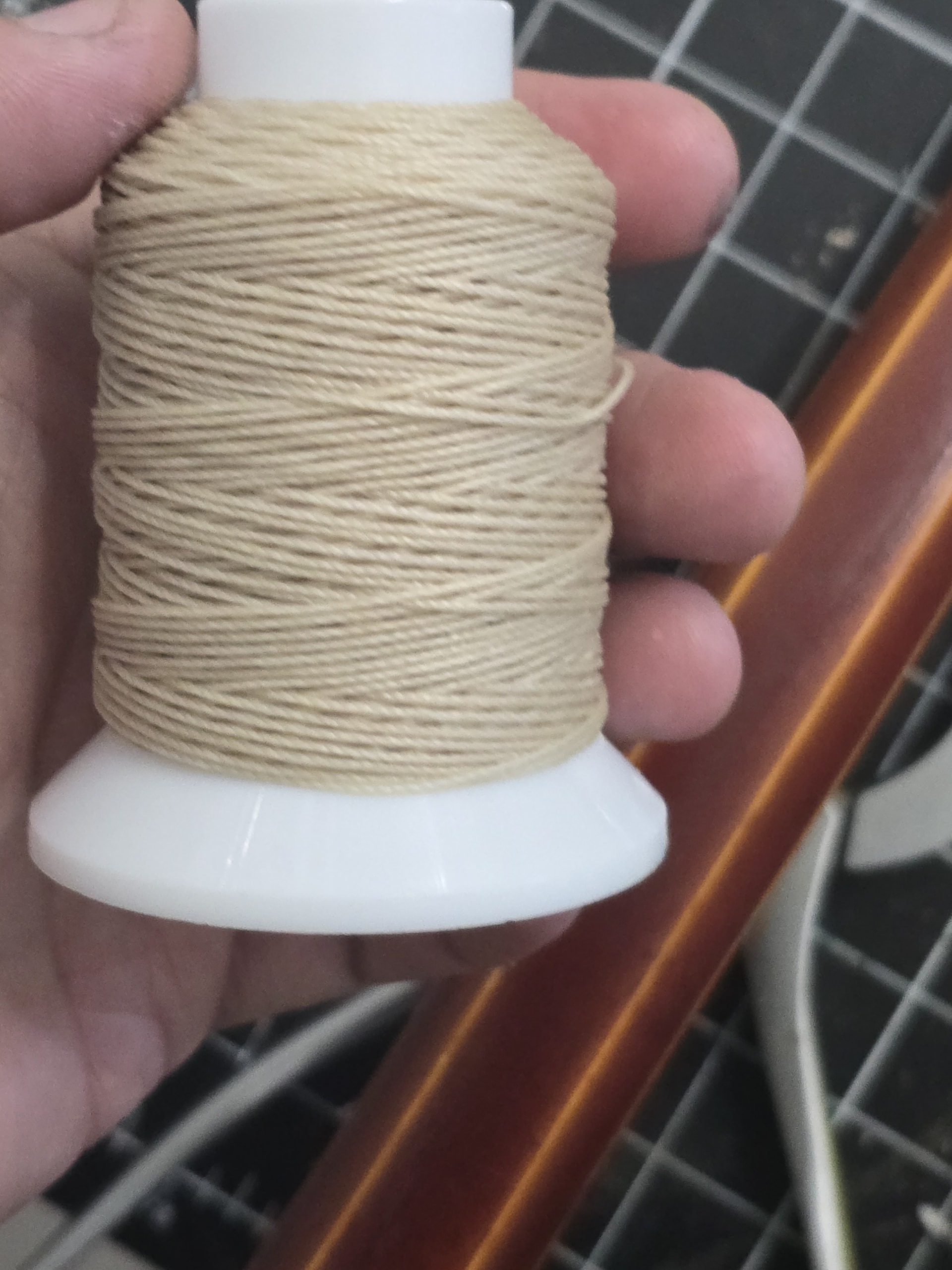
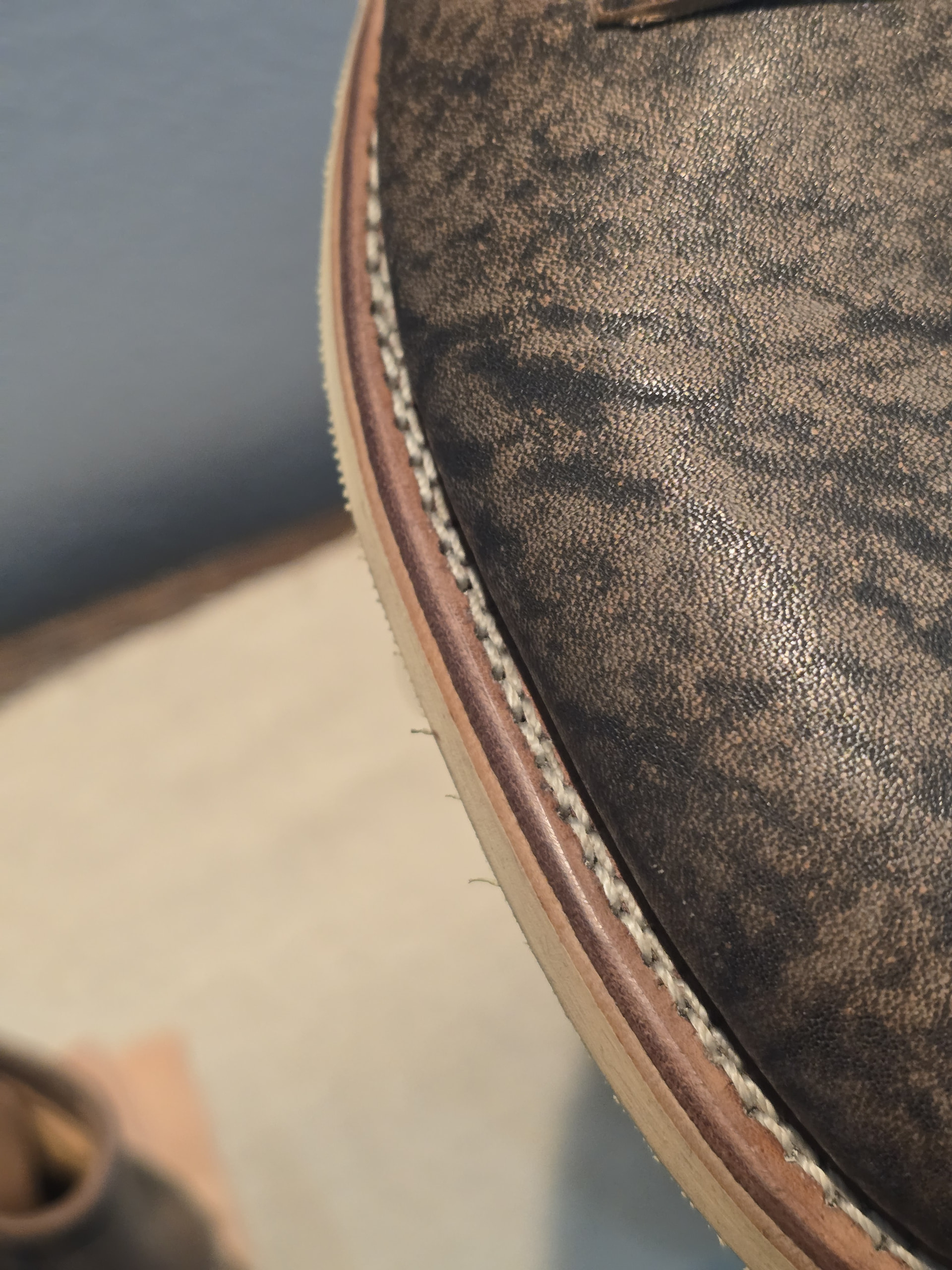
I need to find a better thread for my outsold stitching. Been using some #0 double waxed vinymo mbt and the wax holds things together great, but gets so dirty.


I’ve had this issue, but I haven’t yet discovered why I sometime get away with light thread and sometimes don’t. It’s not just a matter of getting more wax on the thread. It certainly helps to keep hands clean.

When i stitched the 2nd boot, I pinched the thread between two pieces oc leather and pulled it througg several times to try to remove any excess wax. That made the dirty thread problem maybe 50% better. Still not happy with it, but is consistent with the wax being the issue.

1 Like

I’ve also used this thread and had the same experience. I just make my own thread now for welting and outsole stitching.

I was going to make a reference post for awl and thread sizes but I haven’t gotten around to it.
For now I will share this:

Ramie grade 8 thread:
3 ply for 7-9 spi
2 ply for 10-12 spi

TBH I am not a fan of using less then 3 strands because it makes it hard to get a nice long taper. However, ramie 8/1 is the easiest thread to find. If you can find some grade 12 or 16 thread then its nicer for high spi.

So what I use now is:
8/3 for 7-9 spi
16/5 for 10-12 spi
16/4 for 13-16 spi

I am not a fan of using a large amount of strands so like 6+. I always end up getting thread tangled and it becomes impossible to fix, also increases the chance to have small knots in the thread (its like fluff that comes from the spool, not from me). I am able to get a nice long 30-35 cm taper with 5 strands and this works well for the bristles I use.

This is all for leather soles where I make the holes using a square awl.
The awl sizes I use are the following:
80 mm for 7-8 spi
75 mm for 9-11 spi
65 mm for 14 spi
60 mm for 16 spi

For transparency, I have only done 7, 8, and 10 spi on completed shoes and I have done 11, 14, 16, spi on test pieces of welt and sole leather. The thread and awl sizes come from my own testing and some suggestions from William Efe Laborde and a retired Lobb outworker.

Awl sizes are a bit tricky since there can be small awls that have a large cutting surface and are thick along the shank, making them unsuitable for high spi work. Its always worth testing on scrap leather. It also gives you a good idea if your awl is strong enough for whatever sole leather you are using.

You basically want to use the smallest awl possible that won’t break easily.

I have no idea if this is useful for boots with a rubber sole but I figured I’d share in case.

For waxing I am a big fan of Starko tools wax. It preserves the color of the thread and smells amazing lol. One thing to be careful is if you use pitch glue to secure your bristle then there will be residue left that the rest of your thread will pick up, making your thread look greyish and black in some spots. I have also made my own wax but it always makes the thread look a bit yellowish.

In terms of polyester thread I have only used the vinymo double wax but when i asked Francis Waplinger he told me he uses Tiger for his outsole stitching. I’ve been meaning to try it for welting but its so expensive lol.
2 Likes

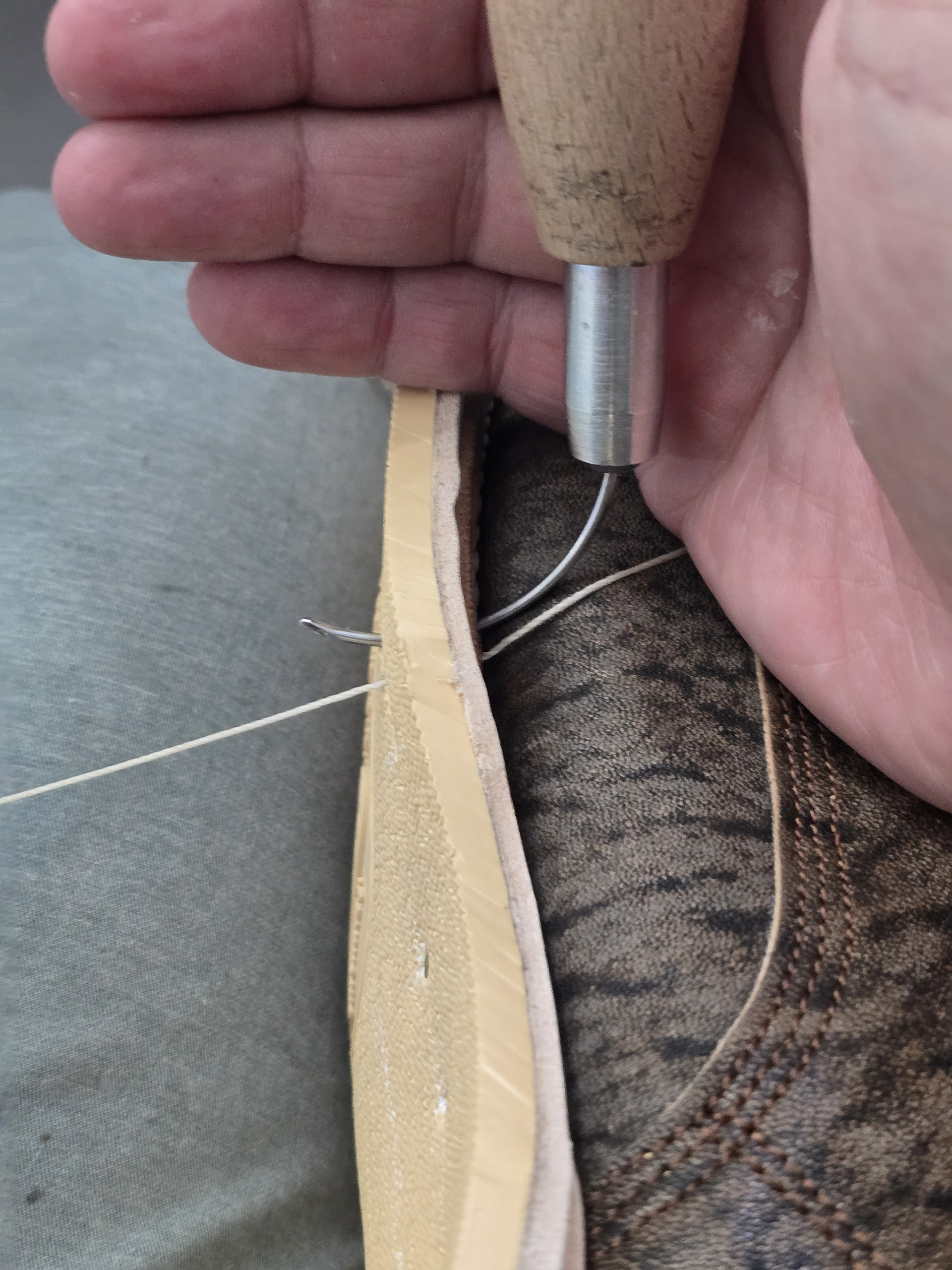
The big challenge I run into with the rubber soles is the awl hole closed up immediately, so pushing a bristle through is almost impossible. I ended up using the tool that lisa sorrel uses for punching holes that is based on a landis curved awl and then put the corresponding curved needle in an awl haft to use as a jerk needle.

Got the job done and should be able to grab some of your suggested threads as easily as the vinymo.

I didn’t hate the vinymo on a bit higher spi (relatively). These boots are at 5 spi, my kangaroo boots are at 8 and saddle stitched. I feel like it worked better on those, but it also helps that the thread wasn’t a light color.

2 Likes


A little heat gun action seems to have helped a bit with remleting the wax and cleaning things up a bit

1 Like

Looks good to me. Problem solved?

It’s better at least. I still think the color is getting muddled up a bit, but there’s at least a path towards looking decent.

1 Like

I wonder if it’s something similar to what happens with pullup leather. maybe stretching the thread changes the way the wax, (or even the air), is distributed within the thread. That would explain why heating it “resets” the color.

1 Like

Definitely could be. May also be a bit where any surface level dirt or dye transfer is absorb/pulled deeper into the thread.

1 Like


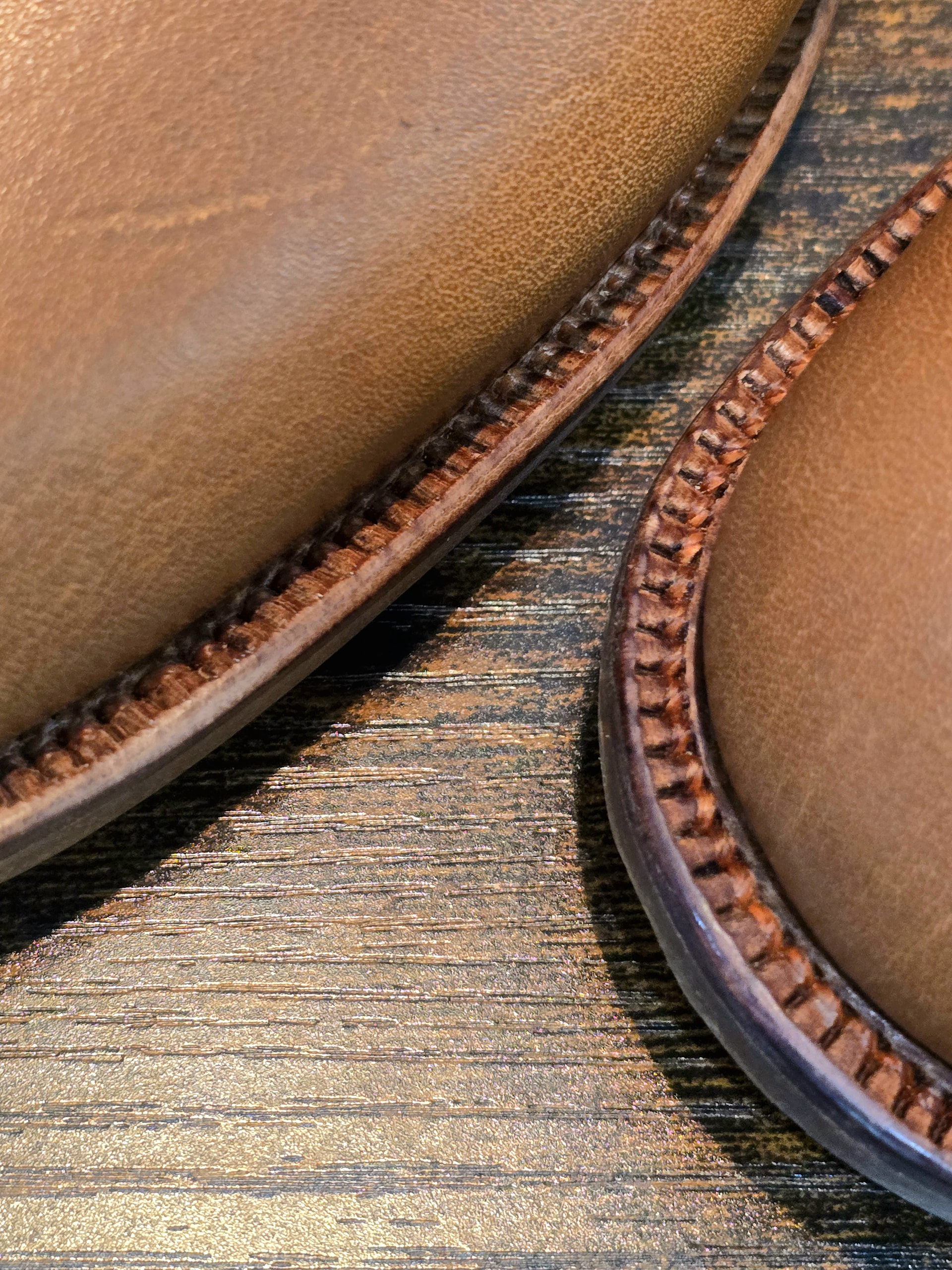
About finished, just needs a sock liner. The midsole leather I bought is really lackluster, so ended up with some mixed looking leathers in the sole/heel stack. Decided to just go with it rather than dye them since these are such an odd mix of things already.

1 Like

Very nice! Stay patient and finish strong!