I was recently rewatching Ken Hishinuma’s video on his 3rd place shoe in the 2025 shoemaking competition and I noticed he was using some of the bottom stain that William Efe Laborde sells.
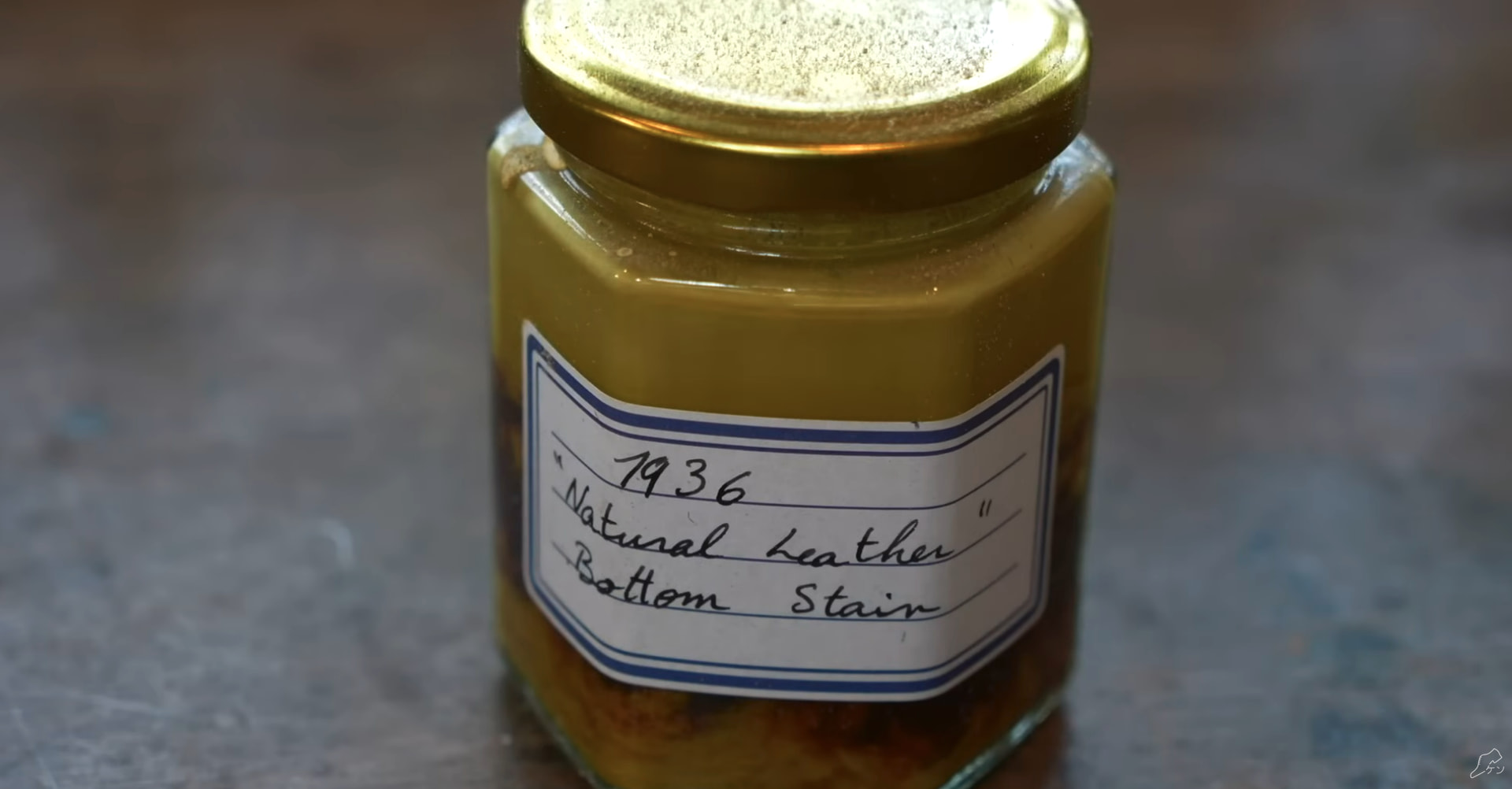
I have seen Ken use funori and a Japanese bottom stain in some of his other videos. If he chose William’s bottom stain for his competition shoe it makes me think it his favorite (at least aesthetically). William’s listing says it’s made according a method printed in a book but not much more information is given. Thorton (pg 424) and Golding (volume 6 pg 227) briefly mention bottom stain but its basically just gum dissolved in water. I don’t think that is all that William is using just based off the color of the stain.
I hope I can pickup some of William’s stains once they are back in stock. For now I decided to compare some of the bottom finishes I have.
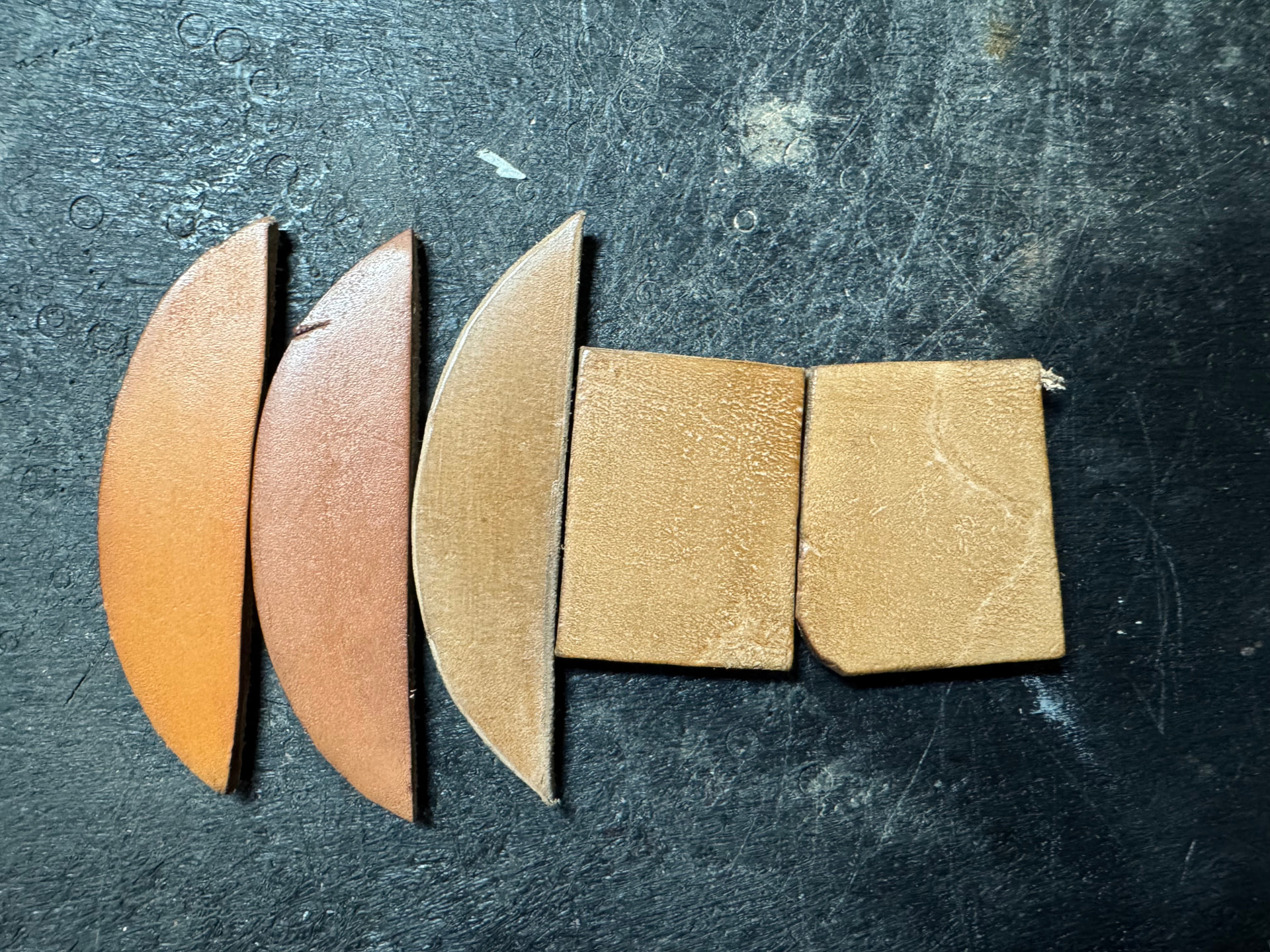
From left to right: Fiebings #228, Fiebings #742*, Funori*, CMC, Tokonele
This isn’t a great comparison since I don’t know if each of these sole scraps are from the same bend. All I know is that the 2 Fiebing stains are from panhandle insole leather and the last 3 I’m not sure.
I prepared each piece by sanding progressively from 100 to 400 grit. I followed Lee Miller’s advice for the Fiebing bottom stains and for the rest I just used one coat, wiped excess, rubbed with polishing cloth. The 228 stain has a beautiful and uniform orange color. Lee Miller describes it as golden but I really don’t get that impression in person, maybe it depends on the sole leather used or I just didn’t apply it well? The 742 stain was purchased from Lisa Sorrell, I placed an asterisk because I’m not actually sure if I was sent the right product. The website describes it as tan (and 228 as brown) and the container is labeled with 747 but it just looks brown to me. Its a nice color but I think it might have been confused with the #1364 stain from Fiebings.
Funori is Japanese seaweed that is boiled in water and used as a burnishing agent. Seeing Ken Kataoka use it in his videos inspired me to get some for myself. I ordered it from Japan, where it is way cheaper. I added an asterisk here because I did not use any kind of measuring when mixing it with the water and I believe I used too little a concentration. With too much water in the mix the leather was compressed too much and took the shape of the polishing cloth (indicated by the streak marks). I’m not sure what kind of measurement is used for funori since the book of men’s shoes making doesn’t give numbers and it looks like Ken just takes a random pinch. The funori preserved the color of the leather similar to the other “natural” finishes but its the shiniest of the bunch (not really obvious from picture, but can see it in person). Next was the cmc which is a powder that is mixed in water. In this case the manufacterer gives a ratio of cmc to water and I followed it. It makes a jelly that you can store. I was really impressed with the shine, especially when you consider how cheap cmc is. Lastly, I tried some Tokonele. It wasn’t as shiny or as smooth as the other finishes but it’s still better than nothing.
I’ll try to get some gum tragacanth whenever I make my next shoemaking supply purchase so I can add it to the comparison. I am also curious about all the other Japanese burnishing agents available. There is so many of them when you look at leathercraft tools but they don’t really give any information, they might all be the same thing as Tokonele. This test wasn’t very scientific so I don’t think too much weight should be put in my observations but I figured I’d share them and see what other people think or have tried.