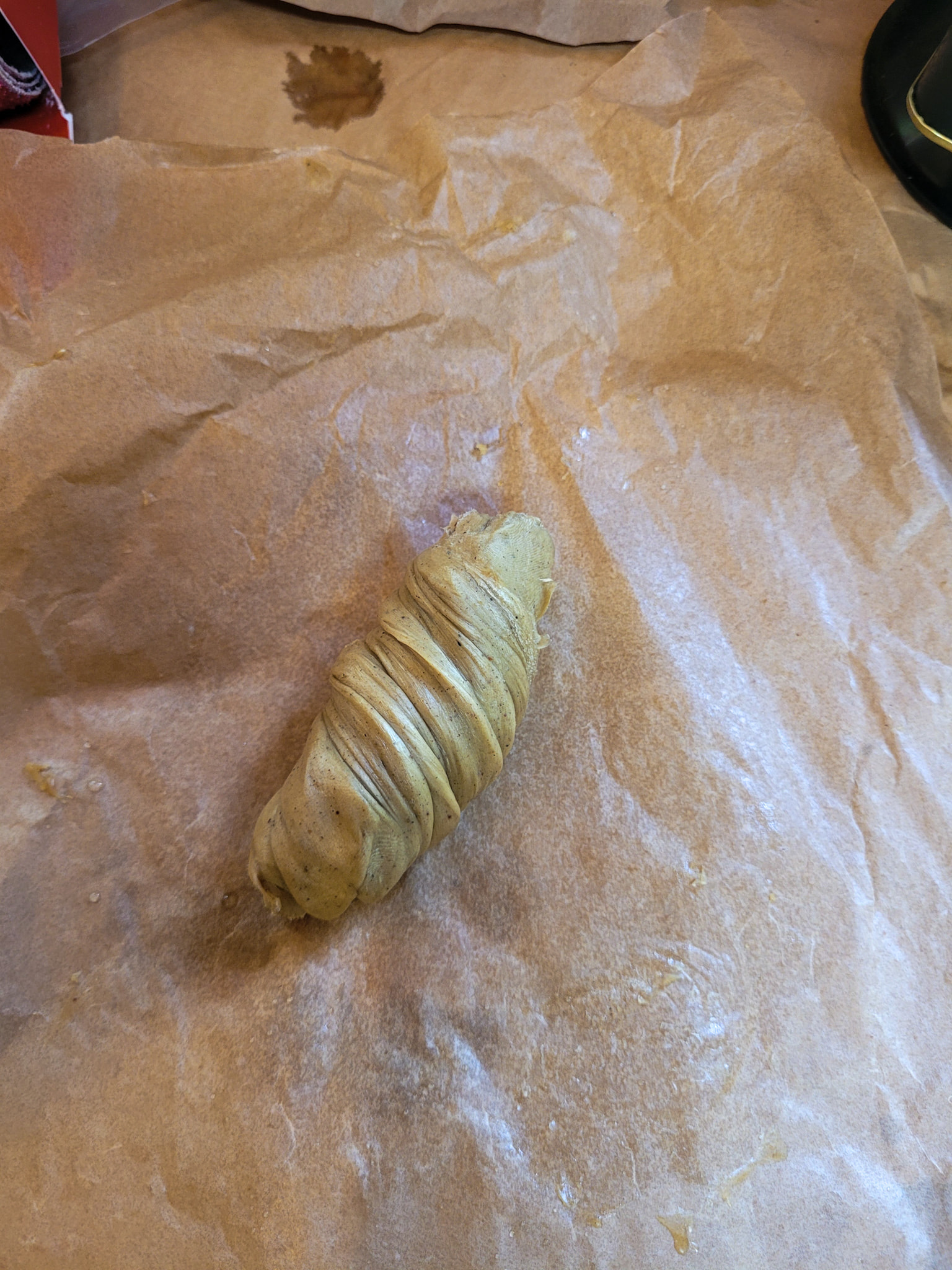
I’ve decided to make my own coad, from scratch, using local ingredients.
Step 1: forage pine resin, refine into rosin.
I spent a few hours wandering the woods where a new hiking/biking trail had been built. As I suspected, there were plenty of pruned and injured trees from the construction activity. I gathered about a fist sized amount of very dirty resin, about half of which was bark, bugs, and debris.
I melted it down in a mini-crock pot from the thrift store, one of those tiny “little dipper” crock pots. At first it bubbled a bit around the edges as the terpentine boiled off, but that quickly subsided. I ended up with a honey-like molten syrup with lots of debris floating on top.
I discovered the perfect strainer was one of those kitchen sink drain strainers. This rested perfectly on top of the melting pot. I scooped out the molten ball of resin coated bark in the strainer, with the lid on, for about an hour, and allowed the resin to slowly drip down to the pot below. This got all the bark and bugs and pine needles out, but there were still lots of tiny specks and crumbs. Hopefully those won’t be a problem.
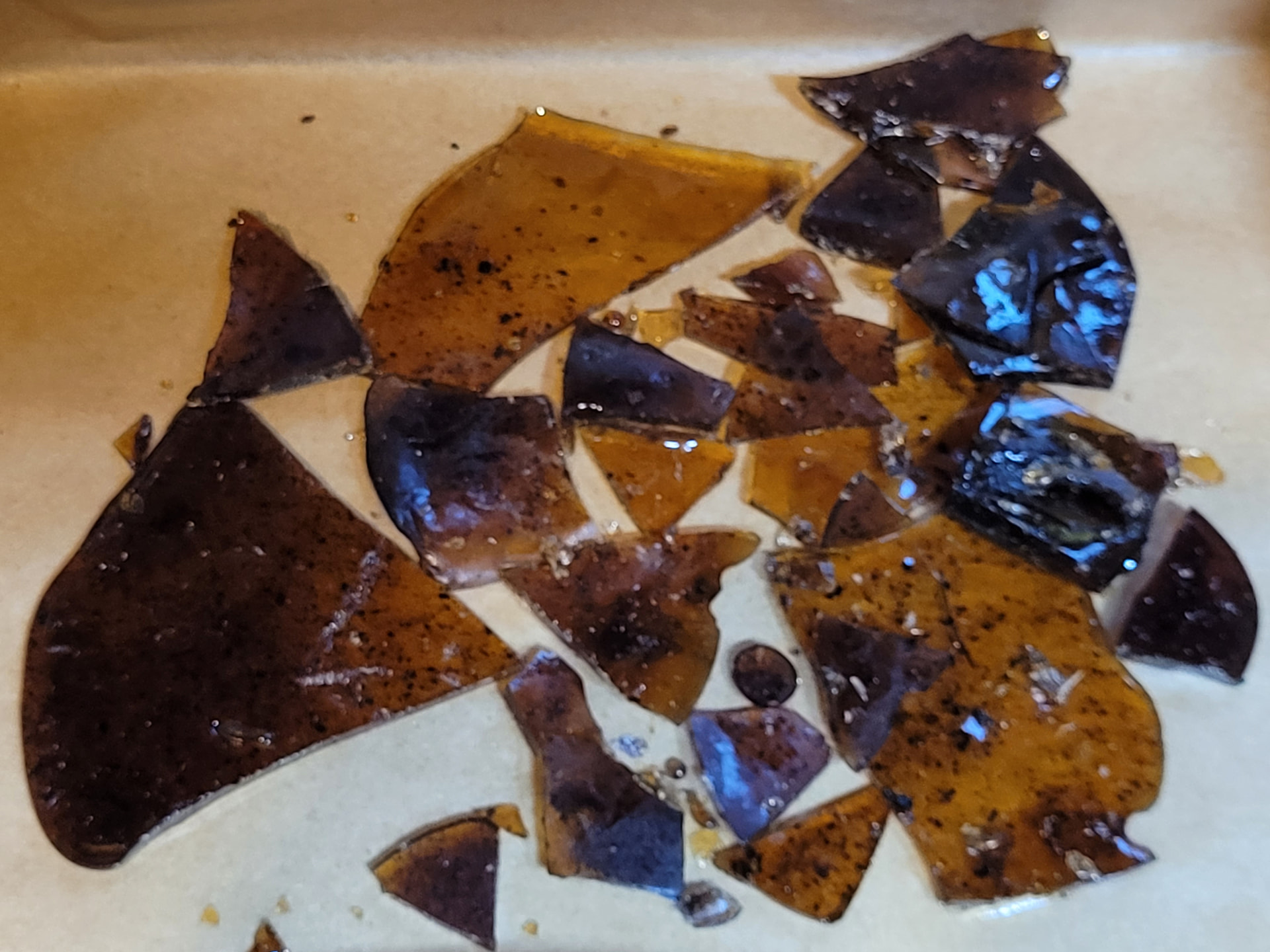
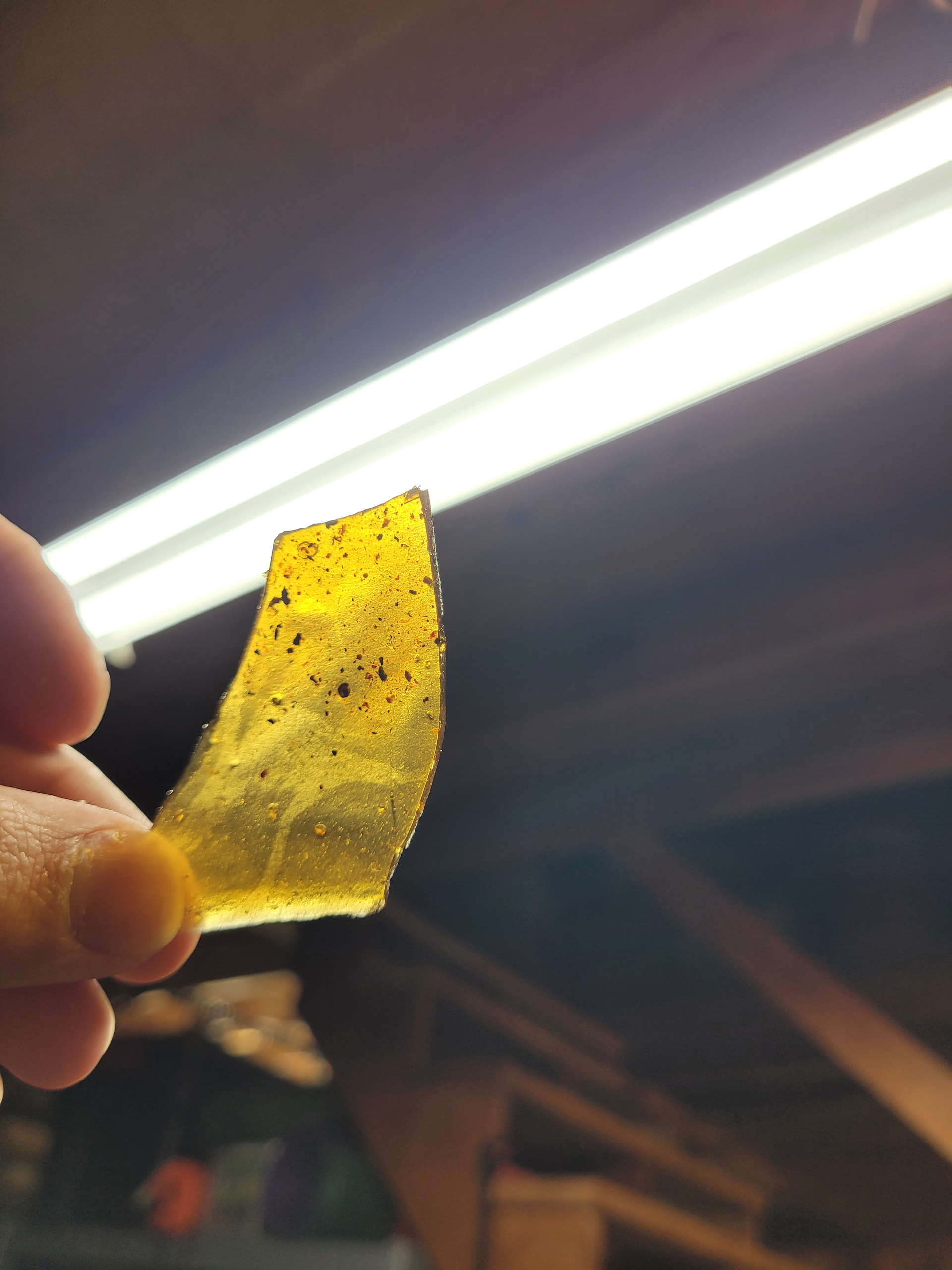
I poured the melted and filtered rosin into a tray lined with parchment paper, and it hardened into a brittle, but slightly flexible transparent sheet.
total yield was about 40g of rosin. the debris was mixed with wood chips and chopped straw and molded into balls, placed in egg crates, to make fire-starters.
I’ve used panhandle’s wax a few times. I suspect its a fairly simple mixture of beeswax and rosin.
It’s not nearly as sticky as the mixtures I’ve made with tar. I didn’t really experience the effect of the coating melting slick then immediately hardening tacky until I made some of my own. But I’m not sure how necessary that effect really is any more, especially with synthetic threads.
I haven’t tried it yet, but I have it on my list to try inseaming with a pre-waxed Maine Thread poly taper, then sealing the inside of the holdfast with RTV silicone. That won’t stop moisture wicking through the weather, but it will sure stop it seeping through the holes.
my impression from what I’ve read is that it’s mostly an esthetic choice. you could make summer or winter versions of both blonde, bronze, and black stitching wax.
the texture and stiffness seem to be mostly controlled by the amount of beeswax and fat, while the pitch and rosin seem to have somewhat redundant functions.
I’ve been reading about this for the past few days and no two recipes are the same. some have pitch or tar, some don’t. some are just resin and beeswax. some have tallow, some don’t. some people taffy pull it. some just pour it into a mold and seem to get good results. Some people use the same recipe twice and get very different results, probably due to slight differences in the ingredients.
even the terminology of the ingredients is inconsistent. nobody seems to agree on what “pitch” even is.
What’s a bronze wax? Something in between black and blonde, in terms of tar content?
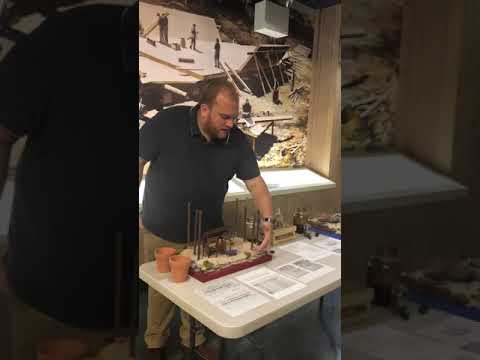
There’s definitely lots of variation in terms like “pitch”. But they could be specified more precisely, in particular contexts, when they were still relevant to major industries like seafaring and shipbuilding. I found this video particularly enlightening:
A lot of the processes used to make those “naval stores” were themselves pretty chaotic—essentially outdoor “recipes” of sorts. So their products were pretty inconsistent, from a modern point of view. It seems that buyers would sometimes get around some of that variation by specifying by country of origin as a kind of second-best to a standard. Hence “Stockholm tar”, which is still around.
I’ve seen recipes that incorporate a bit of tar/pitch to darken it, but during the taffy pulling process it lightens into what is often described as a “bronze” color. I’m assuming that’s sort of a light brown, butterscotch candy color, darker than the yellow/blonde variety.
But again, the terminology is inconsistent.
I can confirm this happens when pulling wax I’ve made with Stockholm tar. It looks very much like the way taffy or other pulled candy gets shiny as air gets incorporated in.
If you put RTV on the insole don’t count on anything sticking after you place the RTV and anywhere it smears.
Panhandles wax always sets for me, even on the prepared main tapers. (The wax they use on them has no stickiness to it) using it on Kevlar and or unwaxed Maine it set immediately and takes a sharp or very hard continuous pull to break loose. It’s all I use now especially for wrapping a bristle and have only had one come loose and it was my fault. I started w DW split bristle method and now I just use a plain Jane wrapped fishing line bristle.
When I tried a recipe with tar it came out runny no matter what I did, I said to heck w it. After trying 3 other recipes and modifying the tar one i gave up lol.
For what it’s worth, I’m pretty sure waxed Maine Thread is primarily paraffin. They might use a blend, but as a whole that’s how it feels, looks, and melts as far as I’ve seen.
Just to add to that report.
When using the premade tapers, I wax only the tapers at first, attach my bristles and get my first hole going and then wax the thread with my hand wax. It doesn’t seem to get as twisty and yuck this way. I still ensure it is tightly twisted but it doesn’t get a pigs tail curly when you pull it through.
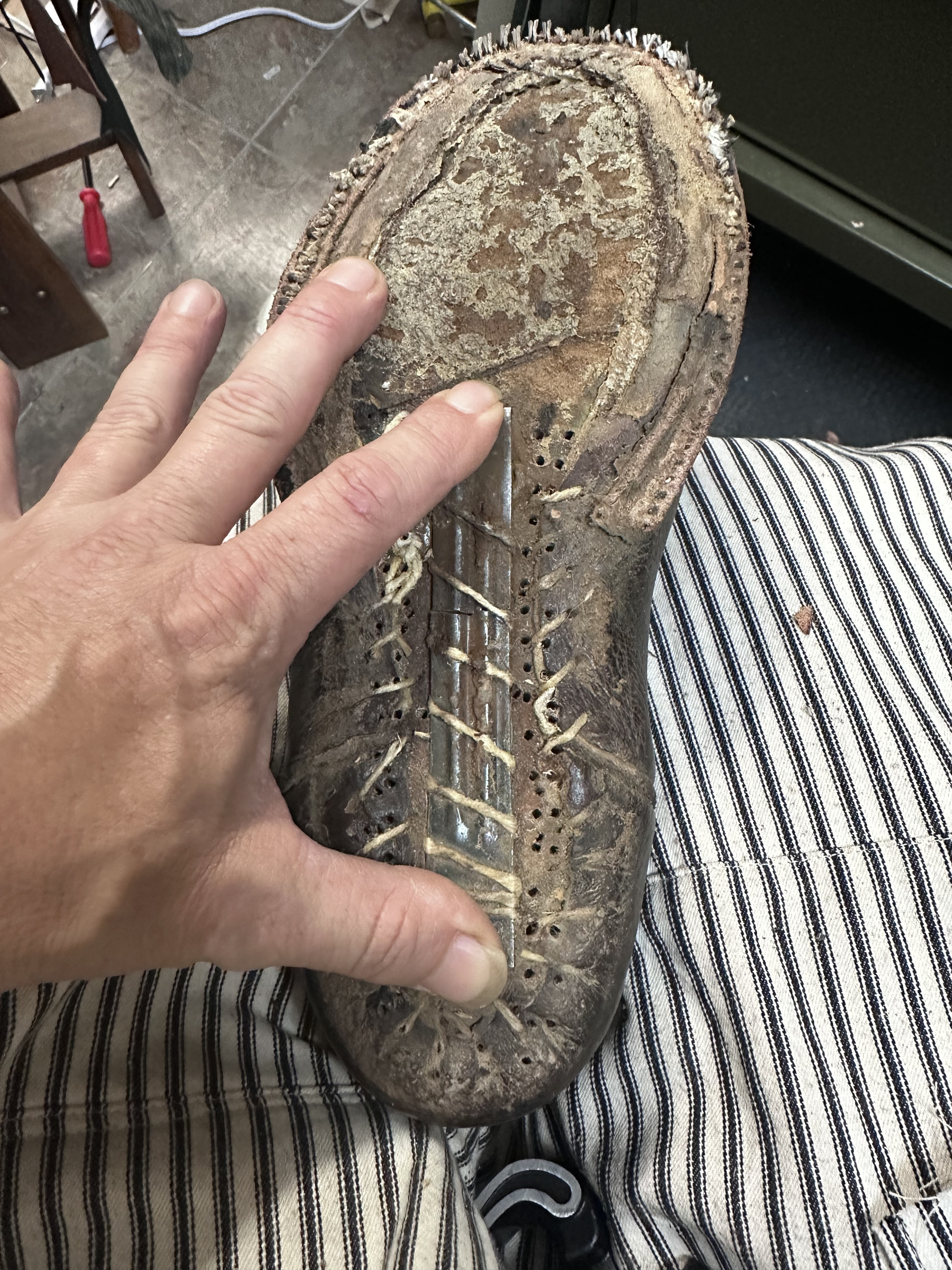
If you have a decent sized piece of cord left over after inseaming save it for repair work in other projects. I had a pair come in that had one broken shank. the maker had whipped the shank in directly to the insole. Never seen it done but it wasn’t budging. I was able to run right in through his original holes, and after running it all through I pulled the cord down tight. No need in wrapping a new bristle or wasting the cord.
Also in this photo you can see what was mentioned by Rex Klingelhefer about not cutting vamp down flush to the outside edge of the holdfast but running a narrow skive ending at the inside edge of the holdfast. In the inseaming thread.
Very much so, however he does nothing online and refuses to even keep a phone in the shop. Started building boots in his grandfathers shop in 1971 has been building boots ever since.
I am probably one of the few folks you’ll hear speak of him much.
I got some local beeswax at the farmers market, and made a batch of coad.
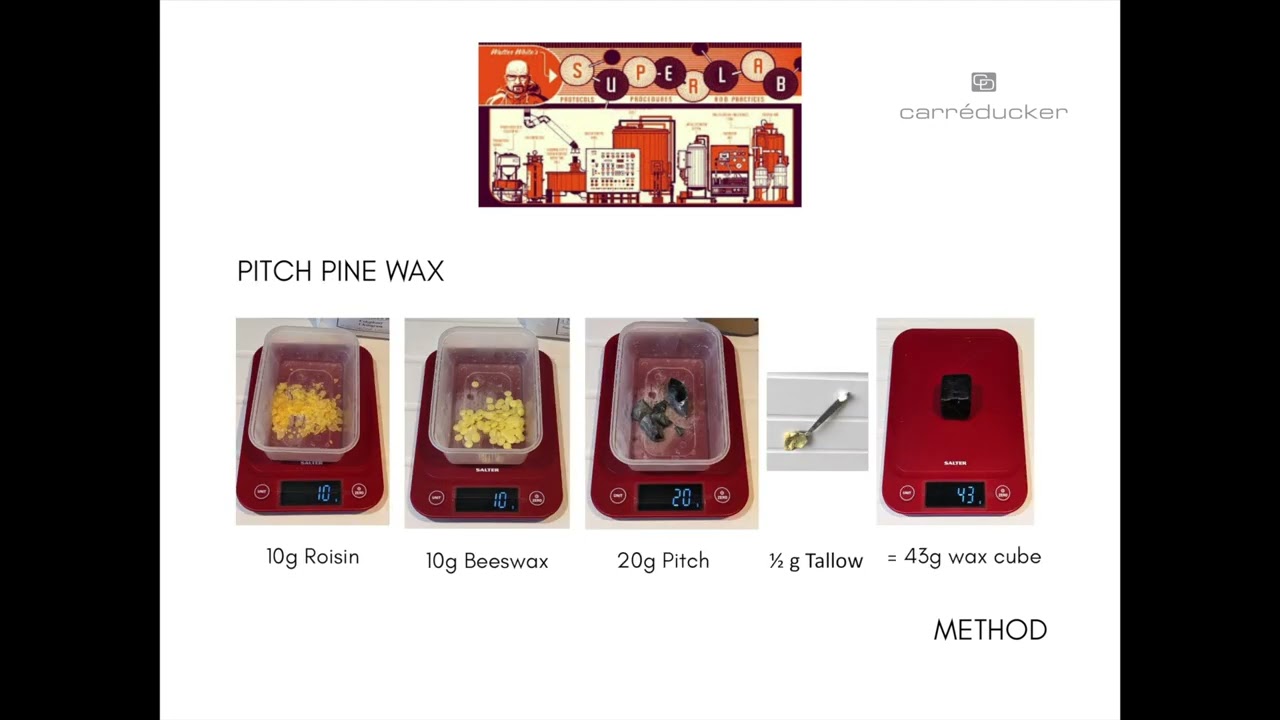
40 grams pine resin/rosin.
20 grams beeswax.
nothing else.
I melted it in my “little dipper” crock pot, mixed it thoroughly, and strained it. I didn’t add any tallow or fat, because I wanted to see what the texture was like without it. From my research, it seems oils and fats should only be used when absolutely necessary if the resin and wax mixture is too brittle or hard, and only in tiny amounts, since it can interfere with the tackiness.
I didn’t pour it directly into a bucket of water. Instead, I poured it onto a parchemnt lined tray and waited until it had solidified enough to peel off the parchment. Then I folded and kneaded it with wet hands to prevent sticking. this seemed to work fine. I didn’t see or feel any rosin crystals.
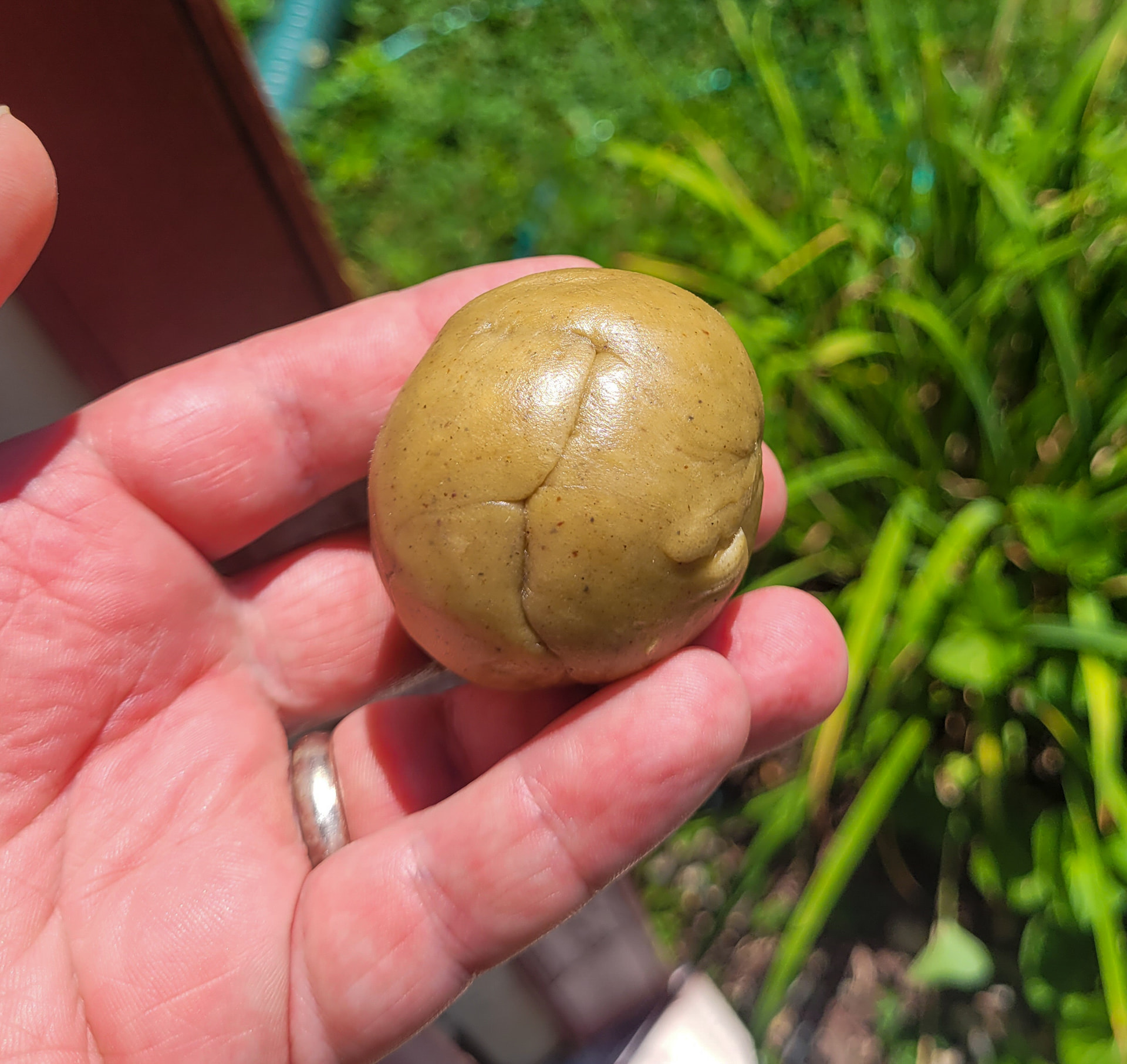
It was easily kneadable, and I got some good “taffy pulls”. it lightened slightly with taffy pulling, but darkened again when rolled into a ball. I think most of the “bleaching” people talk about after taffy pulling is just air being folded into the wax, and doesn’t really affect the color when it’s on the thread. But it’s fun to do, and it seemed to improve the pliability. out in my 80 degree garage it was soft silly-putty texture. In my air 70 degree air conditioned house it’s fairly stiff, but pliable enough to mold. So I’d call this a winter wax.
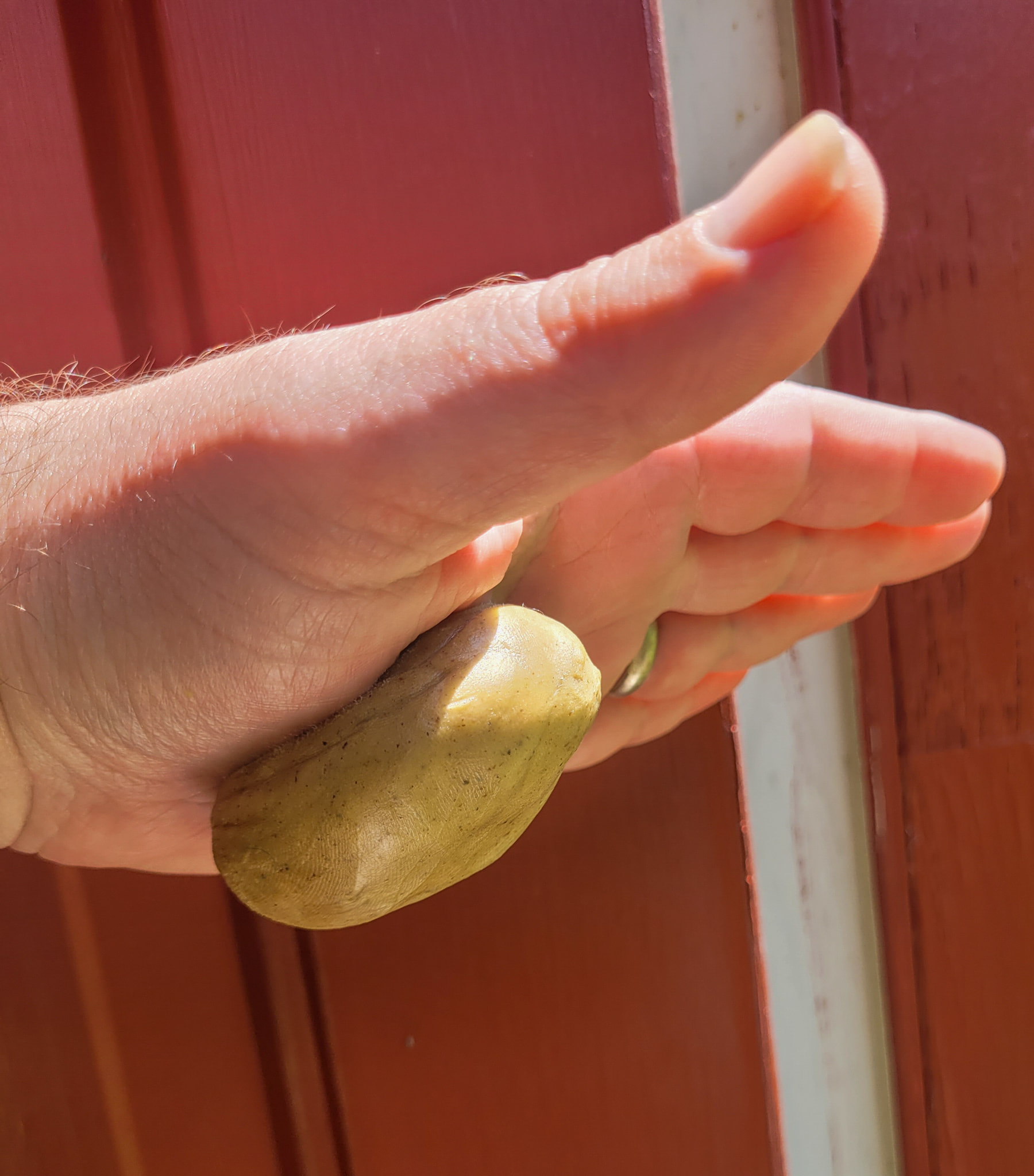
is it tacky? Tacky enough to stick to my hand and not fall off when I hold it upside down. if I pick up the ball it’s not instantly tacky, but a few seconds in contact with the warmth of my hands and it sticks quite well. I’ll plan on keeping this wrapped in parchment or a patch of leather, because once it gets on my hands, it’s quite difficult to remove. I had to use “orange goop” hand cleaner which is used for cleaning paint off hands.
I have not used it for stitching yet, but I’ll post an update when I do.
And it smells amazing. exactly like you’d expect. pine trees and beeswax.
I pulled some thread through it and it seems to coat the thread quite nicely. a little friction buffing from a scrap of leather and it gets right into the fibers. noticeably more tacky than the paraffin that the thread was factory-coated with. after coating, the thread is stiff enough to extend 6-8 inches horizontally without sagging.
Next step is to try a few test-stitches on some scrap sole leather.
The batch I made similar to this stuck a thread together and a stitch in a hold fast really well. At low temps though it was brittle and the cords for lack of a better term would split apart and separate though still structurally sound.
Mind you this was on unwaxed tapers made from a bulk spool of Maine 7 cord and waxed here in order to make a 150” long taper. So no paragon base wax to help the Coad out.
Sounds like you’ve got a keeper though sometimes age helps these too from my reading.