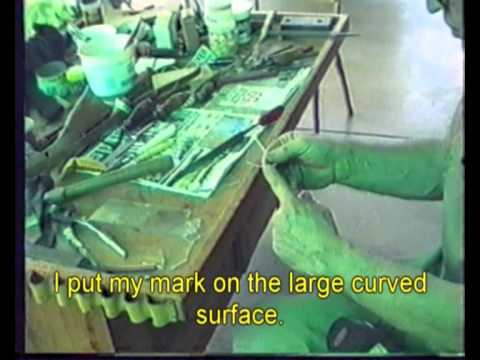
Inspired by the recent post on scraping with glass, I decided to make this post on metal scrapers
Like glass, shoe scrapers (or buffing knife in old books) are used to smooth and remove small layers of leather. In the finishing stage of a shoe they are used to remove the marks left by the rasp and to remove the grain from the sole leather.
I have heard people say that glass is the traditional tool but I see old books mention the metal scraper more often. In the West-End shoemaking tradition metal scrapers are (or were?) the standard. The main advantage of the metal scraper is that the shape is consistent. If you are just using it for general smoothing and grain removal then the shape is not too important. However, if you are making a traditional leather sole shoe with irons then a consistent shape is helpful. In this style of shoe the sole edge is made concave, first with the round side of the rasp and then further with the scraper. By using a metal scraper you develop a muscle memory and can achieve consistent results easier than with the random shapes you get with glass.
I purchased my #3 Barnsley scraper a few months ago but was not able to get good results. I tried sharpening it the way a cabinet scraper is sharpened, following youtube videos.
A few days ago I decided to give it a try again. Following Jim McCormack advice, I thinned the edge and did the process multiple times. The results were much better than before. I would say about 80% as good as a fresh piece of glass. I don’t have a vice so I free handed everything.
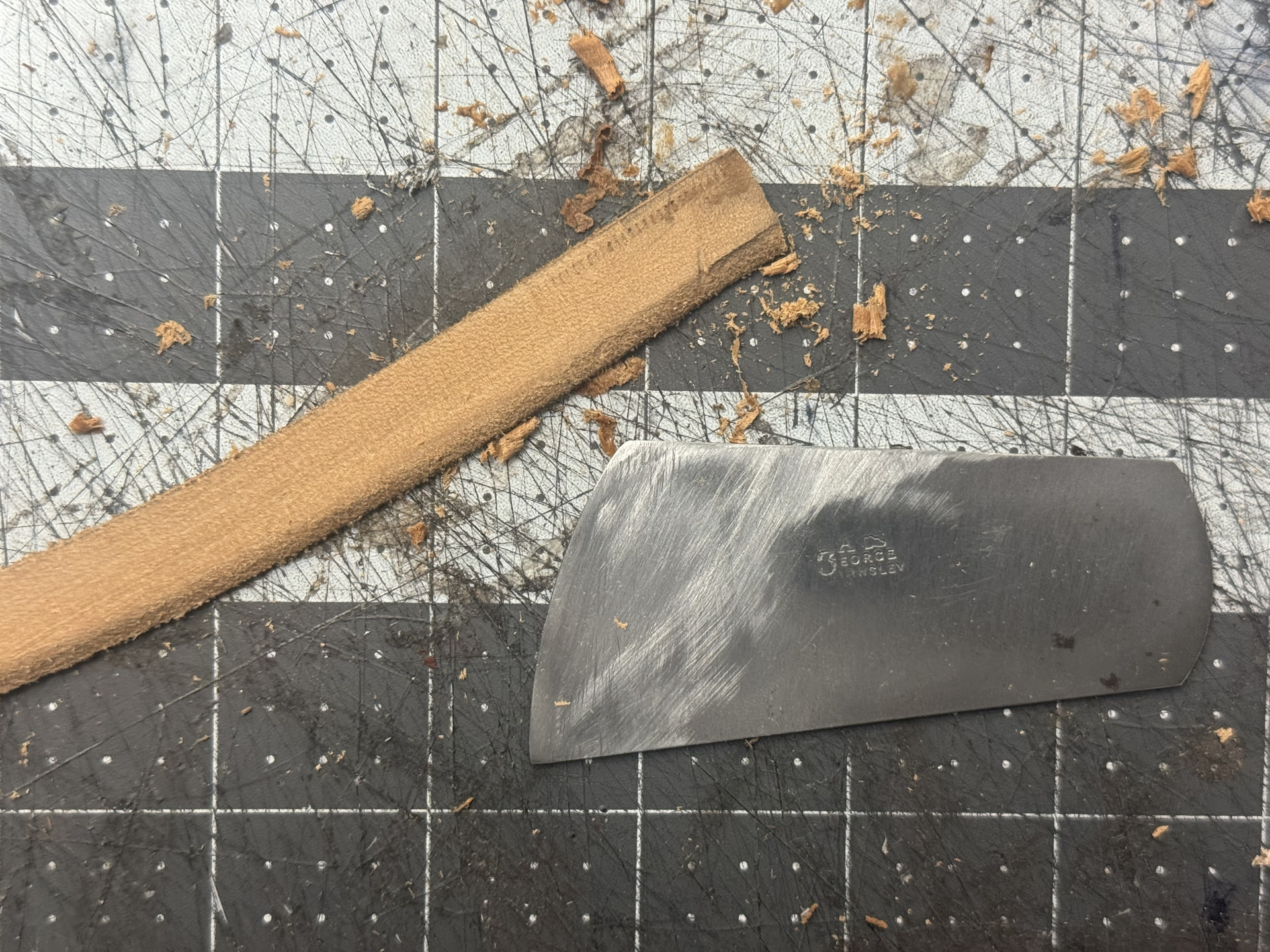
Here you can see the burr, It’s pretty small but you can definitely feel it if you rub your nail on it. I did a bad job of keeping it consistent so I have to use different angles depending on what spot of the scraper I use.
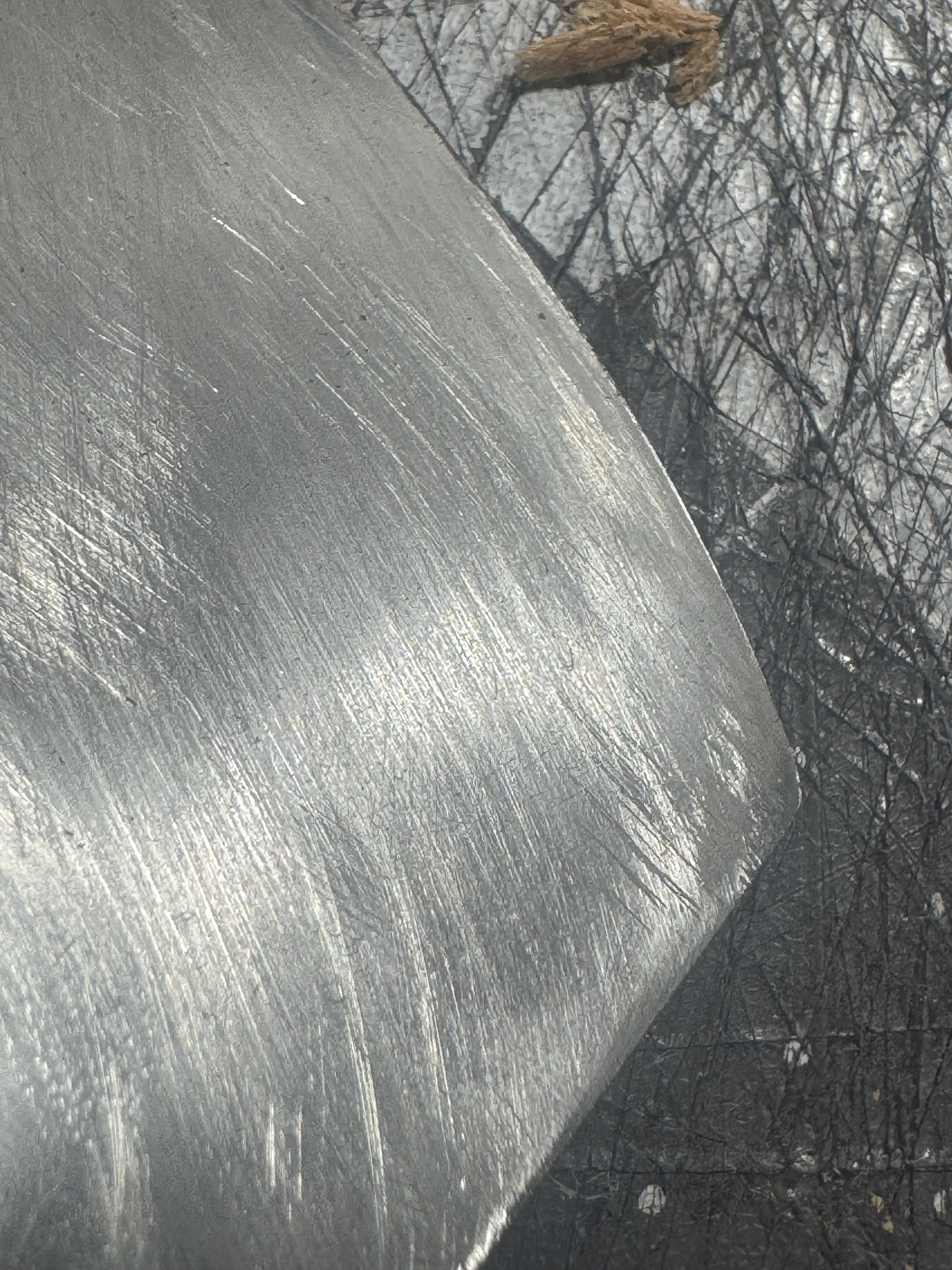
The slanted side is used for the heel breast and the circular side (haven’t sharpened it yet) is used for setting the edge.
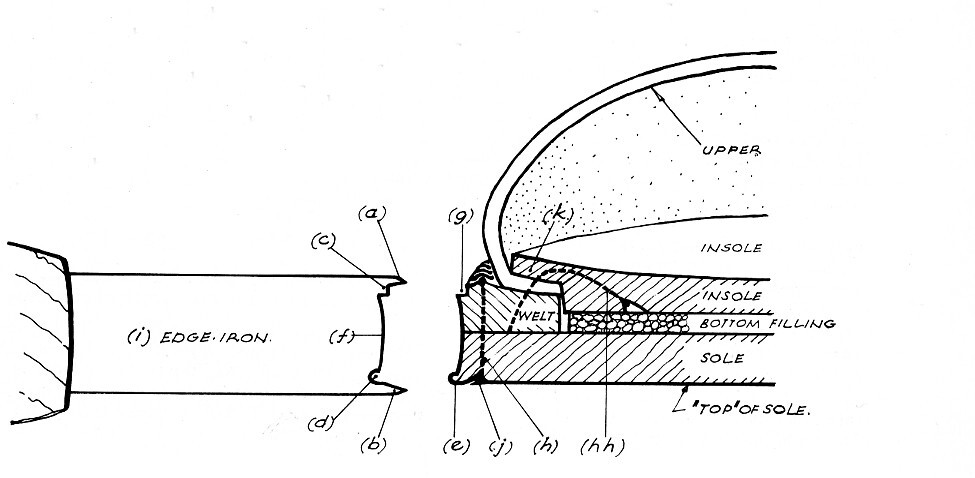
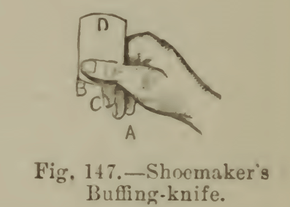
The Boot making and mending book has some good information on using scrapers on page 142. Here is the diagram showing how it is held to set the edge.
Here are some other sources of info:
Barnsley listing:
https://www.georgebarnsleyandsons.co.uk/product-page/shoe-scraper
Shoemakerkraft listing:
Jim McCormack post on scrapers:
https://www.instagram.com/p/CGJ9wqpnDDy/?utm_source=ig_web_copy_link&srtk=MzRlODBiNWFlZA==
Mariano Crespo’s finishing class:
Again, not a necessary tool but just something to keep in mind. If you are really ambitious, you can make one out of an old saw blade.