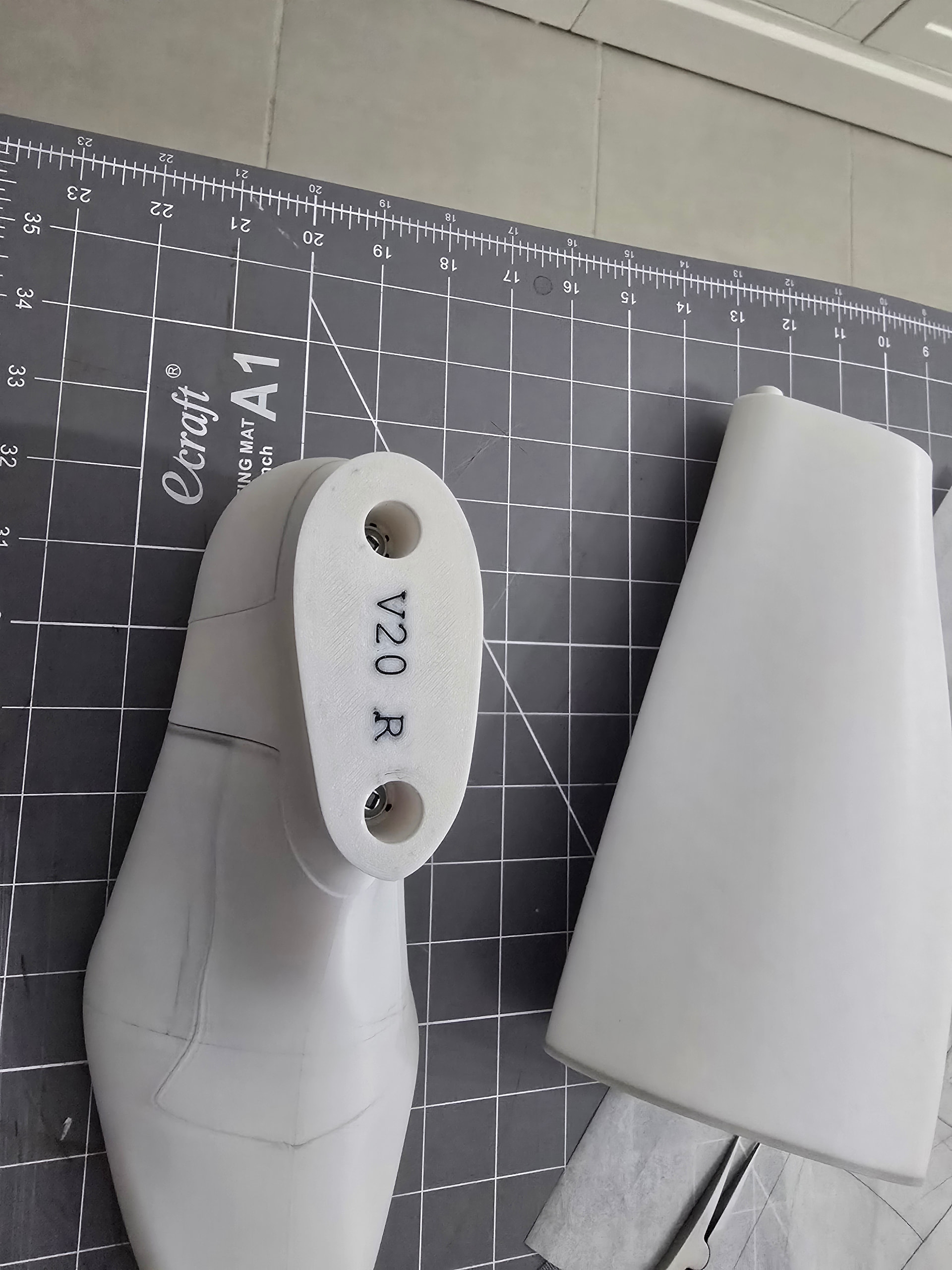
I’ve been researching 3D printing for lastmaking. What a rabbit hole!
I haven’t bought a printer. I’m still wondering whether I should. But I’m seriously considering it.
I’d like to share a few questions, as well as a few tentative notes, in case others can help or be helped.
Questions
Is printing with PETG filament the clear way to go for the foreseeable future, or is it worth looking forward toward stronger “engineering filaments” that newer, hotter-running printers now support?
Given that we’re printing relatively large, curvy blob shapes, is it worthwhile buying a newer CoreXY printer, or will “bedslingers” or other older, cheaper designs suffice?
For printing joined-up lasts, I’d obviously need build volume for the length of the largest size I wanted to print, perhaps 300, 325, or 350 mm. But for printing hinged or divided lasts in multiple pieces, can I go with a smaller build area, perhaps 250 by 250 by 250 millimeters, without missing the extra room?
Has anyone tried installing a broader nozzle, say 0.6 or 0.8 mm, to speed up printing?
Notes
I am completely new at this, so don’t take anything I write as gospel. This is just a snapshot of how I see things at the moment. I fully expect to learn more and change my view.
There are actually a few different styles or processes for “3D printing”, but the one relevant for lastmaking seems to be fused deposition modeling. This is the style where a printer melts plastic filament and shoots it out over a platform, like a plotter with a hot glue gun instead of a pen.
The major FDM printer manufacturers that I see are Bambu Lab, Prusa Research, and Creality. Very roughly speaking, Bambu is like iPhone, Prusa is like Android, and Creality is like a budget or burner phone on the rack at Walmart or Best Buy.
The 3D printing enthusiast community runs under and beside all the people who just want to buy a printer, plug it in, and print specific projects, toys, or trinkets. Talented DIY’ers build their own printers from parts, share designs and software for free online, and enjoy upgrading and optimizing their printers. They’ve originated many of the key ideas and improvements in 3D printing, especially since key early patents on the technology expired in the 2000s.
Prusa came out of the hobby and for a long time served as its champion, making turnkey printers available for the masses while staying connected to enthusiasts. They published part designs and associated software for free under “open” licenses, like enthusiasts do. Based in the EU, they achieved broad success with “bedslinger” printers, a design where the platform, or bed, onto which the printers print moves front to back or side to side, while the print head above moves perpendicular as well as up and down.
Meanwhile, hobbyists developed and refined a different approach, CoreXY, where the print head moves forward and back, and perhaps also up and down, while the bed remains relatively still. The Voron project in particular published designs for a robust CoreXY printer that hobbyists could build by ordering a list of commonly available, off-the-shelf parts, plus printing a few plastic pieces with another 3D printer. A bit like building a race car or kit plane.
Bambu Lab, based in China, leaped ahead of Prusa with a crowdfunded CoreXY printer incorporating lots of hobbyist-developed techniques and designs. They’ve since grown into a broader company with a large catalog of printers, accessories, and supplies. Bambu printers boast lots of features, run out of the box, and work nicely with all the other things Bambu sells, all at very competitive export prices.
Both Prusa and parts of the hobbyist community look down on Bambu as free riding off their sharing community, without giving back. They’re also alarmed by Bambu’s increasing steps to control how customers use its products and prevent them from repairing, changing, or using with third-party accessories. But non-enthusiasts often appreciate the approachability, reliability, and integration of Bambu offerings, many also buying consumables like filament from the company. Think Apple customers buying phones, computers, chargers, and accessories that all work together.
Creality has positioned itself as the budget alternative, trailing Bambu and Prusa in models and features, but charging significantly lower prices. Many people have got their start in 3D printing buying a Creality printer recently. While they do print, they’re not known for long-term reliability. Enthusiasts deride them as essentially disposable.
Prusa eventually responded to Bambu with its own line of CoreXY printers. They are still made in the EU, but cost more than Bambu alternatives, sometimes suffer production delays, lack the Apple-esque integration across consumables and accessories of Bambu, and arguably lag on some specs and features, such as build volume. Prusa also backed away from releasing designs and software for its new line entirely on “open” terms, instead releasing some on terms that only allow free use, changing, and sharing for non-commercial uses and machine repair.
What’s a would-be last printer to do?
The easy choice for those looking to focus as much as possible on modeling, sharing, and printing lasts, and not on 3D printing itself, looks like buying a Bambu CoreXY printer. 3DShoemaker has mentioned using a model X1C himself, and also that an older, cheaper P1S would suffice.
I am starting to see why. The P1S has a build volume of 256 mm cubed, or roughly 10 inches cubed. It only prints one material at a time, but lasts can be printed with just one. Bambu itself sells rolls of PETG filament on spools with QR codes you can scan in to configure the printer. Most people will probably appreciate managing the printer using Bambu’s app, from their phone.
If budget doesn’t reach Bambu prices, or you’d rather spend less now to try and potentially more later, for another printer, if you like the process, Creality might make sense.
I personally have a long history in open software, so my heart is clearly with the enthusiast projects, in particular Voron, started by a fellow NorCal resident. I rather like the idea of learning more by building a kit, but am also wary of taking too long a detour on my way to printing lasts. If I were going to buy something today, I’d likely buy a prebuilt “open” printer based on one of the Voron designs, like a Sovol.