UP THE ARM: AN OLD MACHINE WORTH KNOWING
The Singer Class 19 is a little bit interesting to shoemakers and a lot interesting to bootmakers. Most cylinder-arm sewing machines feed the work across the arm. These machines feed the work lengthwise, up the arm toward the machine.
That seemingly small difference can be extremely useful in shoe and bootmaking. Footwear starts flat and becomes three-dimensional, and once an upper or boot shaft begins to close, the problem is often no longer whether the machine can sew the leather. The problem is access.
That becomes even more important when the leather has significant camber and stiffness. Think equestrian boots, engineer boots, golf bags, and even some PNW-style boots. With heavier, more structured work, you simply cannot fold, collapse, and manipulate the leather around a conventional machine as easily as you can with a softer shoe upper. For certain operations, an up-the-arm machine goes from being convenient to being nearly indispensable.
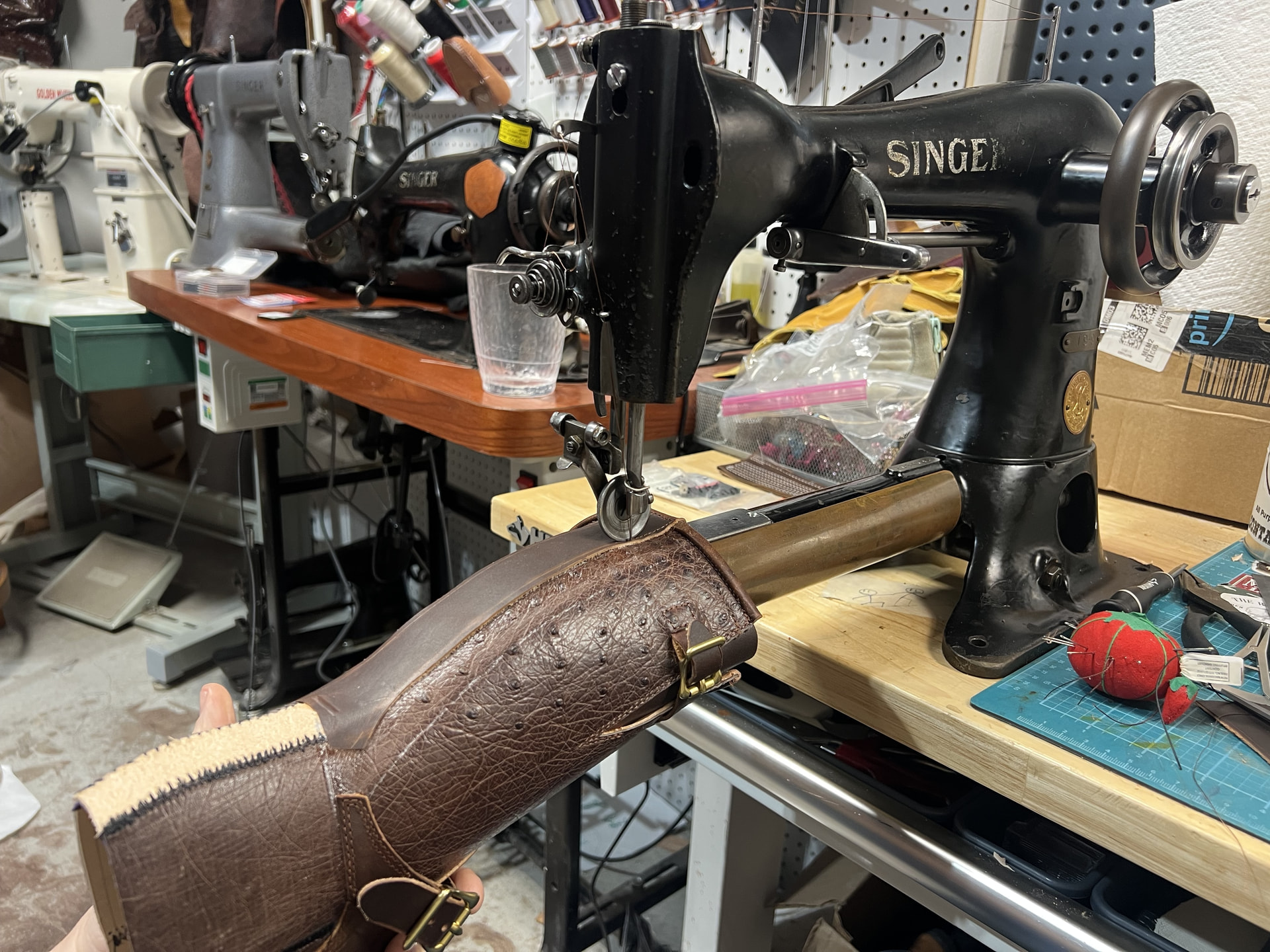
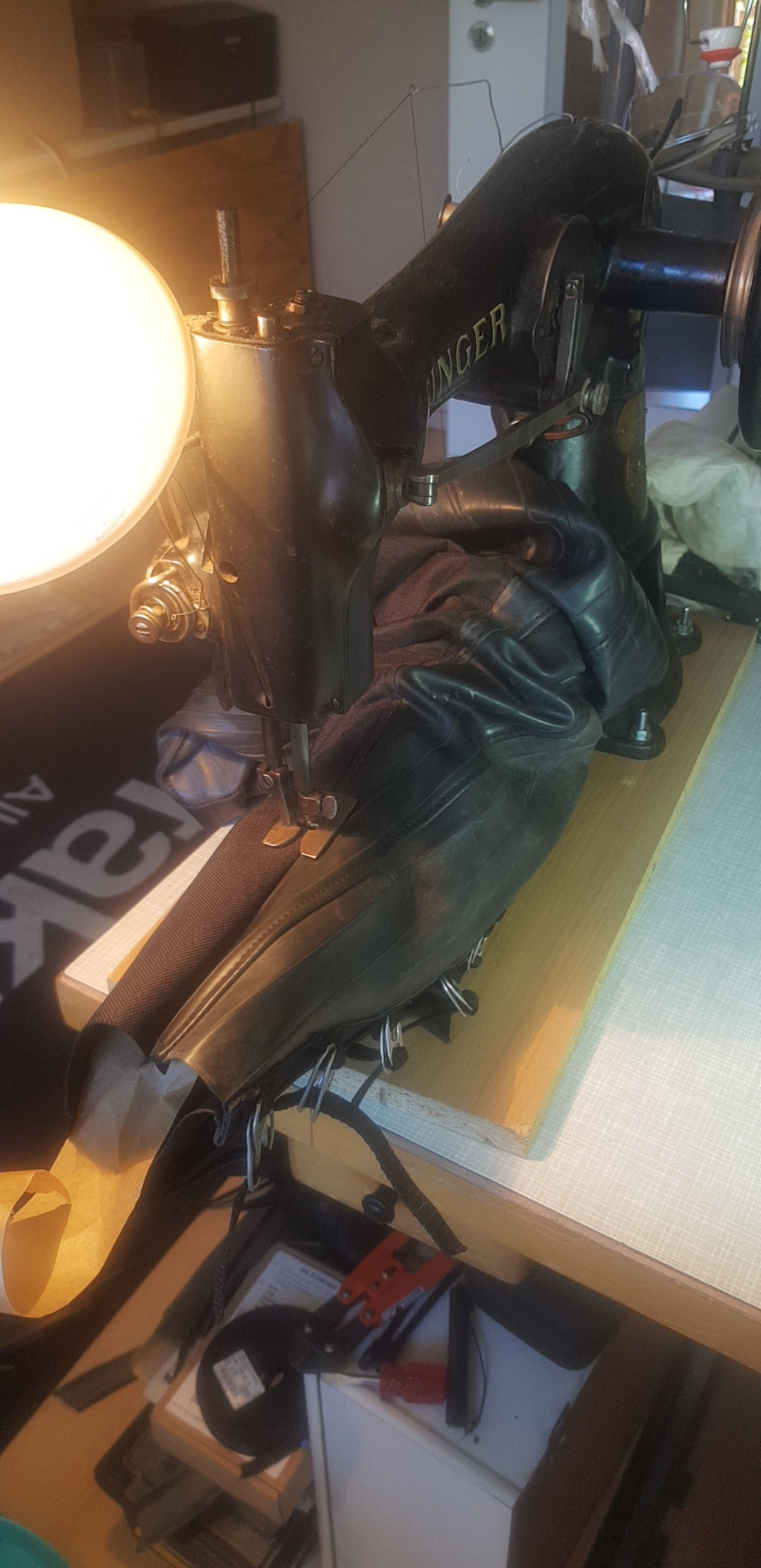
The machine allows the tubular work to sit naturally over the arm while the seam travels along its length. Instead of fighting the shape and stiffness of the work, you are sewing in the direction the piece naturally wants to travel.
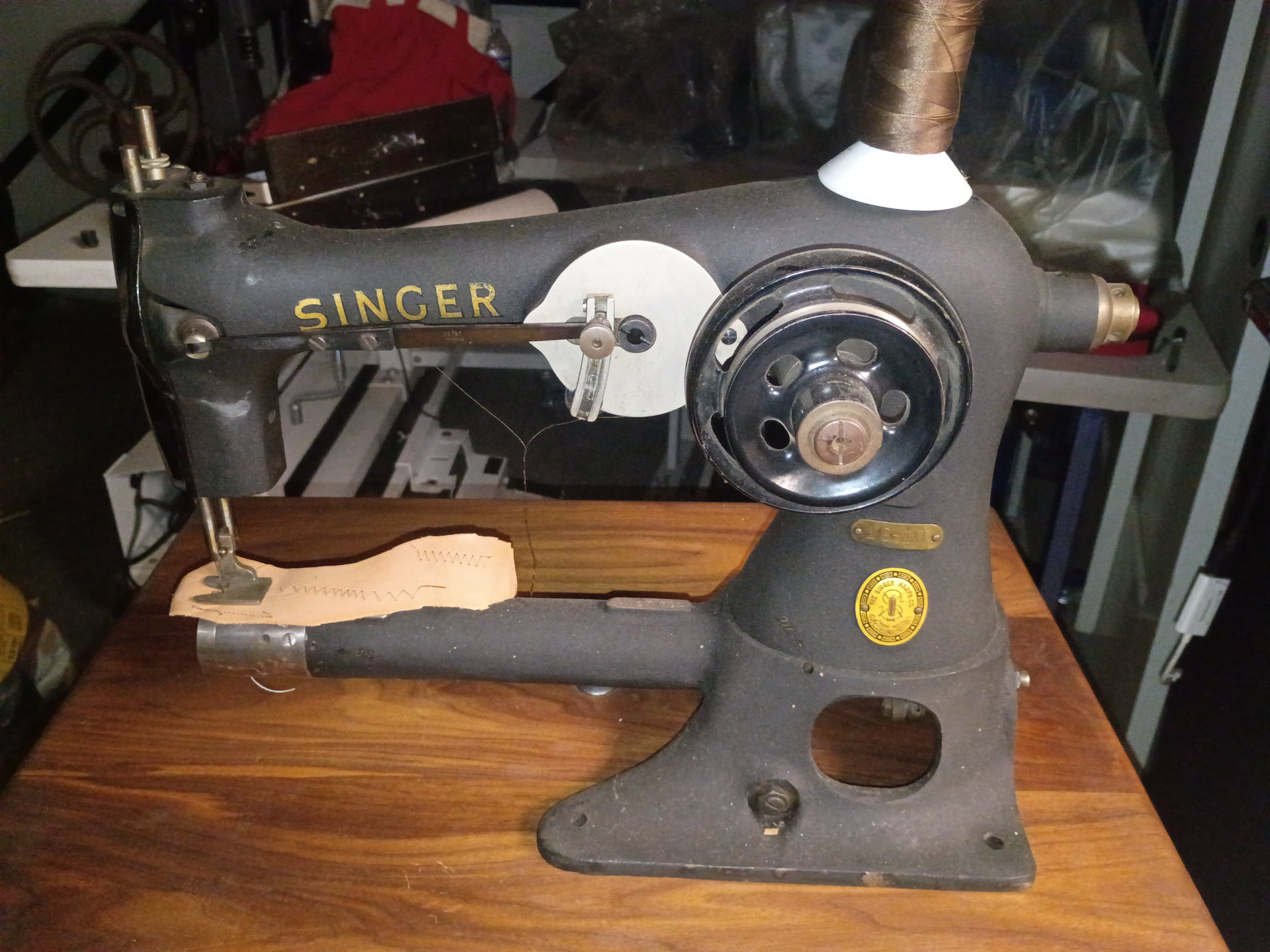
The Singer Class 19 is really the little brother in this family. It is comparatively compact, mobile, and easy to move around the shop, and several subclasses were designed specifically around footwear operations. Some were straight-stitch machines, while others were much more specialized. The 19-10, for example, is an up-the-arm zigzag machine.
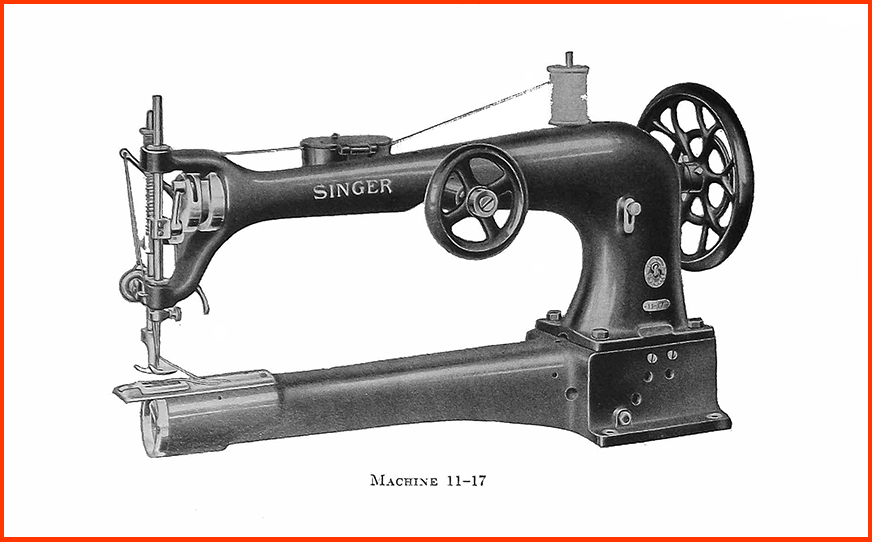
The Singer Class 11 is the big brother, and it is a beast. It is larger, heavier, and much more industrial in character. Certain subclasses were designed specifically for boot work and long tubular seams, but this is not a machine you casually move around the shop when you need the space.
These machines are not really about having more sewing power. They are about putting the work in the right position. A skilled maker can improvise around a lot of limitations, but once the material becomes stiff, heavily shaped, and difficult to manipulate, there comes a point where improvisation stops being efficient.
That is when the value of an up-the-arm machine becomes obvious.
You may not miss one for years. Then one day you need to perform the operation it was designed for, and you understand immediately why they built it.
Photos: RD’s Singer 19-9, my Singer 19-10, and a Singer Class 11. I’m too lazy to pull my Class 11 out for a photograph because it really is a beast.