Trendware Solid Brass AA Eyelets in Five Finishes

Update 2025-08-10T07:00:00Z: 2 packs remaining.

Eyelet Packs
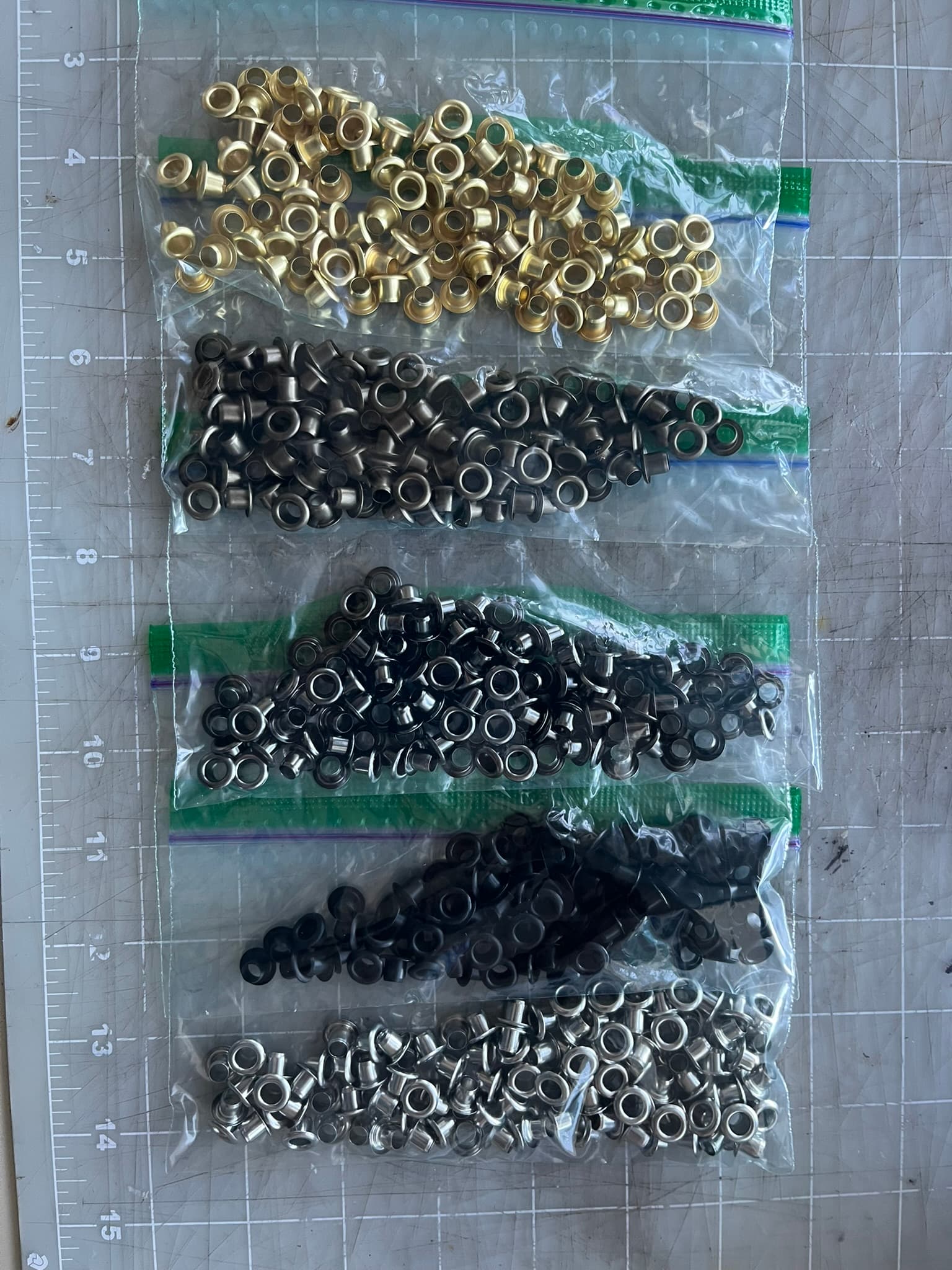
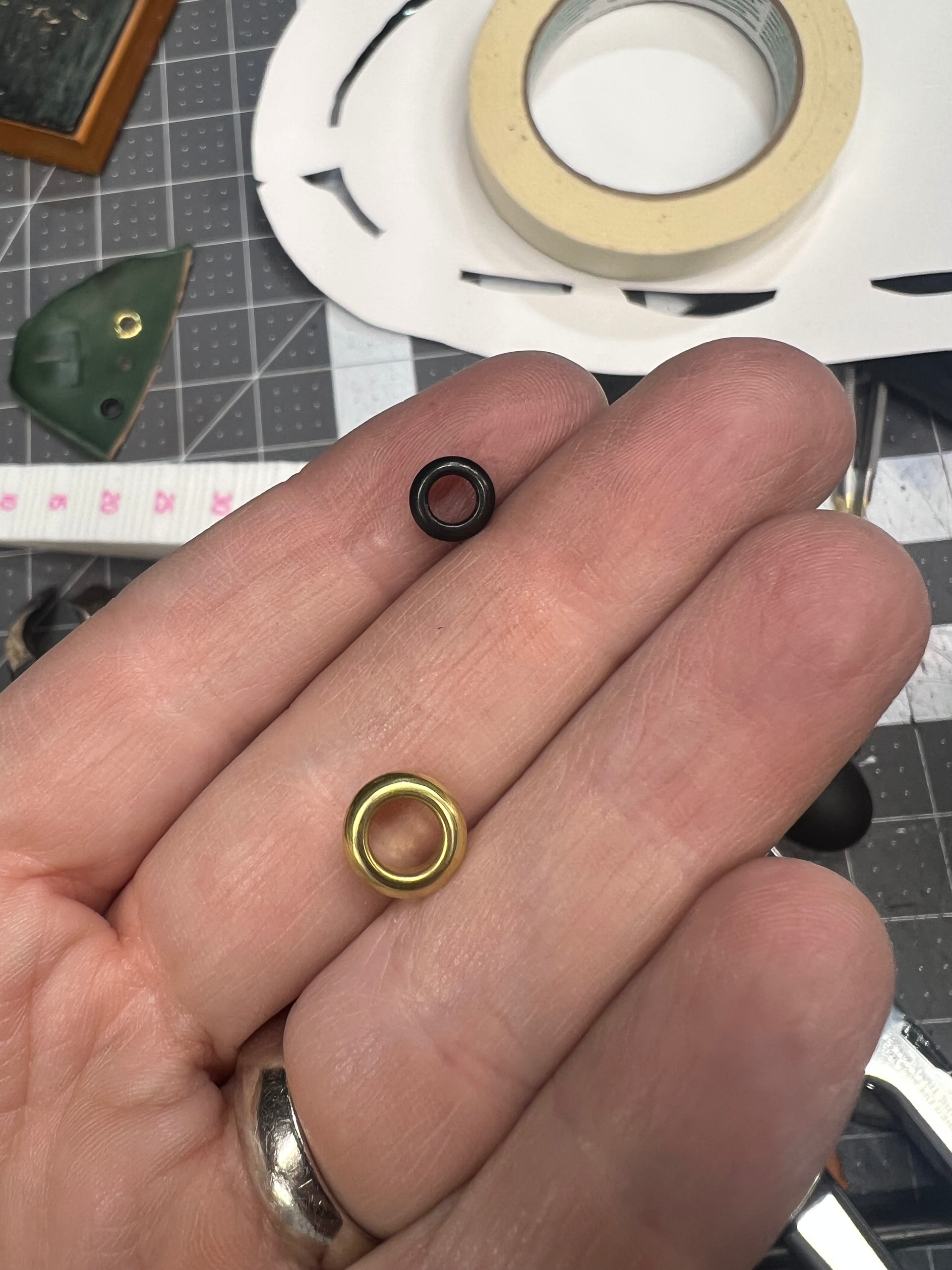
Each pack contains 30+ grams, or approximately 100 pieces, of Trendware solid-brass, long, unscored AA eyelets in lacquered brass, nickel plated, antique brass / old English bronze, gunmetal, and black. That’s 150+ grams, or approximately 500 eyelets, in total.

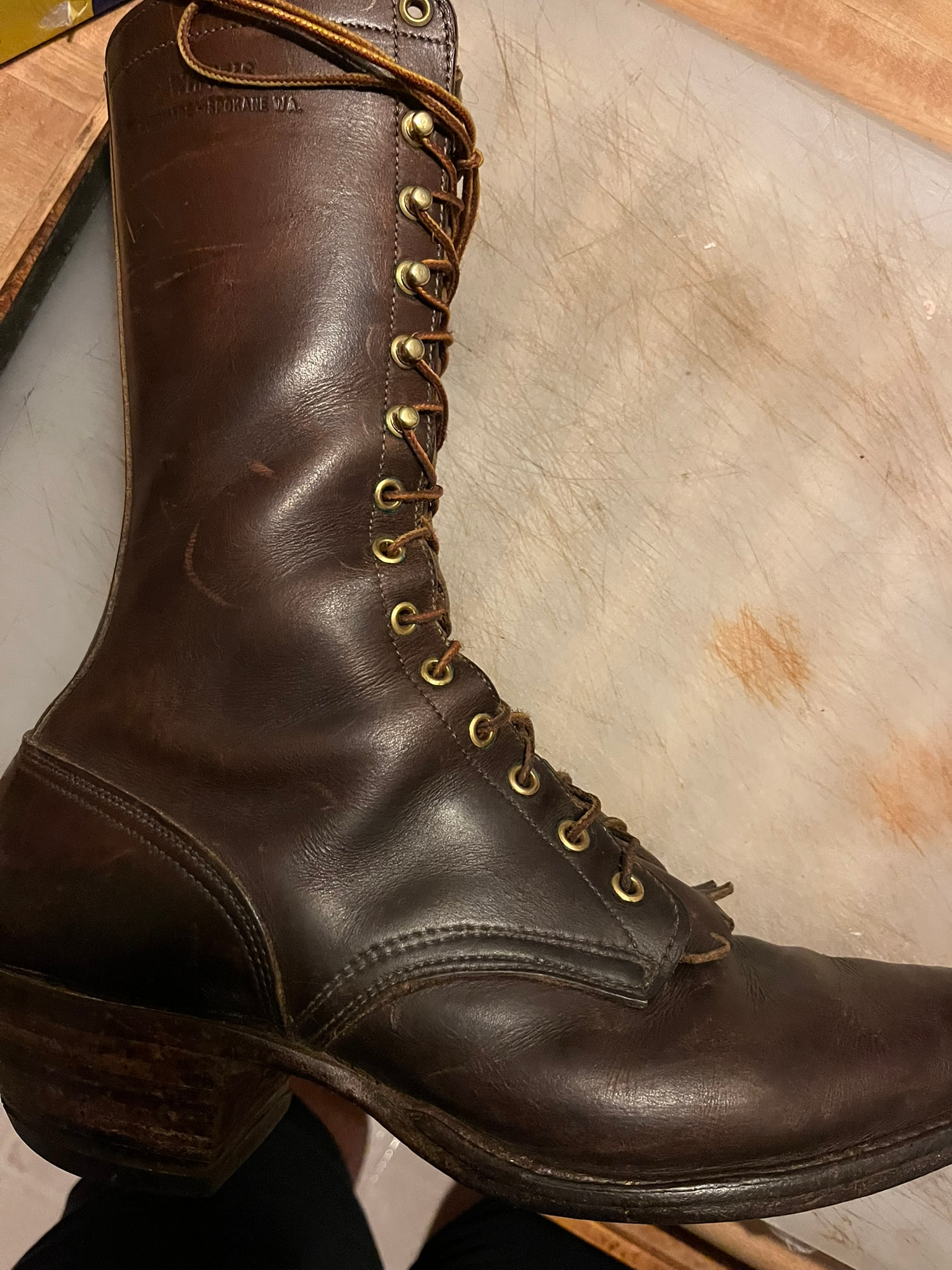
Repairing boots? Make your shop ready for hardware work on PNW and other heritage boots.

Building boots? Enjoy the full palette of finish options for your next client or personal project.

Heritage boot enthusiast? Stock some backups to take to the shoe shop when your pairs need replacement or repair.

I have six total packs to sell. Please understand that I am not offering individual finishes or different quantities, just these multi-finish packs as I’ve described them.

Dimensions

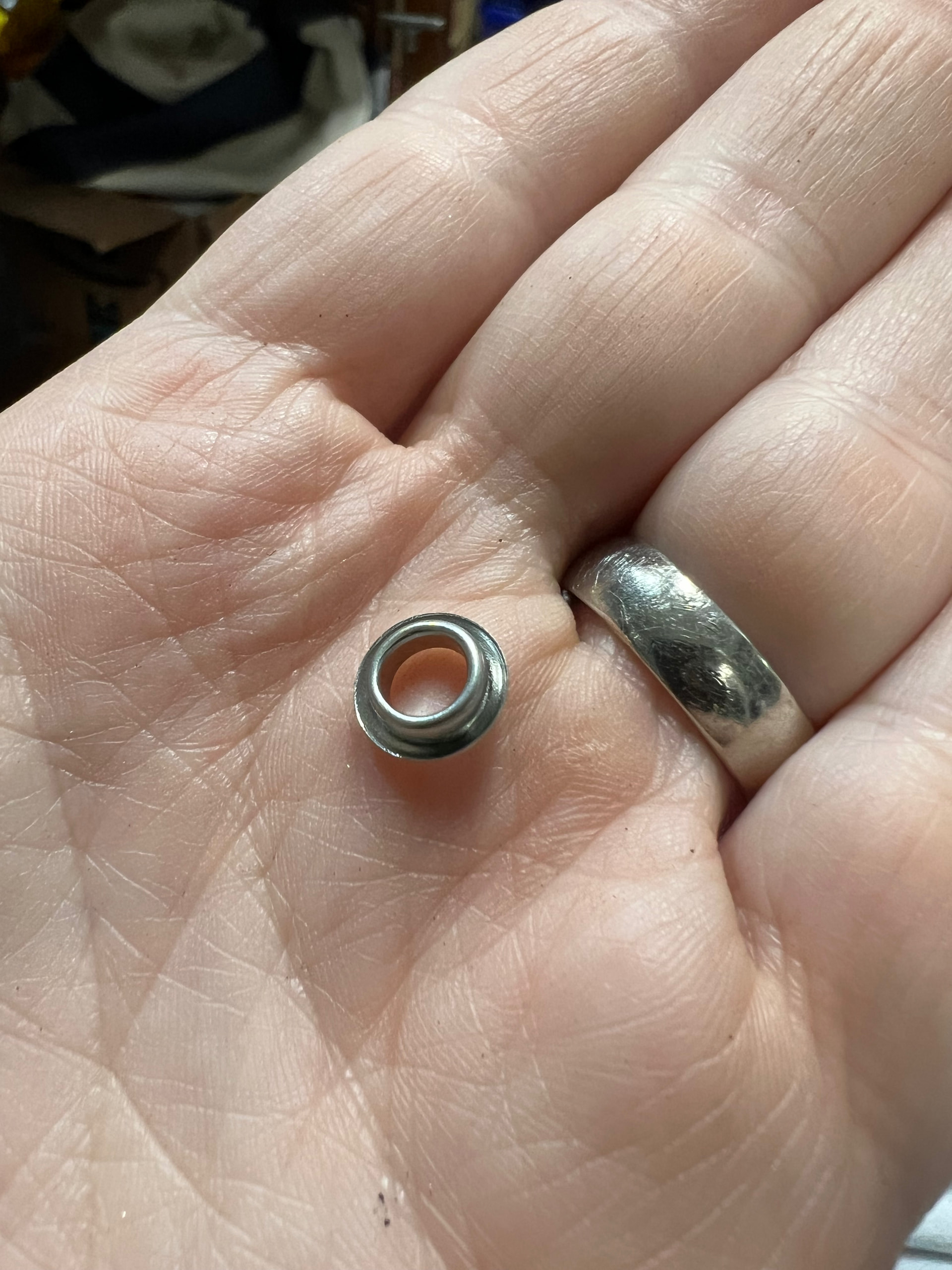
These eyelets are size AA, an old United Shoe Machinery Corporation size commonly found on American-made boots and shoes. They’re the same as, or indistinguishable from, eyelets I’ve compared on some US-made White’s, Nicks, and Danner boots.

Flange Outside Diameter9.8 mm
Barrel Inside Diameter5.28 mm
Barrel Outside Diameter5.8 mm
Total Height6.5 mm
Length Under Flange5.5 mm

Note that individual eyelets may measure slightly differently. They’re designed to tolerances within range for compatible setter tooling. Note on that below.

I have personally had success setting the #205 Trendware lace hooks used by PNW companies, also sold as C-1567 hooks by Ohio Travel Bag and now Weaver, through these eyelets. The fit is tight. It helps to not to crank too hard when setting the eyelets in the first place.

Price

$50 plus shipping

Shipping

USPS

If you’re not in the US, please e-mail me at kyle@kemitchell.com.

Payment

PayPal, Cash App, Venmo, or Zelle

Hints on Setting

I’ve had good results setting with Italian tooling for Moro size 051 eyelets, of similar dimensions. Sometimes the tools are marked 130 instead of 051.

I’m told that the old shoe-repair presses with interchangeable topsets and anvils on rotating turrets handle AA eyelets well.

Why grams rather than pieces?

It would take me hours to count out thousands of eyelets one by one. I take it this is why shoe repair suppliers, like my local outfit, also break down and resell their packs of hardware by weight.

My method here was to count out 100 of each finish of eyelet, weigh them, and then compare. I expected bigger differences between the finishes, but in the end, they were all roughly 30 grams per 100 pieces. So I made up the bags for each pack by pouring eyelets into a scoop on a scale until it read over 30 grams.
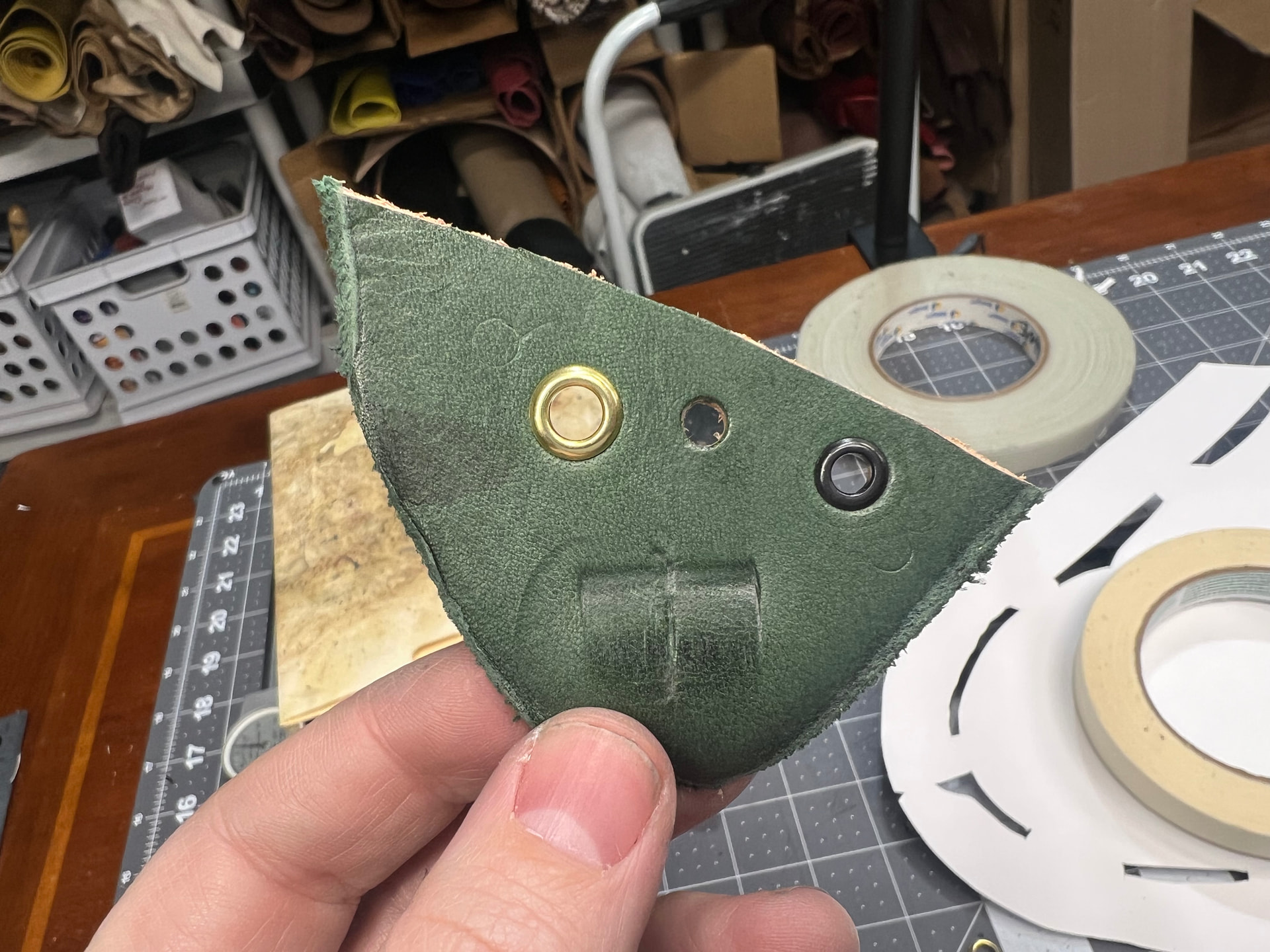
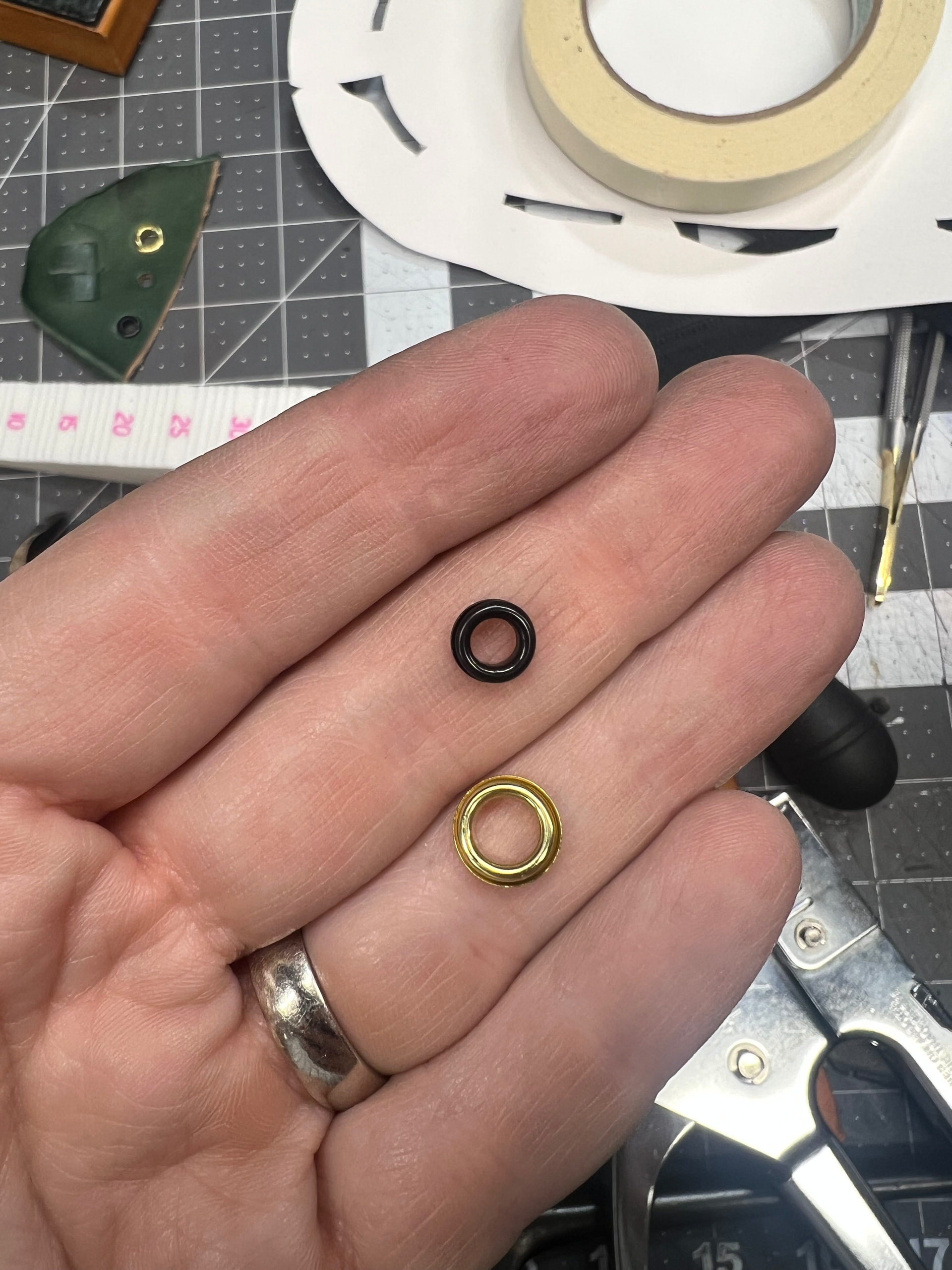
Two packs are now on their way via USPS. One to Western Canada. USPS to Canada costs more than to the US of A, but less than I somehow expected.

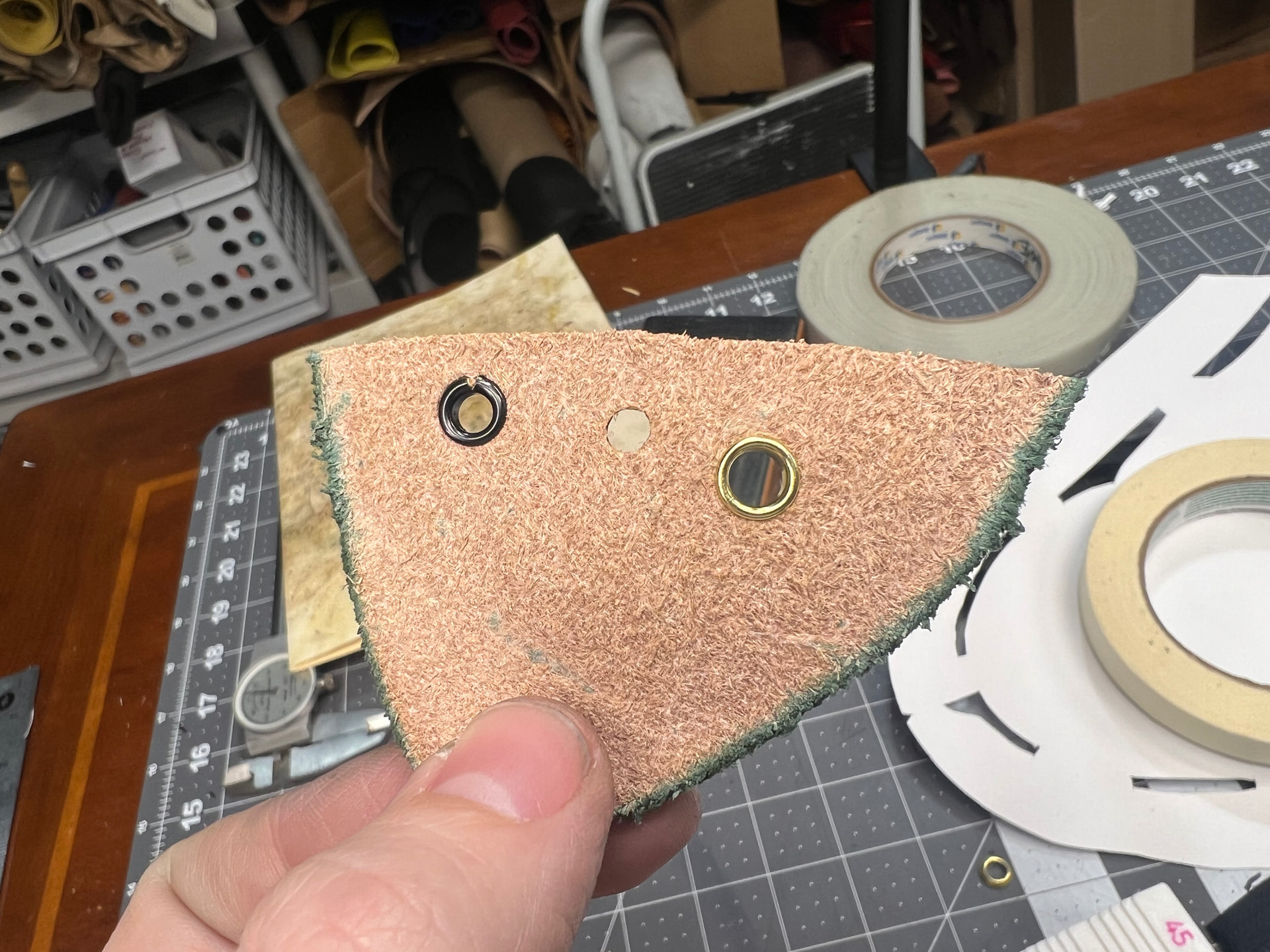
I finally got some scrap together for test settings of these AA eyelets with various tools.

Moro 051 Press Tooling

I got very good results setting the Trendware AAs with Italian twist-press tooling designed for Moro 051 eyelets.

Harfington #45/5mm

Dave of New River Boot recommended this cheap Amazon tool set, specifically in the 5mm size:

Unfortunately, the 5mm size seems to have gone out of stock. It may reappear under some other contrived brand name.

My results with these tools were consistent with what I’d expect from a cheap hand setter. Not spectacular, but definitely doable and improvable with some practice.

The fit between the the topset and the guide post of the bottom anvil leaves enough slop for the topset to deflect several degrees. It’s better than trying to keep the topset perpendicular entirely freehand, but as much help as it could be. It’s possible results will vary here. The tolerances on tools this cheap usually vary a bit.

Side Note and Other Tools

Side Note: The Harfington tool set was listed as “#45” and “5mm”, but the topset is actually stamped “300”.

That reminds me of the numbering for THK’s “Hasi Hato” eyelets, sold by Rocky Moutain here. It may be that series numbered in the hundreds—200, 300, 500—might be de facto trade sizes for East Asian eyelets, the way that USMC sizes were in the US and Moro sizes are Italy.

If anyone has any information on this, please let me know.

I haven’t tried setting an eyelet yet, but sure enough, the Trendware AAs fit securely in the bottom anvil of my OKA Factory setter for 300 series eyelets. Rocky Mountain also distributes those, and you can get them direct from OKA. These are much, much better tools. Granted, for twice the price. But that’s still just $12.

If you have Instagram, OKA has posted a very concise video tutorial, showing their tools:

I have made a note to try some eyelets with the OKA tools. Hopefully I can get to it and report back tomorrow.

OKA Factory 300 Series Hand Tools

I was able to set the eyelets with this toolset, but the results were’t superb. It would do, but it’s not perfect.

The bottom anvil holds the eyelet just fine. The topset, however, has a shape I haven’t otherwise seen where the flange is meant to fold over. It produced very narrow folds over the back.

It may be these tools are meant specifically for 300 series eyelets set with backing washers. I’m just guessing.

I’ve got another pack heading out to the Ohio River Valley tomorrow. Five-day USPS shipping across the country only came to a little over $5.

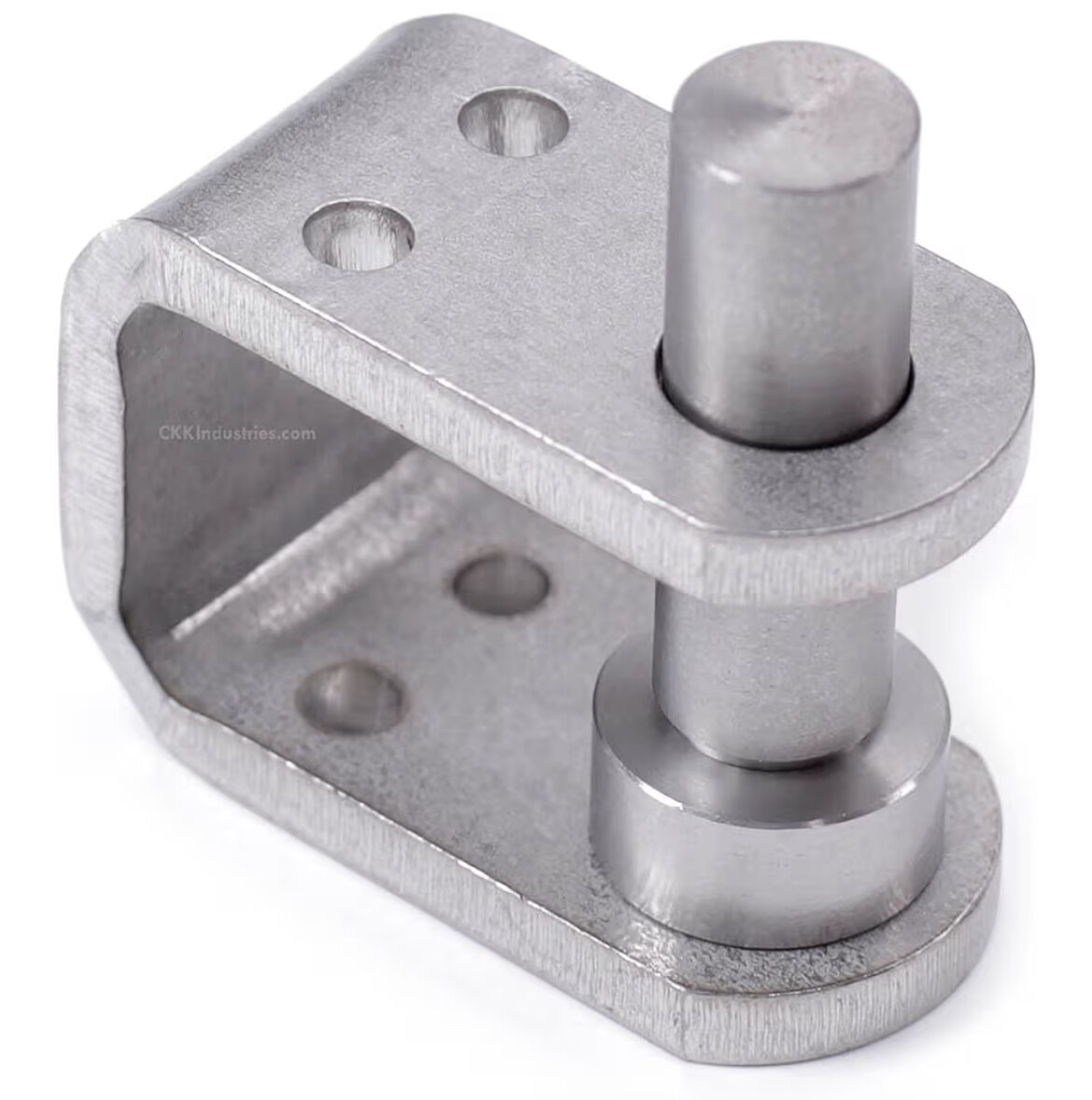
Wonder if this would work?

https://www.holstersmith.com/vcom/ckk-riveteyelet-flaring-dies-master-series-316-p-632.html

Im crossing my fingers that 0.405” shank really ends up being standard unit translation of 9.5mm not literal

$35 strikes me as pretty tempting pricing for hardware tooling.

That listing mentions “CKK” as brand. That led me to this product page for CKK eyelets. There’s a product image with marked dimensions: Eyelets - #6-12 (3/16) - Black Finish - (for .125 KYDEX®/HOLSTEX®) - 25 Pack | CKKPlastics.com

Well if all else fails maybe I’ll have to get my eyelets from a gun holster company … They are made in USA looks like

3/16" is a very common nominal size. I’m sure CKK is just buying from an eyelet mill and relabeling.

I don’t have firsthand experience with the tooling you linked, but I can say from other experience that:

  • Dies with spring-loaded top setters usually work with eyelets with a range of depths under flange. For taller eyelets and taller material stacks, you just don’t push the press so far closed.
  • Lots of makers and even factories set eyelets with tooling designed for eyelet sizes near enough to what they use, but not exactly the same. Lots of USMC AA eyelets set with Moro 051 tools, for example.
  • Eyelets marked 3/16" for the US market are often actually 5mm nominal from the foreign factory. Tandy, for example.

That’s the #6 and #8, 6mm long, eyelets listed as 3/16 and 1/4 although I think that’s the outer diameter of the flange, sold by holstersmith / CKK industries, made in USA (by ckk?). They only had brass and black laquer. I think the split was my fault getting used to the foot press but otherwise rolled cleanly. The dies for them had 3/8” shafts. There are also these nice structured hand setter tools which I used to set the larger eyelet above.

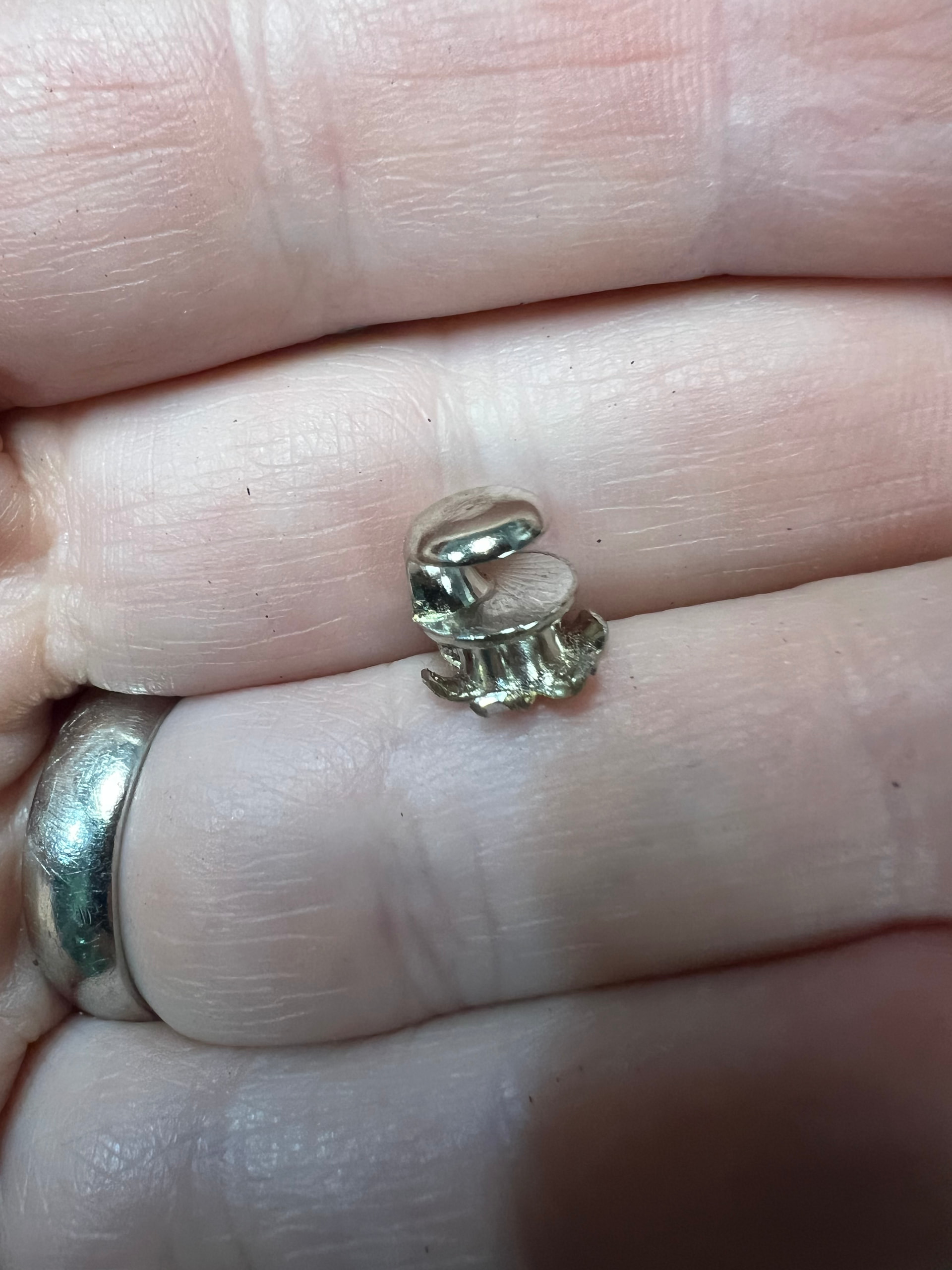
These setters/dies did NOT work for the AA eyelets unfortunately. The 6 setter was too small and crushed them, the 8 too big and split the backside in a star pattern.

1 Like

Oh, that’s a bummer, @thenewreligion. I’m sorry if I helped lead you wrong. I do still think you got a deal on those tools, assuming you find a use for eyelets those sizes.

It sounds like that gun-holster company is using typical US grommet sizes, like you’d see for grommets in Tandy stores, but numbered in their own way: #6, #8, and so on. I believe those are also the sizes Osborne tools are built for. I’d personally prefers those sizes for small goods and bags, rather than boots and shoes.

That said, I’ve seen a bunch of hobbyists use those grommets, since they’re so easy to get in the US. I used 3/16s on my first pair, for example.

I’ve also seen some sign of pro makers using them. DW mentioned using #00s, which are the 3/16" size, in Western Packers. I’ve also gathered that the PNW makers keep that hardware and setters around for those who request wider top eyelets on tall logging boots for easy tying.

I ended up moving away from that sizing system to the old USMC sizes mainly because the USMC sizes just look right to my eye. Looking at a bunch of shoes and boots, I guess I’ve just become accustomed to the sizes and proportions of A and AA especially. Overall diameter is one thing, but the diameter of the flanges compared to the diameters of the eyelets also turned out to be a legible visual cue for me.

Secondarily, I also find it hard to source US sized grommets with the right depth under flange. Grommet for fabric and sheet work, like tarps, were too short for heavier or lined upper leathers that I tried. Some vendors sell taller ones, but they’re way taller.

By the by, if the eyelets truly are made in the USA, my guess would be Siska.

No bummer just sharing the info. I’ll see what I think of the sizes visually when I can test them out on shoes. They seem to be just on either side of the AA. They do have a variety of under flange length available 6,8,9,12mm I think.

Is too bad about Siska not selling to people, their charts and explanations are pretty illuminating though

Oh and for a fellow terminology enthusiast, does grommet mean one with a washer, or can it mean a rolled or split back too? I also saw the holster people calling these rivets. Is there any order or is all chaos? :wink:

1 Like

This is my impression, as well.

American #0 grommets, the 1/4" ones, look pretty close to USMC 1 eyelets, but I haven’t held two in my hands at once for a direct comparison.

I’m not aware of any consistent, principled distinction between “eyelet” and “grommet” in English. I’ve seen a couple posited, but they conflict with each other and with usage.

I nearly always see and hear “eyelet” in shoes and boots. I suspect corset and dress makers also tend to say “eyelet”, too. Sail, sign, and luggage people tend to use “grommet” in my experience.

Personally, I think of eyelets as small grommets, for lace rather than rope, chain, hooks, or nail hanging. The visible proportion of flange diameter to hole diameter also tends to differ for shoe eyelets.

Some bootmakers do set eyelets with backing washers, though it seems pretty rare to me. They don’t seem necessary, even on very hard working boots.

The mills think in terms of runs, with production in boxes, barrels, or poundage. That’s partly why I’ve been so enthusiastic about supporting Trendware with their “basic hardware program” of 1,000-piece minimums.

It’s a similar distribution situation as with, say, CS Osborne. The solution is the same: distributors who buy in sufficient quantity, then break the packs and sell smaller sets at a markup. My local shoe supply, Baltor, does this, and does it with Trendware hardware. They literally weight out smaller quantities and put them in plastic bags, just like I did.

If your customers are all coming to warehouse or placing mail orders for a bunch of soles and cement and whatnot anyway, there’s little payoff to listing this kind of thing online.

Sorry correction 6,8,9, and 12 are in 1/32nd inches. And the sizes 6 and 8 are also 32nds and represent the outer diameter of the … shaft? Well the size hole to punch

1 Like

Success! Can confirm that weaver’s 10mm eyelet setter attachment makes for a clean roll on the AA eyelets with a 3/8” shank press

2 Likes

You’re in business!

Know it was a bit of a garden path. Hope at least some of my advice was useful.

@thenewreligion, by the by, it looks like the automic eye and hook machines at Nicks might be down. Their latest videos show them using presses much like your new setup, albeit with fluted setters for the eyes:

Oh speaking of which got my hook die in from Weaver restock

They seem smaller than I expected. Do they pair well with AA eyelets?

The PNW makers all pair AA eyes with Trendware 205 hooks.

It’s totally unnecessary, but I’ve had success setting 205 hooks inside AA eyelets. Sometimes they slide in with a little pressure. Sometimes I had to ream out the tube a bit.