Where Does Gemming Come From and How Do We Make It Ourselves?

I’ve been thinking more about gemming all the evolutionary steps between carved holdfasts and the glue-on ribs for the modern Goodyear process. I’ve really focused on going slow and doing everything manually in my shoemaking so far, but I’m going to want to want faster cycles from last to wearable shoes as I focus more on lastmaking.

I’ve found some sources, online and locally, for mass-produced gemming by the yard. But I have to admit that:

  1. I have no idea who manufactures it and where it comes from.
  2. I know very little about the materials.

Does anybody know which companies actually mass-produce the rolls of gemming that end up at shoe repair supplies and shoe repair shops?

Any details or thoughts on specifics of the materials? I’ve often read and heard “canvas”, but nothing more on the fiber, yarn weight, or weave.

I’ve seen a fair bit of variation in design, as well.

Some rolls are just flat strips of canvas, like thin belts. Others have a much thicker inner lip that’s notched or pinked to increase surface area while allowing tight bends.

Some rolls seem to be made entirely of canvas, with a thinner, inner belt folded in half to make the rib, and a wider, outer belt wrapping that. Other rolls I’ve seen pictured online, but never examined in-hand, seem to be built around thin strips of leather or leather-looking substitutes, almost like leather lace or very thin welt, that are then covered on three sides with canvas. Sometimes the outer canvas is sewn through along the bottom of the rib, and sometimes it’s just glued.

Here’s a quick and dirty diagram of how the simpler, all-canvas gemming seems to be made:

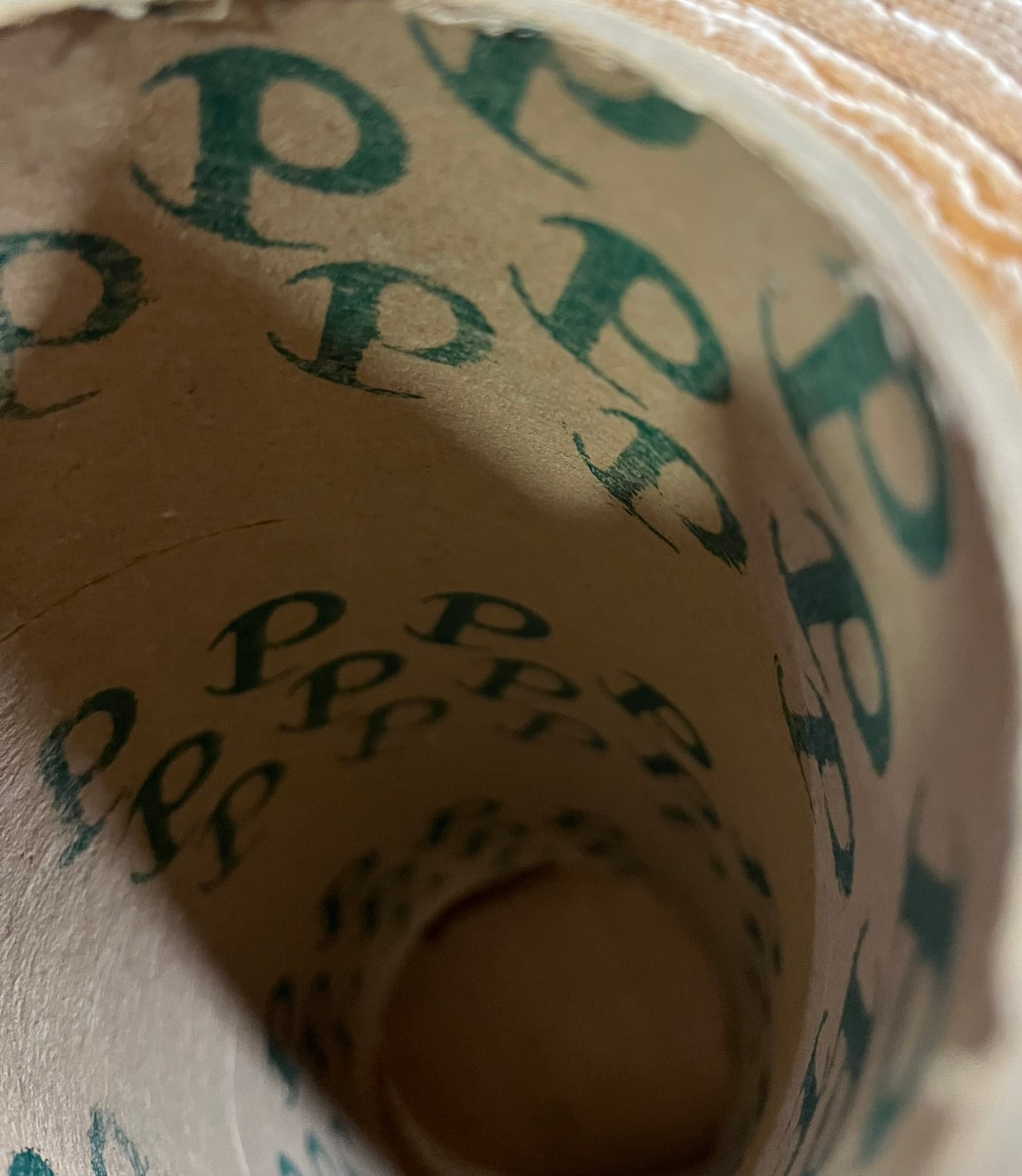
Turns out Baltor & Sons stock welt. I couldn’t find any source name on the box, but the inside of the tube the roll was wound on has this P logo:

A few dimensions:

  • short inside lip: 5mm
  • height of rib: 5mm, plus a tad more from the canvas laying over it
  • long inside lip: 10mm

The bottom of the canvas has a yellowish coating.

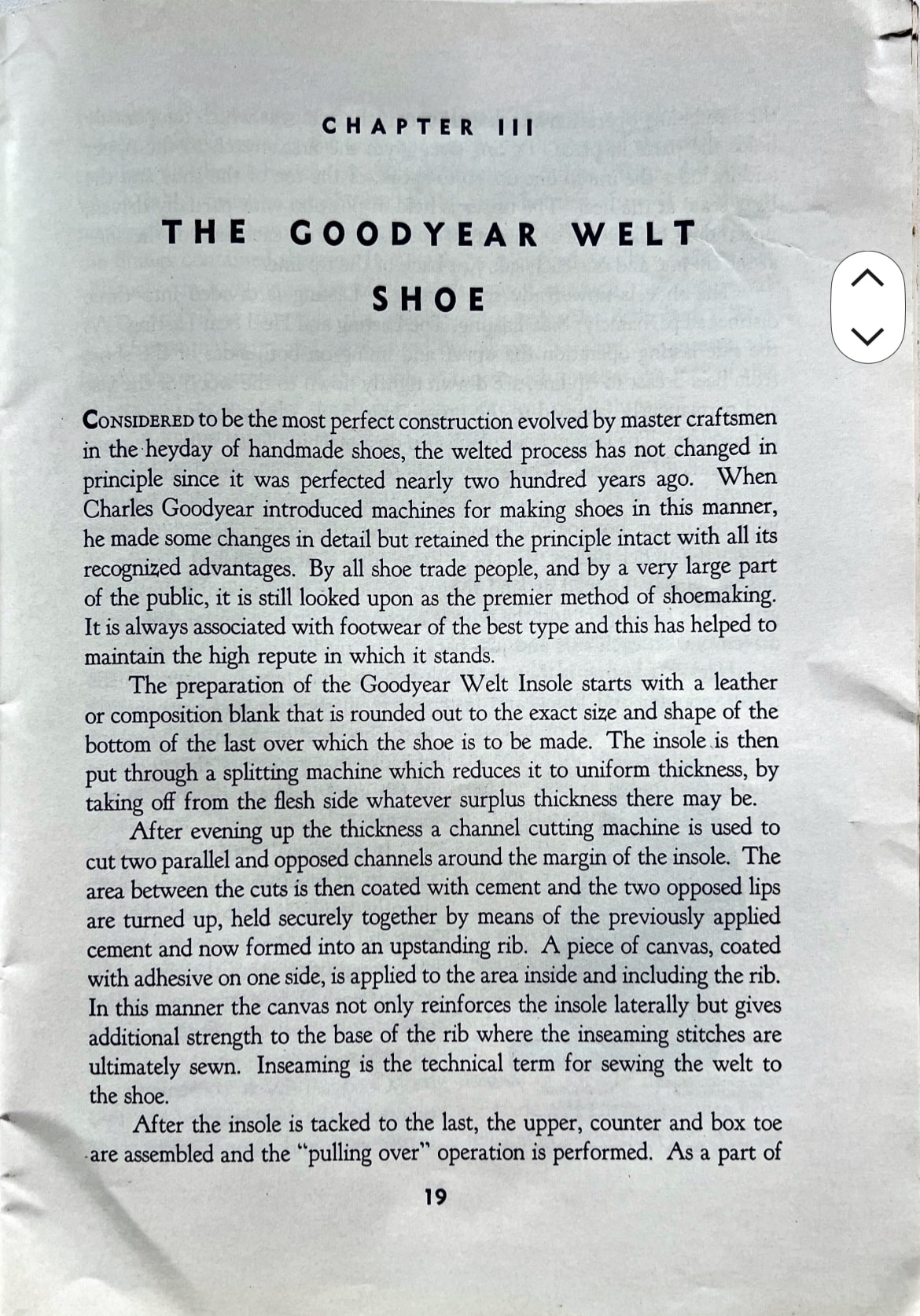
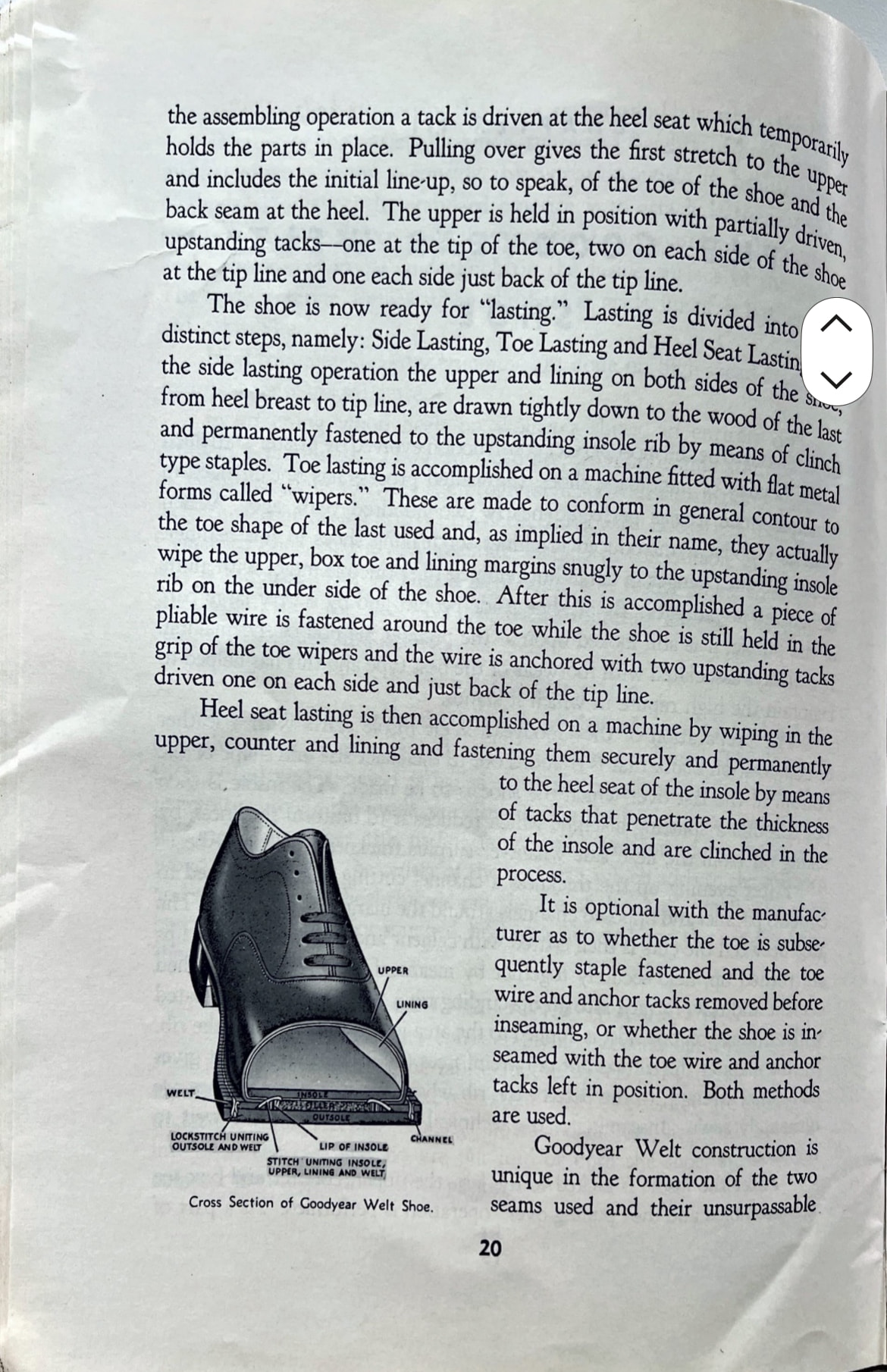
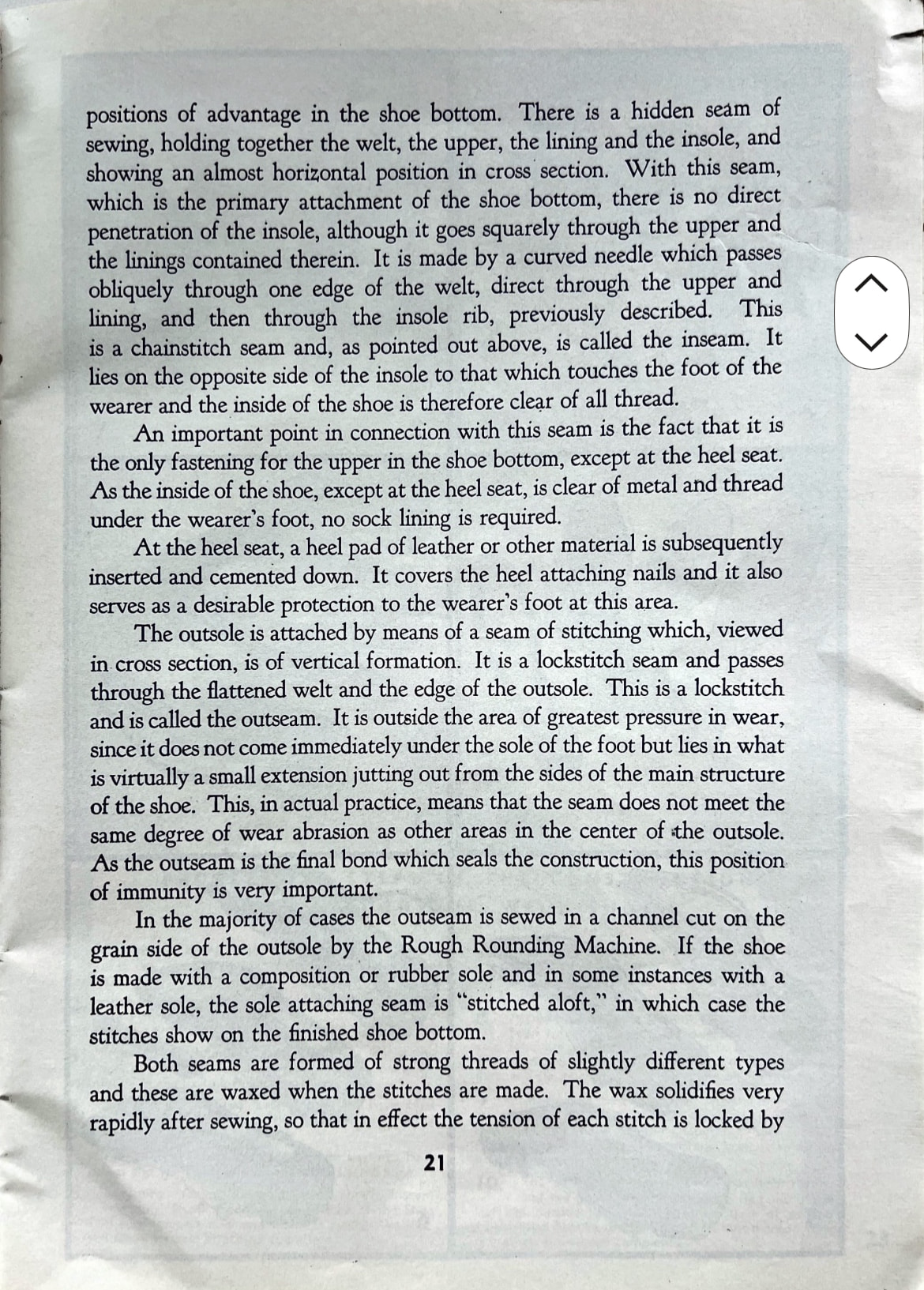
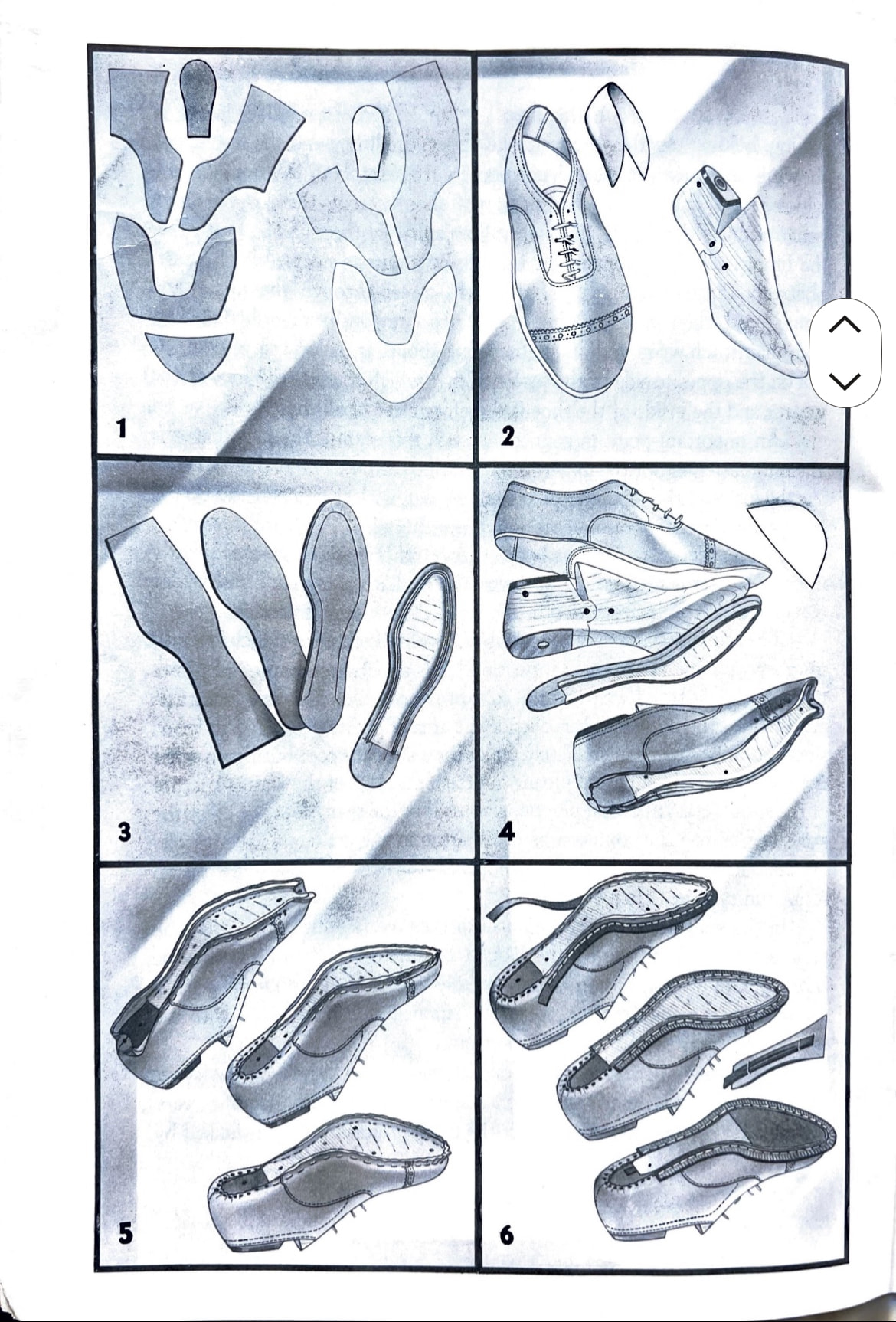
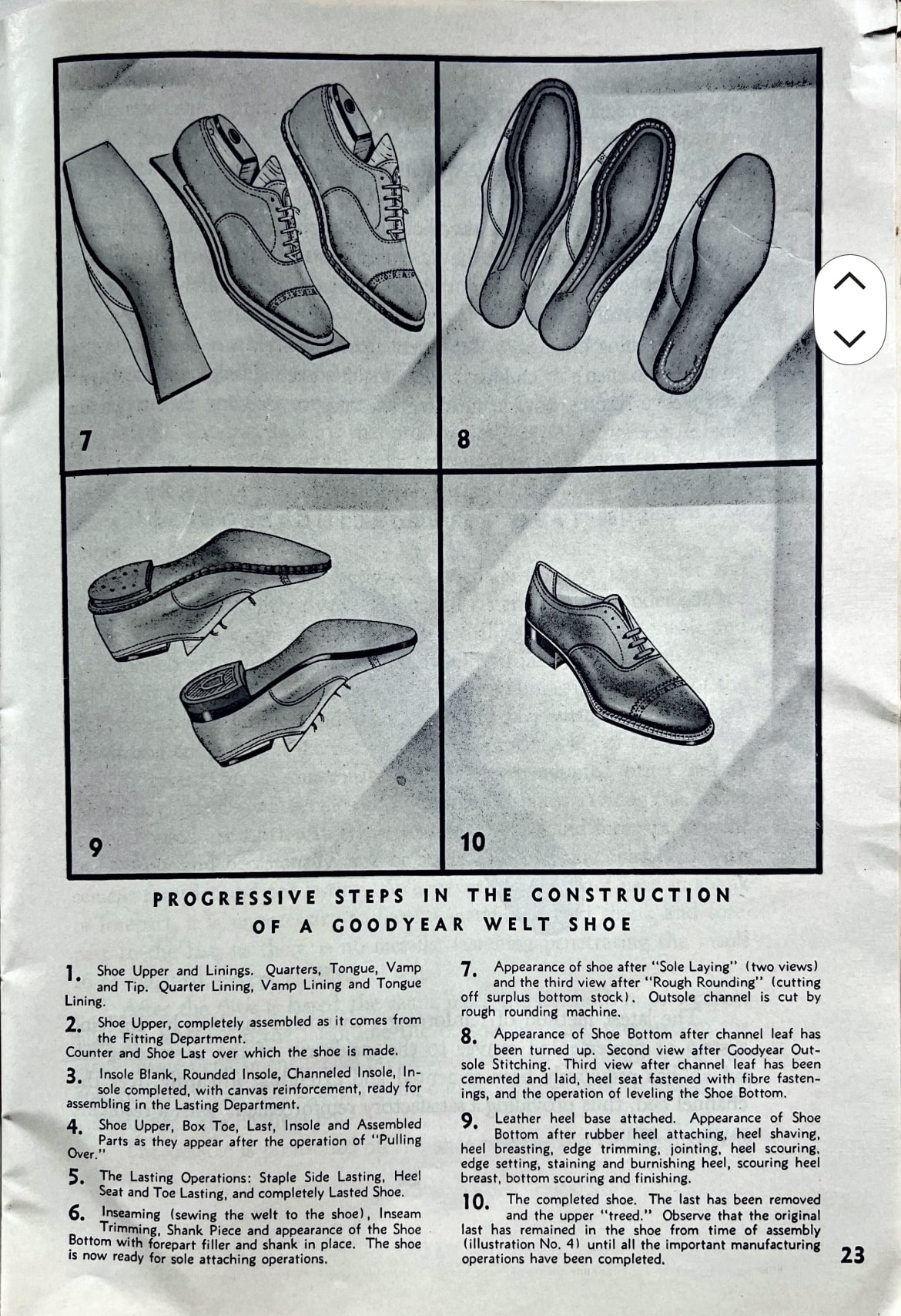
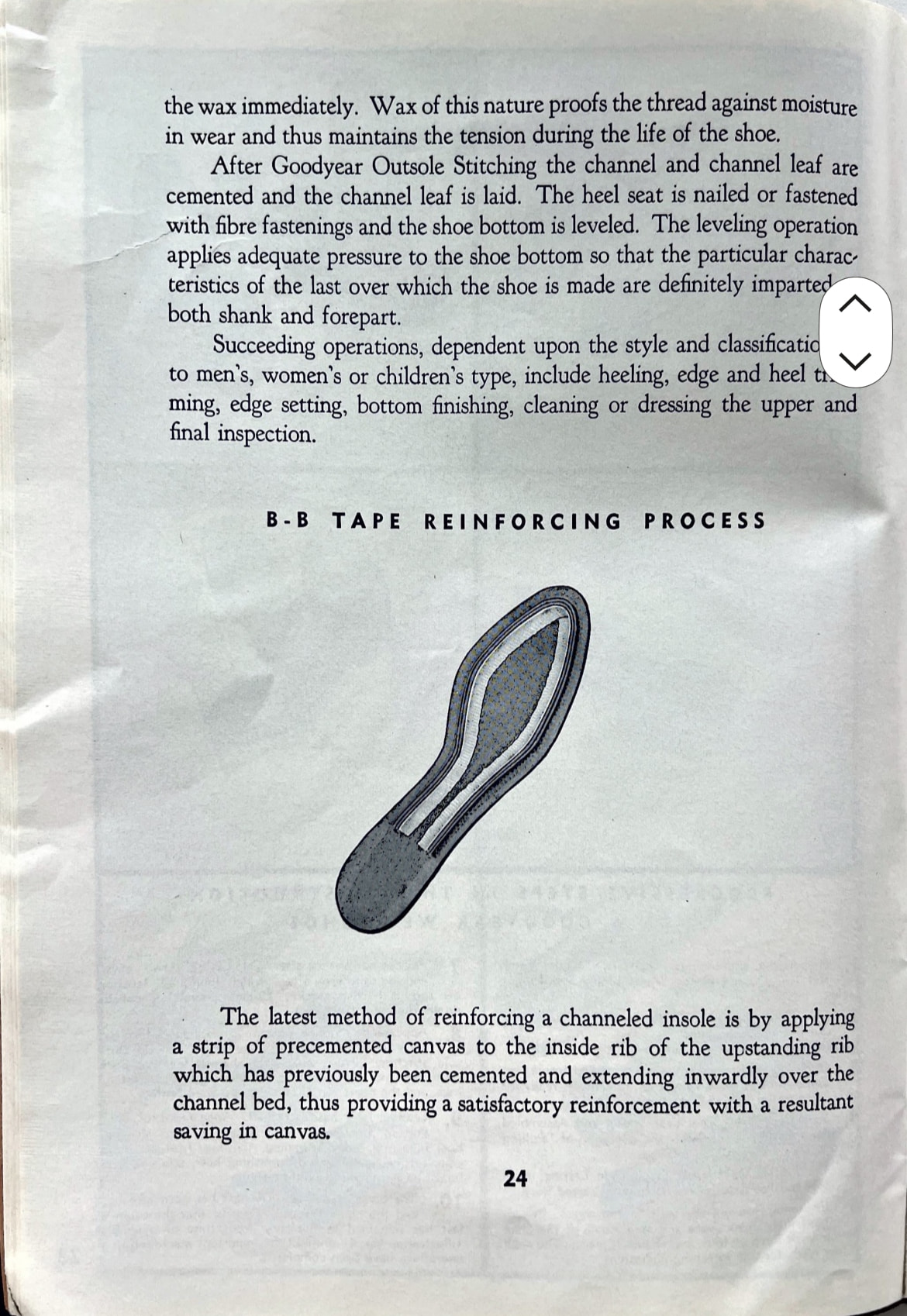
Also interesting to see the 1954 usmc book talking about tape as the newfangled method, and even then as a reinforcement rather than replacement. Looking back at the original version of gemming, a whole-forefoot patch reinforcing a double-flap holdfast you almost see the canvas as a strength add versus traditionally carved holdfast - a reinforcement against pulling stitches through, and transferring excess outward tension to the holdfast on the opposite side (or at least all the insole glued to canvas in between). It’s apparent they slowly gained more confidence in glue and canvas being able to hold the shoe together, although funny to me how wide a gamut of constructions have carried the term Goodyear (to the point that handwelters will use the term just for the marketing value).

1 Like

Great pages.

I definitely see parallels between stronger polymer threads and stronger polymer adhesives. The first thing to do is just sub them in and reap the benefits in finished products. But eventually the benefits in the making process get exploited, too, often by incremental tweaks at first.