Stuff I Shouldn't Have Bought

I’m starting this new topic as a running journal of all the tools, supplies, and other shoemaking stuff that I bought and regretted buying. If you’ve got the pluck to share, jump right in and tell your stories, too!

Some of these will be quality tools and supplies, capable of masterly work in the right hands, but falling into mine at the wrong time, or for too much money. Others, inevitably, will be garbage I thought was gold, or treasures I can’t yet fully appreciate.

Here’s hoping other see this and learn from it. Of course, I’m also hoping to make fewer mistakes, if I have to go online and fess up about them!

Barnsley Bulldogs

In confession, I guess I’m the kind that starts with the big one.

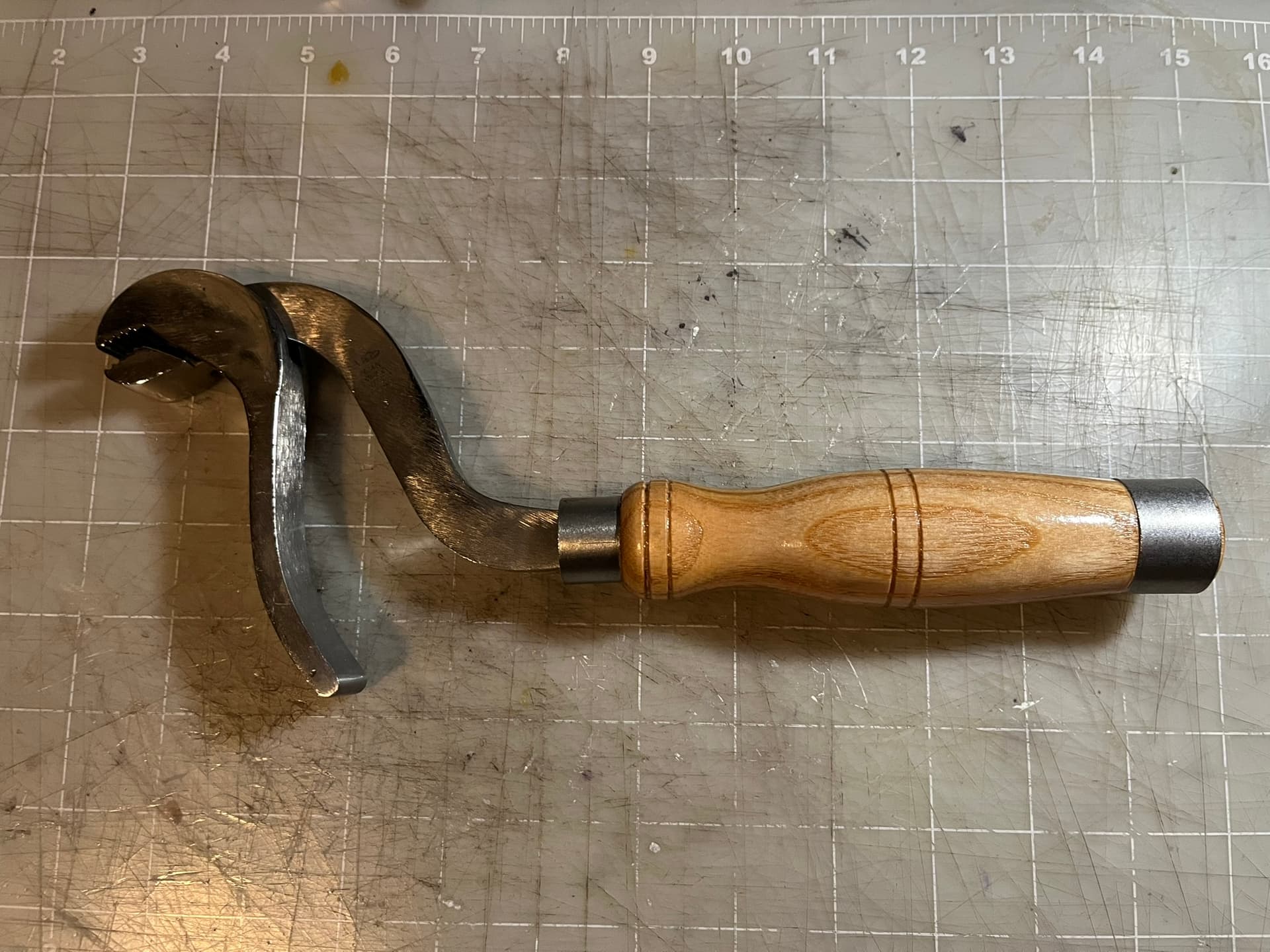
Rather early in my journey, after a couple of original pairs and a handful of involved rebuilds, I bought a new pair of Barnsley bulldogs:

I’d already slipped my initial idea of sticking with the wide, Swedish-style TAN lasting pliers I bought first for a good handful of original pairs. I’d bought a couple of Scheins, too, wide and narrow, also Swedish style. But then I read through DW Frommer II’s Western Packers, re-watched a bunch of Nicks and JK Boots videos, and ended up scouring online sales without success for a few days. In a moment of indiscretion, I gave in and put down over three hundred bucks for a new set of Barnsleys.

Folks who use bulldogs every day have opinions on bulldogs. Longer-term, I could definitely see myself grinding the corners of the lower handle on these, to smooth out the edges. But overall, I think this is a quality, hard-to-find tool from a company I’m glad to support. I’ve done a few shanks with them now, and experienced the wisdom of the pattern.

It just wasn’t the right time. And the budget hit was massive.

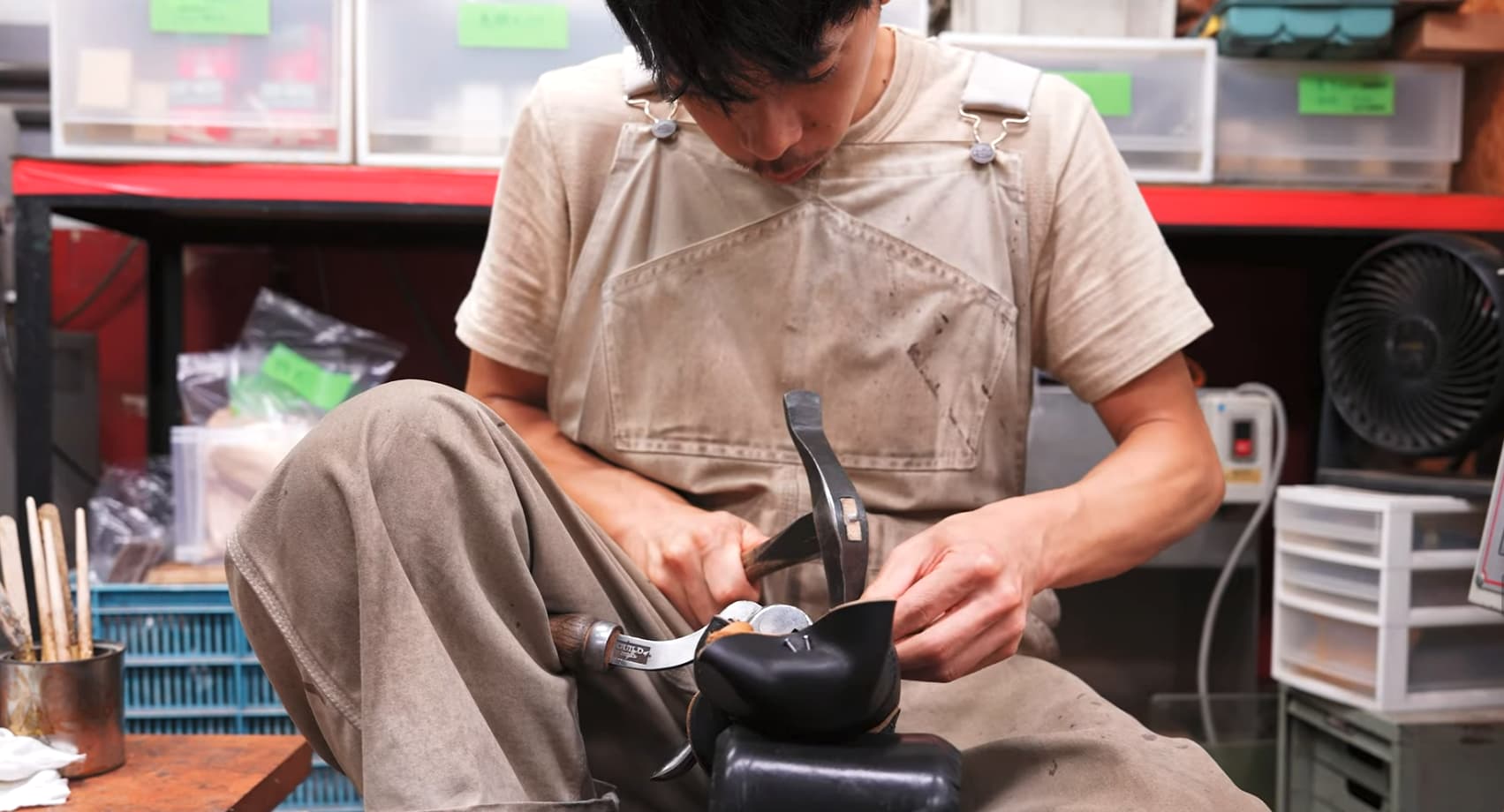
First, for whatever reason, I’ve juts drifted more toward sit lasting than standing next to a tall jack. My first binges on making-of videos were Spokane makers standing at jacks, but I’ve since spent more time watching Kazuma Nishimura, Ken Hishinuma, Ken Kataoka, Terry Kim, Marcell Mrsan, and the like last in their laps, turning the shoes over all the time, every which way. I tried both, and I feel more involved, more in control, working the old knee vise. I’ve since DIY’d a seated-height lapjack, too, mostly for heeling. I find it’s hard to get good use of the bulldogs without it. The handle’s so long that it needs another lever—the jack—acting against it. Otherwise it just turns boots in your legs, like tongs turning hotdogs over a barbecue.

Apparently like many other beginners, I also overestimated how much tension good lasting takes, especially through the waists. That made it possible to wrongly conclude that bulldogs mostly exist to get more leverage than other lasting pliers. I didn’t think about the fact that I’d yet to have tension problems on the heavy-upper boots I’d lasted, without any bulldogs. And if I were actually having shank tension problems, which I wasn’t, the natural tool for lasting in the lap might’ve been a crab-style pattern. I’d seen those in old catalogs, but I’d only seen them used once, in an old video of Anthony Delos. The pattern didn’t loom large in mind.

I’d spent enough—frankly, too much—on lasting pliers already. I spent as much again on a tool that I liked the look, the idea, and the sound of, but didn’t really need. Looking back now, a few more lasting jobs in, I needed more practice a lot more than more tools. I did have a limitation from the pliers I originally chose, but that was a lack of good, light, narrow pliers for fine pleating, not a big, grabby lever arm to drum-tension shanks.

I should have spent the money on awls. But that’s another post.
2 Likes

Anytime someone’s unsure, I’m always happy to listen to what you’re making and give opinions on what you need and don’t need. I know I sell tools, but I’m a boot/shoe maker first and foremost, and I’ll definitely try to talk you out of buying stuff you don’t need even if it’s something I sell.

3 Likes

Teflon Glue Pot

If only to satisfy myself that I’m not committing procurement errors to the tune of multiple hundred dollar bills every time, a counterbalance:

I bought one of those cone-shaped, Teflon-coated, aluminum glue pots for $40 or so. I ended up with two of the tiniest plastic brush-cap glue pots, at $40 altogether. That’s what I should have bought first. I still haven’t poured a thing into the Teflon pot.

I’m just a hobbyist, doing occasional repair jobs for others, starting to do custom pairs for friends. I don’t go through that much cement. But I’d seen a bunch of folks with the Teflon pots, online and in person. Mostly repairers and saddlers, I suppose.

I’m guessing those pots are faster and less annoying to use a hundred times a day, with the brush just waiting there to be pulled out. Occasionally, people report taking vacations or heading out to a trade show, forgetting to brush on some Vaseline or covering with plastic wrap, and coming back to a pot that’s lost half its solvent.

At my pace, that’s potentially every week. Better to have a smaller, handier pot and spend two seconds popping off the cap before starting a glue job.

They’re cheaper, too. Cheap enough to get another one for water-based.

I know it. Didn’t give you the chance!

You sold me the Scheins, I think. Don’t regret those for a second.

1 Like

Also, bulldogs are specifically a cowboy boot making tool. Here’s why: The vamp of a cowboy boot is one big flat piece of leather that has to be strongly convinced to become a three-dimensional shape. A shoe or a lace-up boot has a great deal of shape created with the patterning – anytime you have a seam, you can create curves. You can easily over-pull when lasting a shoe. I learned this the hard way. I’m a cowboy boot maker so I thought everything had to be cranked down tight.

I actually have a pair of shoe shank pullers. I found them when I visited Barnsley; they were making them but didn’t even know what they were. I figured out they were shank pullers but didn’t understand why they were shaped weird. I finally tried them and understood immediately. They are specifically shaped for the shank area, but if you pull too hard the leather slips out of the teeth, so you can’t overdo it.

2 Likes

If you EVER find the perfect glue pot, please tell me. The Teflon ones aren’t airtight. The plastic ones crack after a while. The lid gums up on glass ones. The whole topic of glue pots annoys me because they all suck.

2 Likes

Rocky Mountain Inseaming Awl

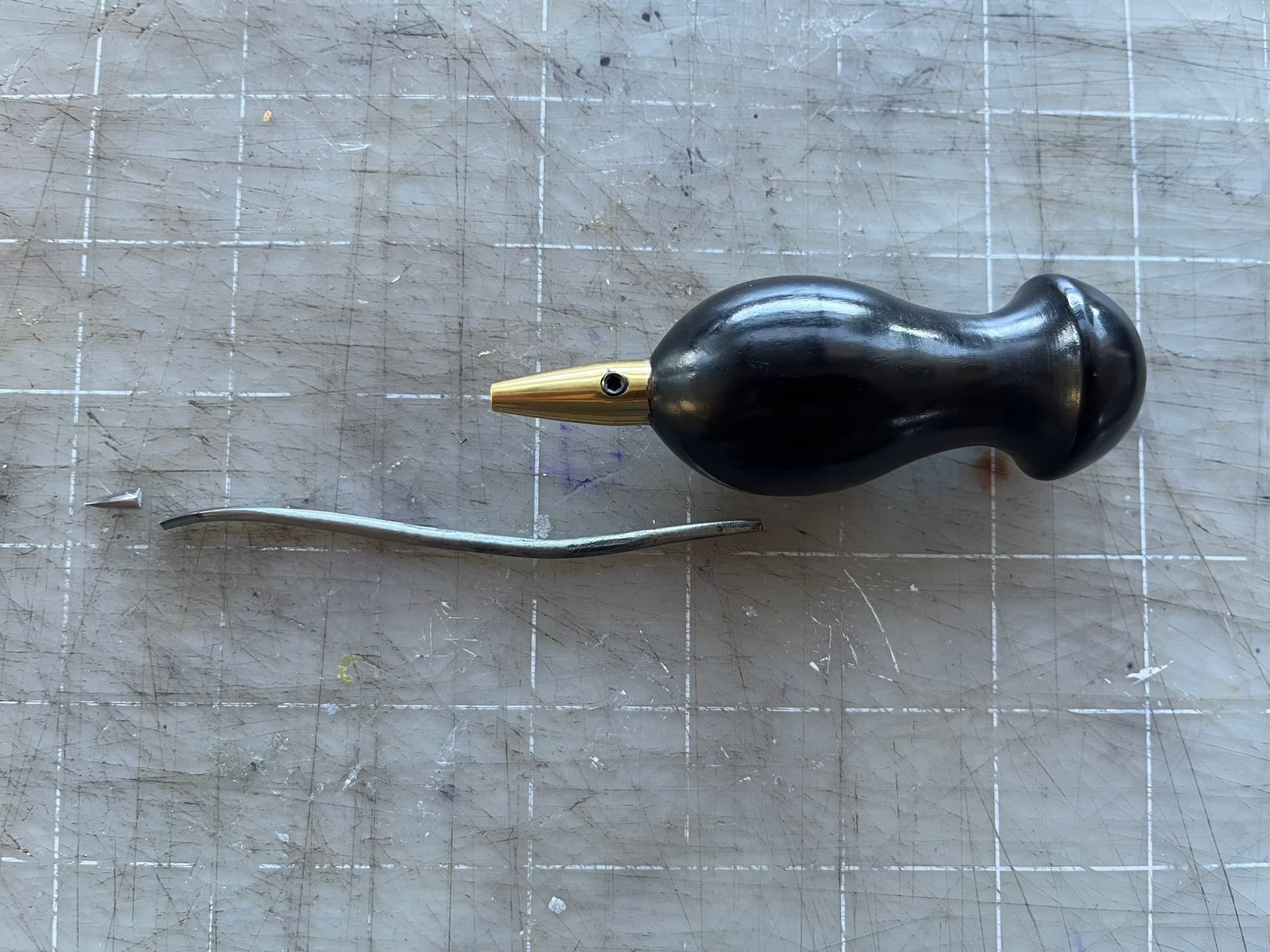
In a moment of indiscretion, I added one of those to a Rocky Mountain order:

The haft is a real nice shape and has a nifty double-set-screw ferrule. The awl blade is also a pretty nice shape, and certainly seemed designed for purpose.

I suspect RM are having these made to spec in China, but I still think it cost too much. More than a complete awl, with haft, from Dick Anderson or Tom Carbone.

Worse still, the tip of the blade snapped off on first use. And not where it thins out to a diamond point, but back where flares out to full thickness. At the time, I thought it might have been me. I’ve since done the very same job with other blades from Tom Carbone, Dick Anderson, King, and Barnsley, without any issue. It’s also really clear on the broken blade that grains are very large where it split. I’ve tried taking photos of that, but it needs a macro lens, which I don’t have.

I contacted Rocky Mountain, and to their credit they responded. However, their message basically boiled down to an offer to share tips, but a flat confirmation that they don’t and won’t sell separate blades, even as replacements. Clearly I should have confirmed they’d have those before I bought in. But it still feels disappointing that they don’t.

In the end, my buying instinct at this time was right. I originally messed around with a bunch of Osborne blades, looking for something I could fashion into an inseamer. Their #31 series came close, but in the end that was a dead end.

With a focus on handwelting, I think I was right to allocate more budget to a purpose-built sewing awl. I just chose the wrong one. Or bet too much, and got unlucky.

1 Like

I realized it might seem that I’m picking on Rocky Mountain. I don’t mean to. Here are some items of theirs that I’m very glad they stock, and was glad to pay them for:

THK “Hasi Hato” Eyelets and Setter

I ended up standardizing on Trendware eyelets with longer barrels for thicker leathers. But the level of finish on this hardware and tooling is superb. I don’t know another US importer.

OKA Stitching Tools

I’ve also bought these direct from OKA, but Rocky Mountain often has stock, and ships quicker.

Miscellaneous Doodads

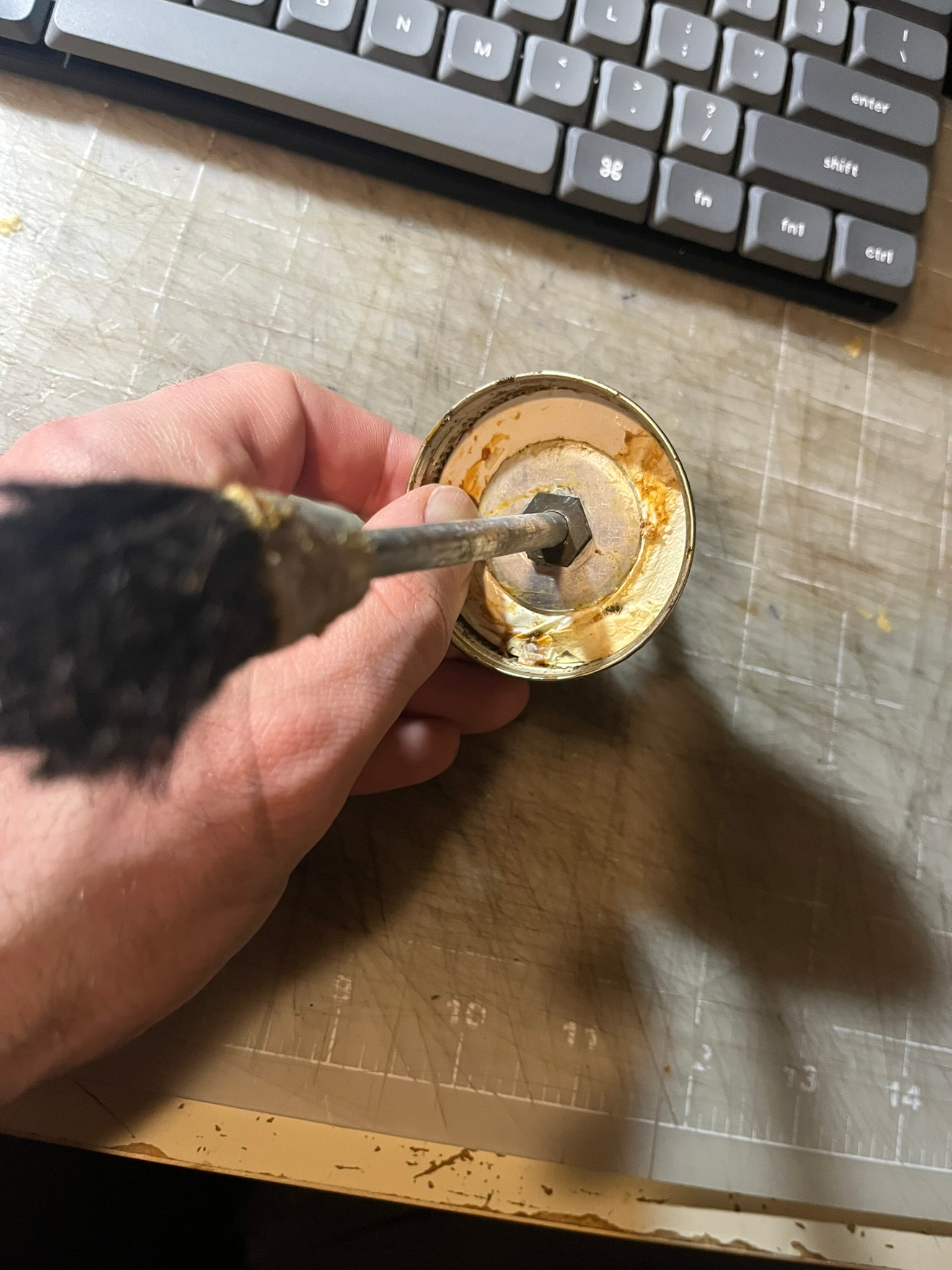
My solution is to leave it in the original can with the built in brush, and i keep a pipe wrench next to it so when i come back the next day I can get it open :joy:

3 Likes

I found a Youtube video of the bookmaking process in the Rolling Dub Trio Factory. It’s very interesting how they combine PNW and Japanese construction techniques. One of the things that stood out the most was their lap lasting and their use of bulldog pliers with a sitting height lasting jack.

2 Likes

Nice find! I’ll definitely add this to the wiki.

I improvised the leg-over maneuver once or twice on a pair. It worked for the boots, but my back was not happy!

1 Like

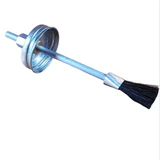
FYI I saw a tip to put Vaseline on the threads of the glue can and it works like magic. Now I’m pretty happy using the brush-in-lid. But I need a solution for the aquilim that come in those square bottles

1 Like

I put petroleum jelly around the wells of my TS Boy-style pots.

I’ve also used it on CdC cans, but I always end up bending and breaking the built in brushes where their shafts join the lids.

True me too. I ordered one of these, I’ll report back.

1 Like

It’s great. With Vaseline on the threads I can unscrew with one hand and it’s a large solid brush.

1 Like

Glad to hear it!

I don’t use my jar with a brush-in-lid like this much anymore. But when I did, I found it also helped to rub some petroleum jelly on the lip of the gasket inside the lid. That helped keep the gasket clean of drippings that tend to accumulate there and then dry out in the empty hair, tearing up the sealing surface.

1 Like