X24 Leathers intro

Hey all. I’m a guy from Northern Utah who got a bit obsessed with figuring out how to match Russell Moccasin’s construction styles, as I’ve never seen anyone other than them do it. So I did it.

I haven’t matched all of their styles yet, but I’ve done multiple molded soles, and my most recent boot is a single vamp true moccasin chelsea boot in Teal shrunken bison from Law Tanning.

I’m also trying to learn hand welted footwear, and plan on messing around with other methods on friend’s/family’s boots.

Here’s my Instagram if you want to see some of the moccasin process.

I promise this isn’t an advertisement :sweat_smile: , I just really enjoy the process and sharing what I can for others to benefit from.

1 Like

Welcome to the forum! Glad you introduced yourself!

I am off Instagram and doing pretty well resisting temptation to relapse. But I’m definitely interested in the moc constructions, and can respect your fascination with Russell. They’re carrying on a pretty neat tradition there.

Anyway, I hope you’ll feel fully welcome to share about your shoe work whenever you like.

I also try to make a point of telling everyone to be a little “constructively selfish” here. If you get a nice result or make a mistake on a pair that you’d like to share about, there are almost certainly folks here who’d like to read about it. If you find a neat video or blog post, this is a great place to share. And if you have a question, or trouble finding some tool or finding, don’t hesitate to start a new topic about it. If it’s relevant to you, you’re almost certainly not the only one who’ll benefit from discussing.

Mind sharing how you came about that hide?

I just poked at Law’s website again, and saw they now have an in stock program, where they plan to stock particular leathers for 3–5 day shipping, even orders of a single hide. But I sure don’t see teal shrunken bison on that menu!

Thanks for the welcome!

As for the hide, I just asked them. Sent them an email asking what kind of neat buffalo they have in. I knew Texorado boots did a run with the leather, and it just seemed neat to me. I had also previously purchased 2 other hides from them. A darker redder type shrunken bison, and a more medium brown shrunken bison. Their stuff is great, and they’re a very easy to deal with company.

1 Like

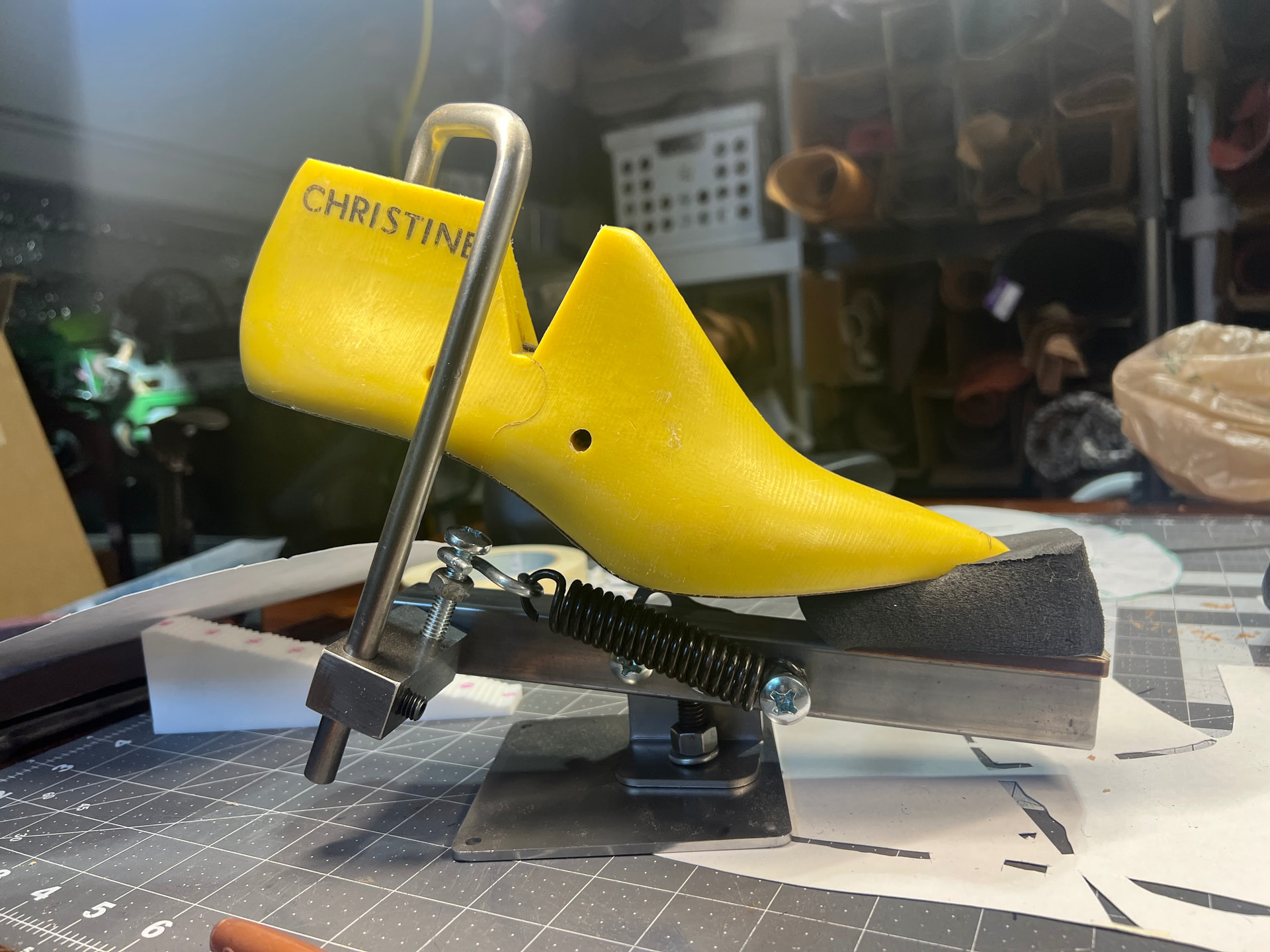
Hi! Have really enjoyed your stuff. I’m ahremdee on instagram. You motivated me to finally get a moccasin jack. :smiley: this one from tom carbone. I’m sure I won’t catch up, but I plan to follow your lead. Thanks for sharing all the good info

1 Like

Oh hey man! Glad you got a moccasin stand. I haven’t heard of that one before, but it looks pretty neat. I appreciate how compact it is. Looks like I have an inseaming awl of his.

How did you come across this one? I can’t seem to find it with a basic Google search.

1 Like

That’s a great Step 1 for learning handwelting. I’ve been really happy with my number 2.

1 Like

He was advertising it directly on his Instagram, just DM him I think tomcarbone56

Oh it comes with a taller rod as well for sewing moccasin boots

1 Like

@thenewreligion - Oh nice, I was just going to ask about the taller rod. Do you know how tall of a boot shaft it can accommodate?

@kemitchell - Inseaming has been an experience, that’s for sure. I think I will try a stitch groover for the inner channel next time.

I am only a beginner myself, having handwelted going on two two handfuls of original and reworked pairs. Even so, I’d strongly recommend you try the manual way:

  1. mark the line you want
  2. wet your leather and let it soak in a minute
  3. incise the line with the point of a knife
  4. open the channel with the point of a painter’s tool, a screwdriver, a dedicated channel opener, whatever you have
  5. if you want, dig out a sloped trench by skiving away the inner edge of the channel you’ve opened

I have a nice collection of stitching groovers and gum tools from prior leatherwork. I like a groover for some shoe jobs that look more like old leatherwork tasks. Making welt, for example. But I’ve never had good, reliable results using those tools freehand carving insoles. The thick grain of the flesh side doesn’t cut or gums up the cutters. They skip around unreliably, even when I score guidelines. They can only cut the groove size and shape they were ground to make. The stitching groovers with guide bars or l-shaped cutters have blades far too small for thick inseaming cord.

So that’s exactly what I did. Incised the marked line I made, opened it with the tip of my folding tool, then cut the angled trench. When sewing, it just seems to add the ability to sink the stitches under the holdfast, as if it’s been cut too deep and is tearing apart.

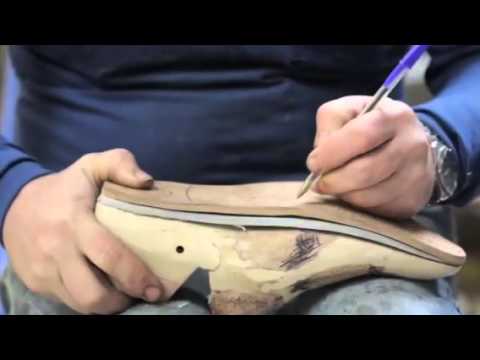
I’m sure I am just missing something, but I don’t understand why a stitch groover is suitable for welt making, but not as often recommended for making the interior channel on the holdfast. If the outer edge is well defined and set up, can’t the guide on the groover follow that nicely?

Are we talking about the same kind of groover? Like this:

or this:

I believe I’ve read of at least one maker who preferred to simply groove rather than cut an angled trench on the inside of holdfasts. Might have been DW Frommer II. Couldn’t say whether that was a groover like the above or a gum tool or scratch compass with a bigger cutter.

My experience has been that groover or gum tool will not reliably follow a curving, awl-scribed line on the insole leather I’ve used, either Baker or Panhandle. Your experience may differ! Mine has been consistent. I’ve needed pressure to make the little cutters bite the hard, wooly insole fibers. That pressure could drive the cutter off course from a simple scribed line. I’ve seen it done cleanly when the groove was split and opened.

As for spacing, I did my holdfasts a fixed distance from the edge of my insoles all around on my first pair, but I quickly moved to varying that distance, and therefore the distance from edge to channel, as well. Further in through the waist, especially on the medial side. With a welt, the groove’s a fixed distance off the edge, and the edge’s ideally perfectly straight.

I tried doing just a groove, too, without cutting any angled slope. I think that was my second original pair, though I don’t seem to have taken a good photo. It worked, but it made stitching slow. Without a little ramp on the inside, my bristles would often crash into the side of the groove and not slide through. It was also harder to feed them inside out cleanly. I was also snapping inseaming awl blades at an unfortunate rate.

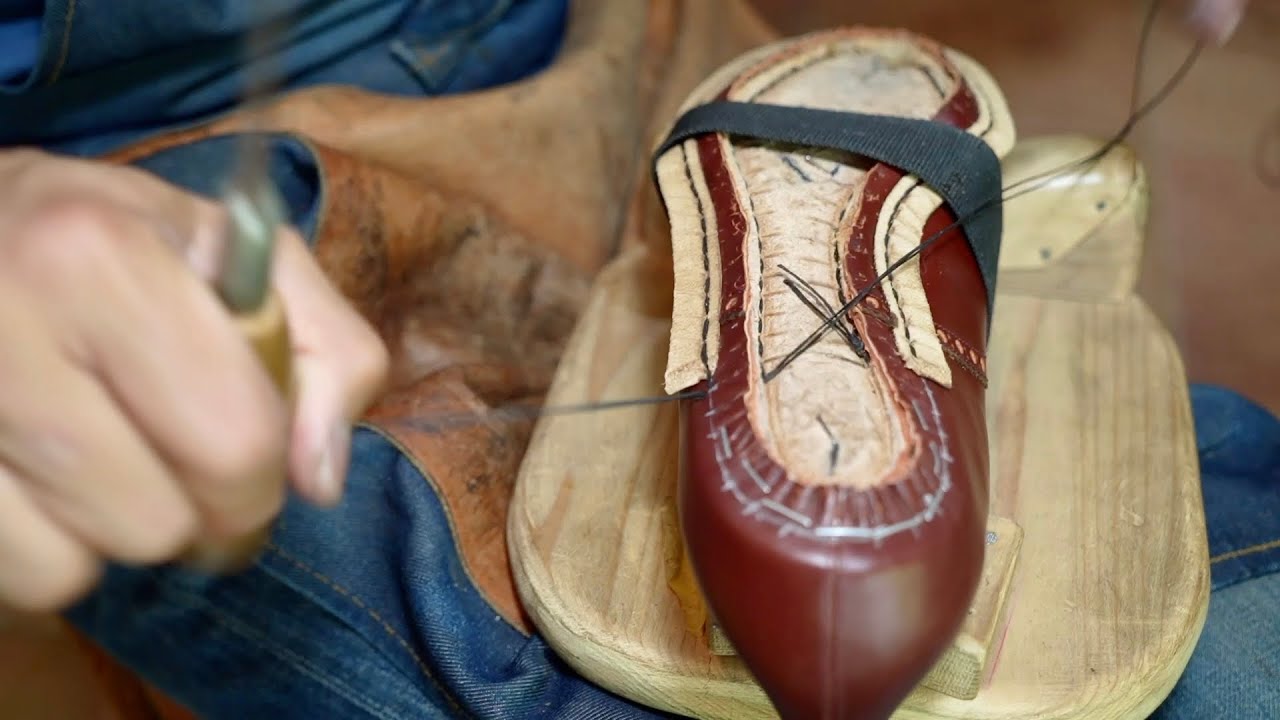
When I managed to get sewing a little smoother, I realized I was pressing my inseaming awl into the side of the groove, essentially embossing in little ramps, and using those to guide the bristles. Much easier to carve out a little ramp beforehand. It’s quick work with a sharp knife, good moisture, and practice:

This is one of my favorite things on the Internet. Sorry to anyone seeing me link it for the umpteenth time.

@x24leathers, don’t let me talk you out of anything! Follow your instincts, take some photos, and share your experience. And feel free to start topics to discuss this specifically, or your projects overall.

Yeah, those are the groovers I am talking about. I know Lisa Sorrell likes them, or at least she used to, which is where I got some of my logic from.

Your points do make sense though. I ordered some curved needles, as I want to see how well those work. Either using a groove or a channel cut with a knife. I’m perfectly glad to admit my knife skills simply are not up to par yet, as well as the other skills needed for hand-channeling.

I also had thought about the issue of making the holdfast a varying distance from the feather edge, depending on the area of the shoe. It does seem like there is little easy way to do it with a groover, but free hand carving with a knife is plenty doable, assuming not sub par knife skills.

I’m sure it also doesn’t help that I am not using tapered ends for this. I am just using some twisted waxed cord from Maine thread, which is the exact same as their tapered ends, just in a continuous spool. So there could be some extra bulk in the knot behind the needle that is causing issues? To be fair though, on other parts of my hold fast, it is not splitting.

So again, it really could just come back to inexperience and user error. I’m quickly learning that welted footwear is probably more difficult, even if there is much less info on moccasin stuff. I’ve figured out how to make my moccasin stuff basically just some version of a sewn together leather sock hand sewn onto a midsole of some sort. Making straight stitches through two pieces of thick material that won’t be seen is a little less complicated than dealing with a welt, upper, liner, and holdfast, all with a curved needle path.

1 Like

Waxed Ends Make a Big Difference

Using round thread without tapered ends, you will end up either making much wider holes or essentially reaming or tearing smaller holes out as you pull needles through. The thread essentially doubles in thickness bending around the eye of a needle. You may feel a pop pulling through, as the bend forces its way to the other side of the hole.

Wispy taws, good coad for coating, and learning to mount bristles are three more things to figure out. Making waxed ends is a chore. But I can already say even from my limited experience that it really pays off in different aspects of the inseaming process.

The thinner the bristle you can mount, the easier it becomes to feed them through. The smoother the transition to just the bristle’s thickness to the full thickness of the thread, the smoother and faster you can pull taught. With holes just small enough to pass two threads, you can get much tighter stitches that keep tension. The sticky rosin in your coad really starts working as an adhesive, melting from the friction and hardening in place.

Making Waxed Ends from Maine Twisted

I haven’t tried untwisting Maine Thread twisted. I’m sure you could unwind it and trim the plies at staggered lengths.

You may have a little trouble getting bristles or needles to hold in place, due to the thorough paraffin coating. But even the premade waxed ends Maine Thread sell seem to have a bit of wax on the taws, and plenty of makers inseam with those. If you’re stateside and want to try a few, private message me your mailing address and I’ll throw a few in an envelope for USPS.

Consider Braided Poly

Alternatively, you can use braided poly cord. Some very talented makers inseam with thick Ritza 25 Tiger, 1.2 mm or 1.4mm IIRC. I believe Maine Thread now also makes a braided product over 1mm wide. Perhaps that’s wide enough.

Braided has the nice property that it naturally lays flat like a ribbon, rather than a rope. That can make a sharper bend around the eye of a needle and lay closer together in stitchlines. Of course, it’s also incredibly strong and resilient. You’d probably tear out holdfasts before ever popping the braid under tension.

Channeling with a Knife and Opener

I’ve got plenty to learn about knifework, but I haven’t experienced any issues channeling freehand for quite some time. Everybody’s different, but this came fairly easy to me. Much easier than feathering freehand.

The one big mistake I committed early on was incising too deep. I’ve learned to avoid that by holding the knife point like a pencil, choking up to use the pads of my fingers like a kind of squish depth stop. Go slow and speed will come. Try not to nick the tops of your other fingers with the back part of the cutting edge.

Whatever platform this forum is on is pretty cool.

Tapered Ends

All of that makes perfect sense. I actually use tapered ends for my moccasin toe stitches, I just didn’t want to use them on this test piece. No real desire to actually make them though, unless there’s great reason to? Mine are Maine Thread tapered ends.

I did coat the thread with coad. My mixture is just 66% beeswax, 33% rosin, and a touch of olive oil to make it malleable. Has been working fine so far.

It does help to think of the bristles that way though, having a gradient transition from the thin bristle to the tapered end leading into the full thickness of the thread. I’ve been using some DIY wire bristles, made by twisting wire (can’t remember thickness right now) with a drill. I’ve made progress with it, but I know it could be better.

I’ll have to use some of the tapered ends I have on the next piece. I’ll grab some legit bristles too.

Braided Poly

I don’t have Tiger in that thickness, just in 1mm or 1.7mm (some silly thickness), but that’s a good note. I had wondered if shoemakers tended to prefer the more classical methods of doing things, or had shifted to newer methods like Ritza.

As a test, I have been using the 1.7mm Tiger as a reinforcement, looping it inbetween the actual stitches to give it a bit more structural integrity, like you might do in the toe or heel. Seems to be helping a bit, but now knowing about the bristles and how I am possibly popping open the holdfast, I’m sure it can only do so much. I can’t remember what the actual term for this practice is though.

Knife work

Oh interesting, I’m somewhat opposite. I found free hand feathering relatively straightforward, but had a hard time with the channeling. It took some time to wrap my head around what needed to happen, but I think know it’s just an issue of skill.

I started my cordwaining journey with moccasin making, which has much less precision knife work than welted construction styles do. I think I learned some awlright (:sweat_smile: ) awl control, but the precision required for top down construction styles isn’t there just yet.

That being said, my test piece looks alright from an aesthetic perspective, from the outside only. So that’s something I guess?

Braided Poly in Action

Here’s Ken Hishinuma, who won the London championship a couple years ago, using Ritza 25 tiger:

He was kind enough to confirm in a comment he’s using 1 mm.

And here’s Chad Little using 1.4 mm Ritza 25 Tiger, lockstitching with a jerk needle, in a cowboy boot:

Maine Thread Tapers

There’s no shame in using the premade Maine Thread tapers! If you end up inseaming with them, be aware they also come in 110″, not just 72&Prime. @Customboots stocks both lengths:

She also stocks CS Osborne 501x needles, which were probably the best premade curved needles I found:

I tried the size 3s, and while they were the right shape, I didn’t have a great overall experience with them. Too easy to break the eyes. That said, I was completely new to the process then. Better technique might have saved them. Or a thicker gauge of needle.

The forum software is called Discourse. It’s produced by a company that I represented as legal counsel for several years. They release it free of charge as open source:

I rent a server and run the Discourse software on it myself. Toward the very beginning, I posted about my direct costs:

You can read a bit more about why I started a new forum, rather than double down on Crispin Colloquy or Reddit here:

Lisa did an insole prep demo at the last boot roundup and has changed a couple things. Knowing she’s sometimes lurking and may swoop in and correct me violently… :sweat_smile:

From what I remember she has switched to starting the holdfast with inner and outer incisions like Tony did above, then using a feather knife/plow for a more traditional stepped feather and a V gouge for the channel

1 Like

Really appreciate that report! We all keep an eye on @Customboots :wink:

I wonder if she’s running the v-gouge straight down for a v-shaped groove or tilting it so she gets a flat inside face of the holdfast and a ramp, like the top half of a capital letter K.

Straight I think. Should have taken pictures but just stood there absorbing and apparently leaking information