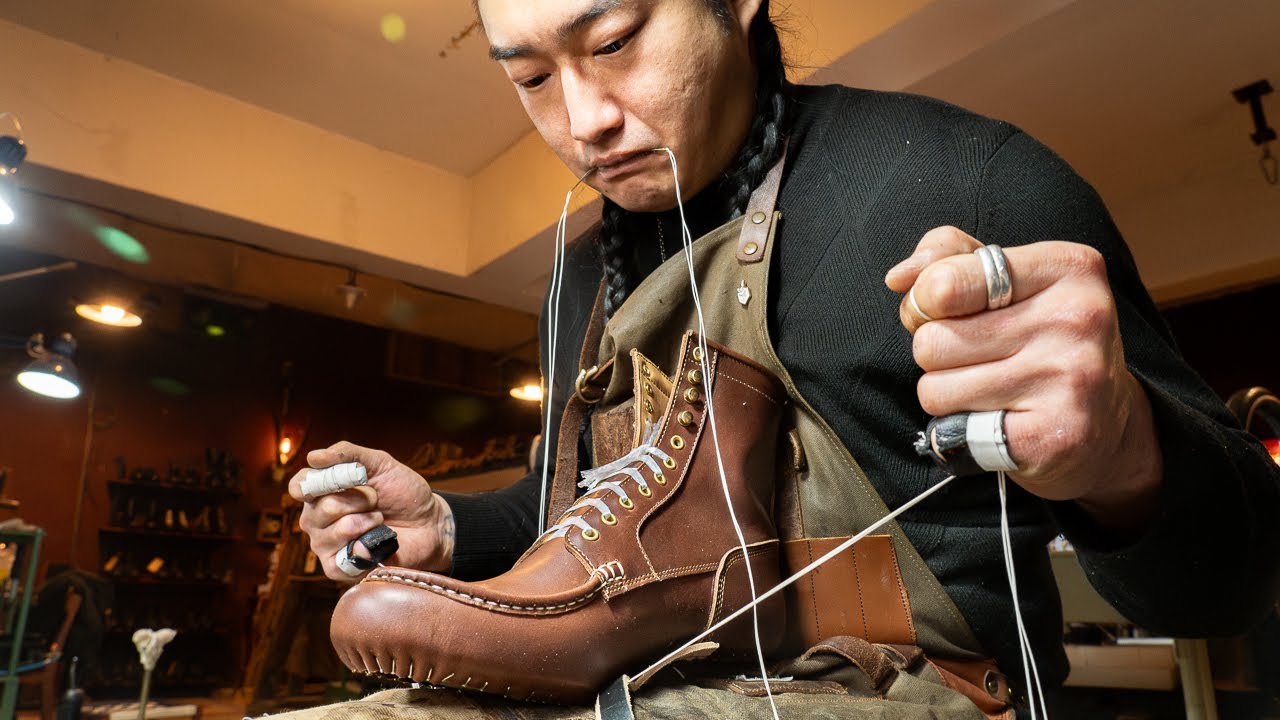
What's new on shoemaking.wiki?

One of my big motivations for setting up this forum was to make a place where other folks could share their shoemaking online like I have, on a site without all the ads and attention grabbing of other social media. I’ve moved my project journals—1, 2, 3—to topics here on the forum. I’ve also moved some notes, like those in the Reference category, from shoemaking.wiki to the forum.

At the same time, I’ve found myself continuing to update shoemaking.wiki, my own personal notebook of shoemaking, which is now up to almost 2,000 non-geographic entries. It’s just much easier for me to add new tidbits of information there as I find them. Many of those tidbits hardly seem worth their own posts here on the forum, though I hope they add up to something useful to others. Especially beginners getting totally lost in the thicket of shoemaking jargon.

Instead of forcing myself to post little trivia bits that nobody wants to see here on the forum, or simply not sharing new info and resources as I find them, I’m going to keep updating shoemaking.wiki, but also use this topic to share news of new entries and revisions that I’m excited about.

To kick things off, here are a few recent additions.

Hand Press Tooling Interfaces

I was recently able to confirm that the twist presses from Italy are in fact threaded 1/4"-24, and also made by a company called SPS. My entries on “twist presses” and SPS have been updated accordingly. I’m slowly gathering tooling interface information on more presses. For example, the folks at Sailrite confirmed the threading for C.S. Osborne’s W-1 and W-3 presses, and also let me know they’re coming out with a new press that will ship with a whole handful of tooling adapters. The kind folks at Weaver also confirmed the interface for their Little Wonder.

E.A. Berg Lasting Pliers

I saw @thenewreligion post a page from an old E.A. Berg tool catalog that I hadn’t seen before. I found what I think is the original scan on Internet Archive, but they’ve been down for a few days. While I wait for their archive to come back online, I went ahead and copied the page @thenewreligion shared to my entry for Berg. It’s got measurements and other notes on their various lasting pliers.

German Heel Seat Sewing Style

A kind passerby on YouTube sent me on a research spree about different styles of seat sewing after I commented that Dennis Kieback’s latest video showed him sewing a seat in a style that reminded me of Lee Miller’s. I ended up starting a new entry about a German style of heel seat sewing I hadn’t seen before, with a dinky little diagram I drew up and some links to photos from Manuela Kendler in Austria.

The kind commenter also referred to two-needle saddle stitched seats as “English style”, but I haven’t been able to find another source using that name quite yet. I already had a short entry with diagram on French style seat sewing. There’s a great video on YouTube of Anthony Delos sewing that stitch in some riding boots.
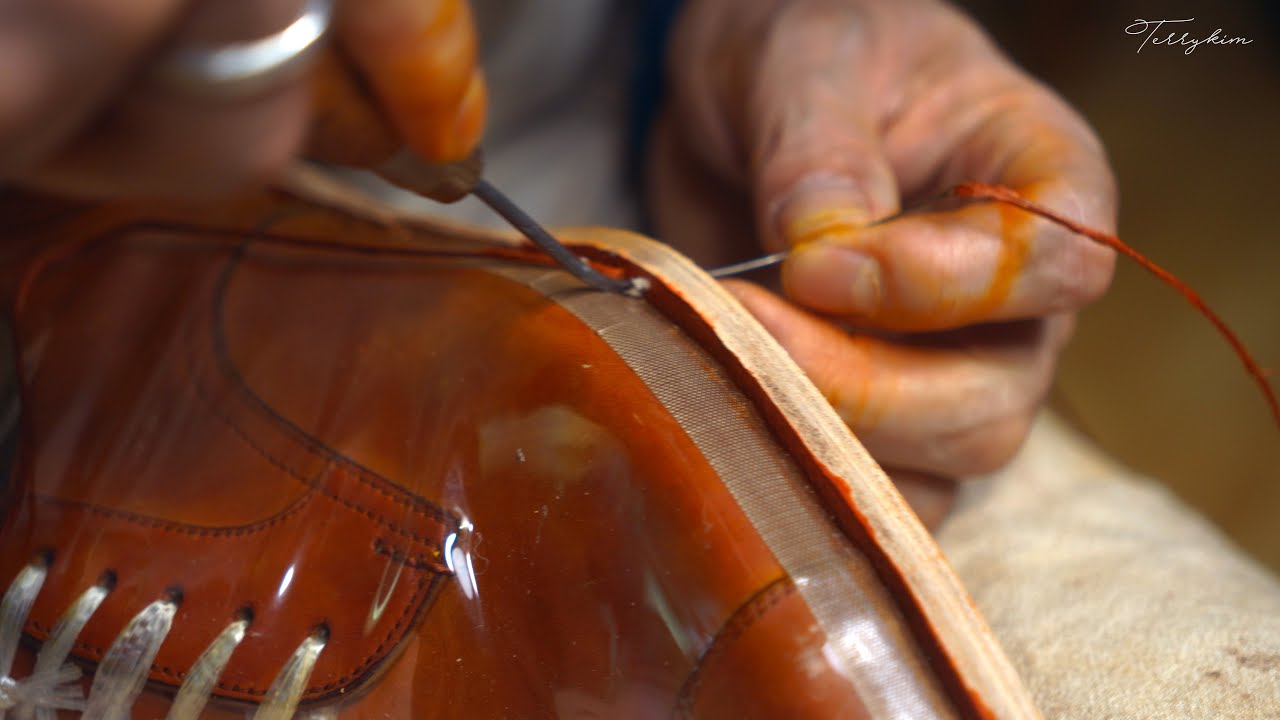
Inseaming with braided poly cord

I’ve published my notes of parts 4 and 5 of Ken Hishinuma’s recent YouTube series about making himself some shoes.

One big takeaway for me from part 4, showing inseaming, was that he uses Ritza 25 Tiger braided poly cord for welting and inseaming. I hadn’t seen that before, but fully expect it’s even stronger than the twisted poly cords from Maine Thread, which in turn will be stronger than any natural fiber like help or linen.

Ritza doesn’t come with any kinds of tapered ends. But Ken fashions bristles out of wire for himself, and doesn’t seem to have any trouble pulling through.

I posed a comment on his video today asking if he’ll tell me which thickness of Tiger he uses. I suspect 1.2mm or 1.4mm. There is also 1.7mm—only in black or white—but I imagine that would be massive overkill.

Eyelets are a whole, big thing.

I’ve been consolidating my notes of various shoe eyelet dimensions and specifications. A lot of the best reading has actually been in older catalogs from USMC and Stimpson. At least in the USA, it really seems like the eyelet business took a sharp turn away from shoes and apparel toward stationery and especially electronics. Catalogs that used to feature pages of shoe eyelets now have a passing mention or just a few selections.

The best output to the wiki so far is probably my digitization of Stimpson’s 2007 catalog shoe eyelets table. That’s been my best guide so far to understanding what the old “trade sizes” like “AA” and “JK” mean, dimensionally. But it’s still far from clear to me how those names came about. My best guess is they go back to USMC, which had its own fastener division as well as J.C. Rhodes.

My best lead for a consistent US source of standardized eyelets so far remains Trendware. They keep certain “Basic Hardware” in stock, and while they have order minimums, they don’t seem terribly onerous: 1,000 of each piece ordered and $100 minimum before shipping. I’ve sent them an e-mail asking for dimensions of those basic hardware pieces.

Based on dimensions, I suspect that Siska’s shoe eyelet selections are Stimpson production.

The Italian manufacturers I’ve found, OMS and Moro have their own systems going on. I haven’t confirmed yet, but I suspect that Moro’s numbering system is the one I see marked on the setting die tooling sets from Italian finders, especially those marketed to work with twist presses and others from SPS.

On the DIY angle, my tentative conclusions so far are that it’s probably not worth it to me to try to make my own eyelets. There might be a practical way to turn and spin effective brass eyelets on a mini lathe from tubing, but best I can tell, the factories all use multi-step die and punching processes.

On the other hand, electroplating brass eyelets with other metals appears totally doable, especially nickel. There are a bunch of videos online showing how to do that with a bit of wire, some vinegar, an old phone charger, and anodes from eBay.

Flags and Headstones

I’ve started adding country flags to links to entries on the wiki, so it’s easier to recognize where things are located in longer lists.

I’ve also added little headstones next to the links for entries about defunct companies, discontinued products, and deceased people.

Maine Thread offers more products.

Thanks to @carsten, I e-mailed Jenn at Maine Thread and got confirmation that they offer pound-weight spools of _un_waxed twisted cord. The magic words are “11-7 unwaxed” and a color, like “natural”. My cost was a little over $28 before shipping. They can bill me through my account on their website.

I’ve updated the Maine Thread entry also with notes on making fine taws with sandpaper. I believe @Carsten mentioned that he got that tip from a @customboots video!

Found the source of Blau Ring pegs.

Thanks to @carsten, I was able to add an entry on Gottfried Mayer in Austria. That also gave a prompt to update other shoe-peg entries, including moving the American sizing system entry to its own page and improving it.

Die Breaks

I finally got around to starting a short entry on die breaks.

Mass production from components isn’t my personal focus. Heck, I’ve pretty much entirely avoided reading up or even really thinking deeply about grading. But I’d seen “die break” come up in various places, but never in any glossaries, or in text with a specific definition.

I hope I’ve got it right.

Maine Thread Numbering

The ever-helpful Jennifer of Maine Thread was kind enough to crack the code of their internal cord numbering for me. “11-7” is seven plies or strands of poly—that much I’d gathered—while the 11 stands for the corresponding equivalent thickness in linen thread. The idea was that folks used to buying, say, number 9 linen could try Maine Thread 9-6 poly with confidence.

It’s all on the wiki now, with notes on uses for unwaxed rather than waxed cord.

Original Edwin Simpson Last Chart?

I suspect I may have found a print source for the original, unmolested last chart proposed by Edwin Simpson in the late 19th century. I’ve seen sources that his system was adopted by a US retailers’ association in the 1880s, but not yet confirmed that in print, either.

Still, here’s the chart, from a regularly updated dictionary of shoemaking published out of Boston, in a fourth edition with 1918 as copyright date:

https://shoemaking.wiki/American_Standard_Last_Measurements

Another Kind of Last Build-Up

This video prompted me to add another material to the list for last build-ups:

I asked in a comment whether it wasn’t scrap HDPE from last turnings. I was right!

This reminds me a bit of using fiberglass putty, but it’s much faster. Very important to have good ventilation.

1 Like

Wow that smoke looks … carcinogenic

1 Like

That crossed my mind, too. I thought about mentioning it in a common, but didn’t.

He does appear to have a working fume hood.

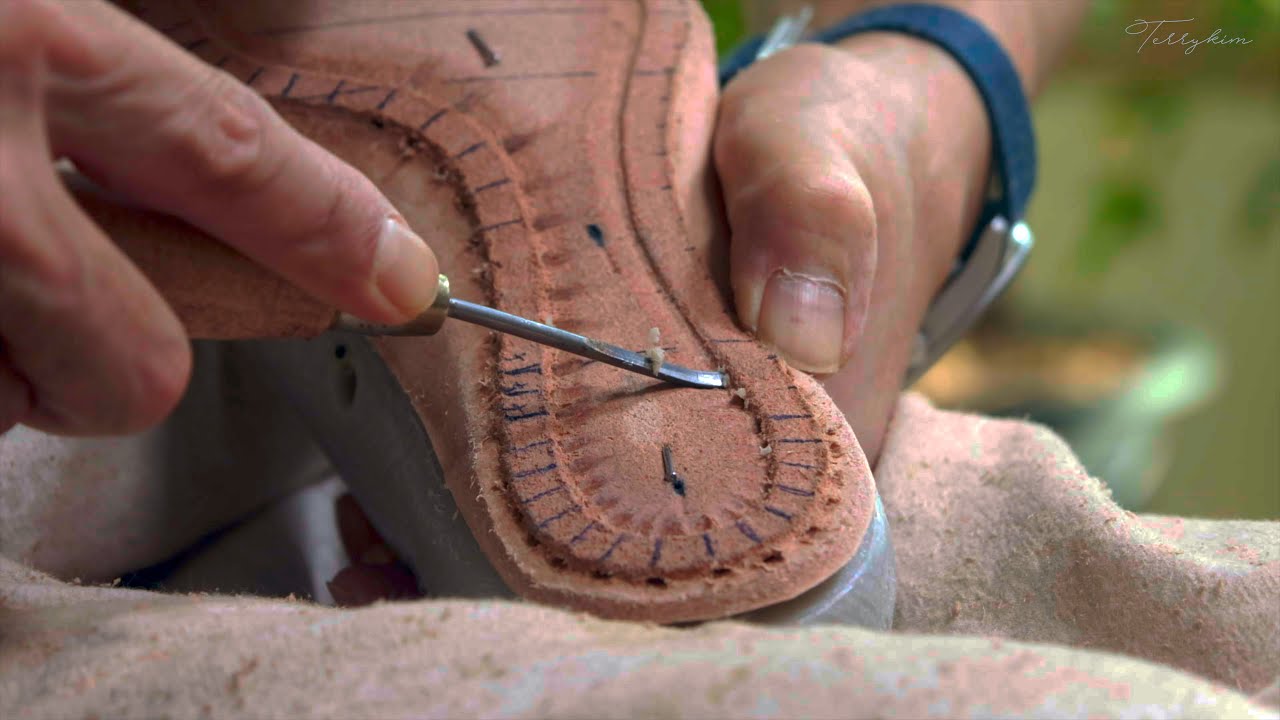
Another Example of Insole Carving with a Knife

from Matt Paker in Russia:

Lastmaking Tree Species

Having essentially recoiled in horror from carving lasts out of laminated MDF, I’ve refocused my research on available hardwoods. For North America, the clear front-runners are:

  1. Sugar/Hard/Rock Maple
  2. Ash
  3. Beech

I already had entries for each of these families, but I went through and added maps of where they grow from the Forest Service’s National Individual Tree Species Atlas.

The eastern part of the US is definitely richer in these species, though the Oregon Ash grows near me, here on the West Coast.

Koleff Geometric Method for Insoles

I reread and then restated the geometric method for men’s insole shapes in Koleff’s Last Designing and Making Manual:

There are definitely some magic numbers and unexplained formulas that I don’t feel I fully understand. But overall I do feel I’ve a better grasp of his overall method.

Double-Thread Inseaming

I spotted a YouTube video of a new-on-me Korean heritage boot company called Bad Hat Brothers showing double-thread inseaming. I don’t think I’ve seen that before:

The same video shows moc-toe sewing by hand.

Nice, eliminates the need to fix a thread end to the bristle at all

1 Like

Thanks to @KBayCustomLeather’s mention, I was able to add short entries for Degermann and Haas, neither of which I’d heard of.

Index of “Help Needed” Entries

I added a page listing just the entries that I’ve marked as needing help:

If folks here have a chance to browse and spot a subject they know something about, please do share!

Mystery Revealed: It’s “paper soap”!

Several of Terry Kim’s YouTube videos show him mixing a strip of something out of a small plastic case in water before brushing it onto his holdfasts. It’s always the same little case, the same hiking mug, the same simple chip brush:

His commentary subtitles to his latest video reveal the mystery: “paper soap”!

I’m guessing this is to lubricate for the awl, in lieu of constantly jabbing it into a tub or bar somewhere on the bench.

1 Like